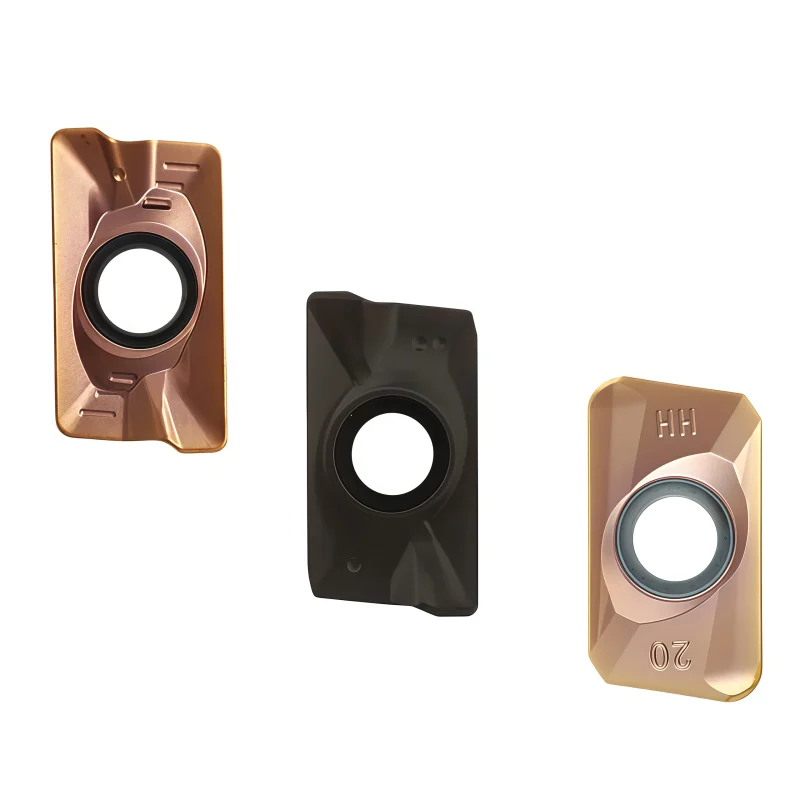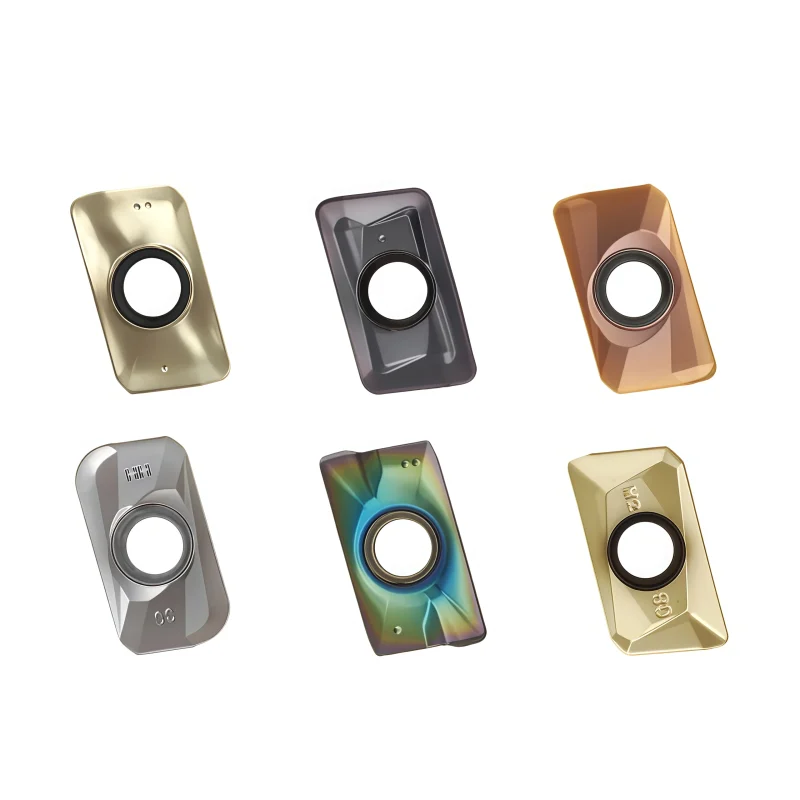
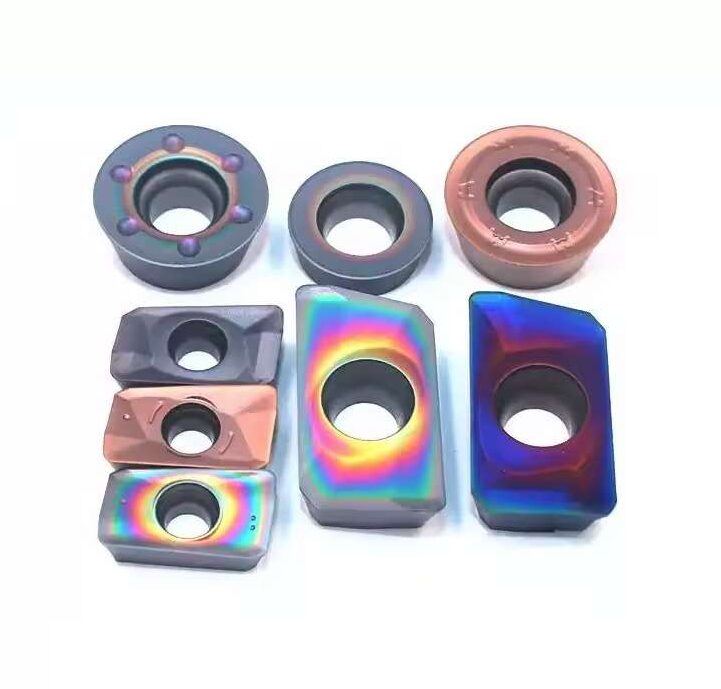
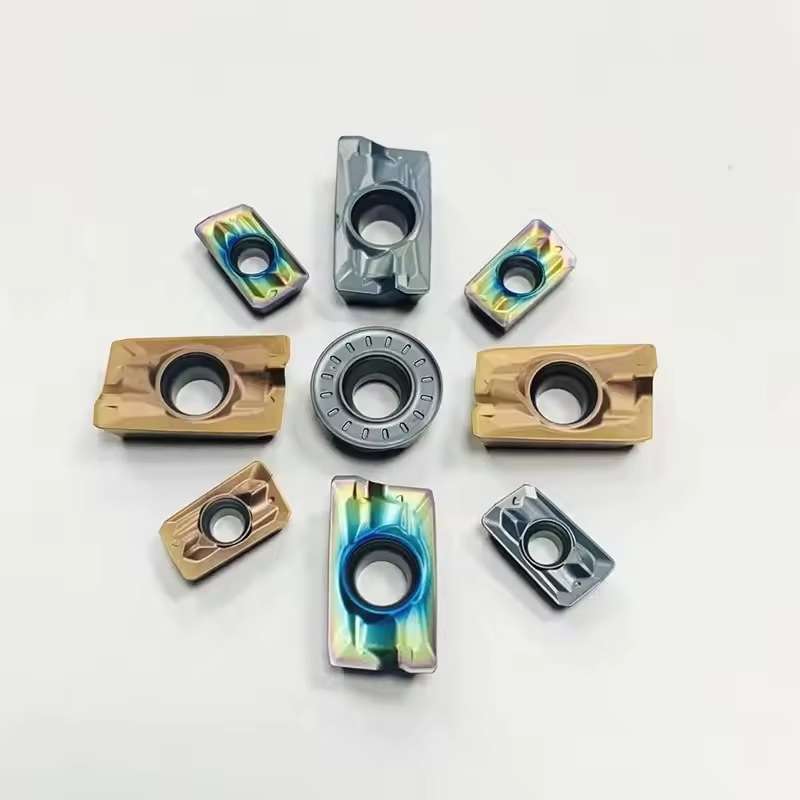



Insertos de metal duro recubiertos APMT 1135 para fresado de acero y acero inoxidable
APMT 1135 coated carbide milling inserts feature positive geometry to help reduce cutting resistance in shoulder and face milling. Grade, coating and chipbreaker options support steel and stainless steel machining, with bulk supply and private-label packaging available.
Positive Geometry
Wear-Resistant Coat
Acero inoxidable
Embalaje OEM
◆Productos
En APMT 1135 Coated Carbide Milling Insert is a positive-relief indexable insert developed for shoulder milling, face milling, slotting, side milling, and profile machining with compatible APMT cutter bodies. Its coated carbide substrate is selected to balance cutting-edge strength, wear resistance, and heat control when machining steel and stainless steel.
Because steel and stainless steel generate different cutting conditions, the correct substrate, coating, edge preparation, and chipbreaker should be chosen for the actual material and operation. For a combined size comparison, see the APMT1604 / APMT1135 R0.8 milling insert series.
Carburo recubierto
Steel & Stainless Steel
Indexable Milling

◆Understanding the APMT 1135 Designation
APMT 1135 identifies the basic insert family and size, but it does not fully define the cutting application. The suffix, chipbreaker, corner preparation, tolerance, coating, and carbide grade must also match the cutter pocket and workpiece.
Insert Shape Family
The first character identifies the standardized insert-shape family used by the compatible cutter pocket.
Positive Relief
Positive clearance helps the cutting edge enter the workpiece with lower rubbing and cutting pressure.
Tolerance & Type
These characters relate to dimensional tolerance and insert construction; the matching pocket remains essential.
Size Family
The numeric portion identifies the nominal insert-size family. Confirm actual dimensions from the supplier drawing.
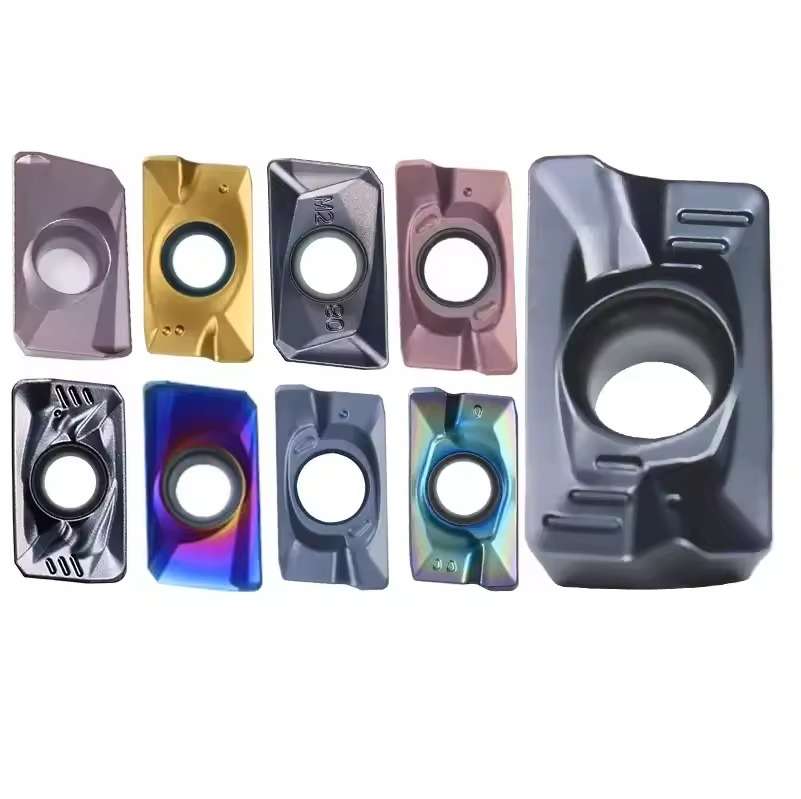
◆Insert Series & Geometry Reference

Use the product image together with the full model code and cutter-pocket drawing when checking compatibility.
◆Why Coated Carbide for Milling?
Protect the Cutting Edge
A correctly selected coating helps resist flank wear and abrasive contact during repeated production milling.
Maintain Edge Stability
Coating and substrate work together to maintain hardness and reduce thermal damage at the cutting zone.
Support Repeatable Production
Stable edge condition improves dimensional consistency and helps reduce unplanned insert changes across a batch.


◆Steel vs. Stainless Steel Selection
One insert grade should not automatically be treated as equally suitable for every ferrous material. Steel prioritizes wear resistance and edge strength, while stainless steel requires sharp cutting action, controlled heat, and reliable chip evacuation.
| Punto de selección | Acero | Acero inoxidable |
|---|---|---|
| Primary Concern | Wear resistance and edge strength | Heat, adhesion, and work hardening |
| Edge Preparation | Balanced or reinforced edge according to load | Sharper positive edge with sufficient toughness |
| Rompevirutas | Selected for roughing, medium cutting, or finishing | Designed to shear cleanly and control long, tough chips |
| Coating / Grade | Wear-oriented selection based on cutting speed and interruption | Tough, low-friction, heat-resistant selection for the alloy |
| Programming Focus | Stable engagement and appropriate chip load | Avoid rubbing, dwell, and repeated passes that work-harden the surface |
For additional process guidance, read
how to prevent tool burning when machining stainless steel.
◆Operaciones de fresado recomendadas


◆Compatibility Checklist Before Ordering
If the existing tool uses another insert family, compare the broader
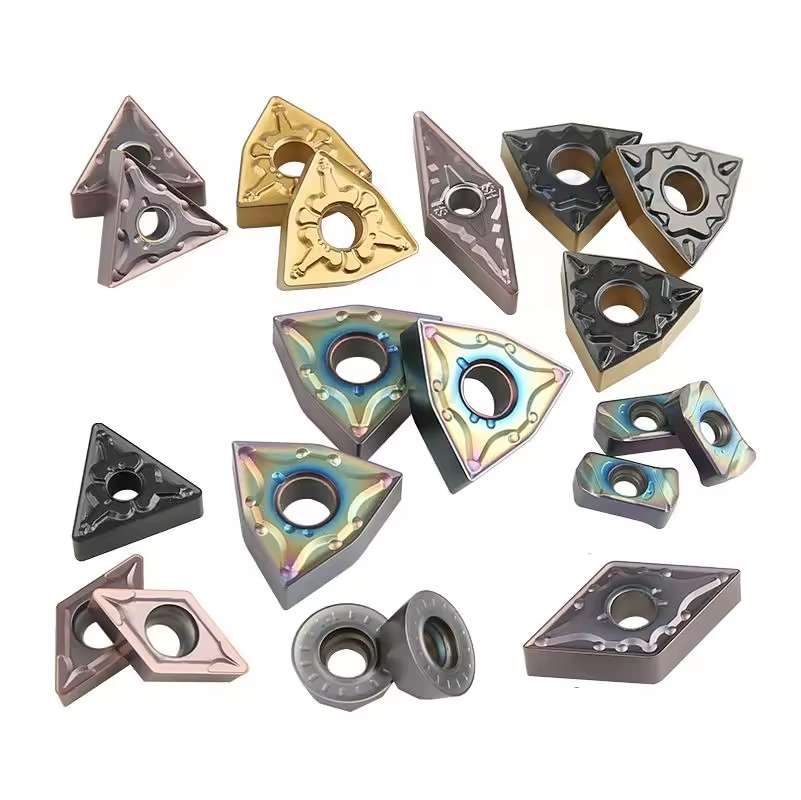
CNC turning and milling carbide insert range
before requesting an equivalent model.
◆Additional Product Details


◆Common Milling Problems & Checks
| Problema observado | Possible Cause | What to Check |
|---|---|---|
| Premature Flank Wear | Speed too high or grade too soft | Verify material group, cutting speed, coating, and coolant strategy |
| Edge Chipping | Impact, vibration, weak edge, or unstable pocket | Check holder runout, cutter screws, machine rigidity, feed, and edge preparation |
| Built-Up Edge | Rubbing, low speed, unsuitable coating, or poor chip flow | Confirm chip load, sharpness, coolant delivery, and material-specific grade |
| Long or Recut Chips | Incorrect chipbreaker or insufficient evacuation | Review chipbreaker, engagement, coolant direction, and cutter flute space |
| Acabado superficial deficiente | Runout, worn edge, unstable setup, or incorrect feed | Inspect every insert seat, edge height, holder condition, and finishing allowance |
◆Related Inserts & Technical Resources
APMT1604 / APMT1135 R0.8 Inserts
Compare two common APMT size families for steel, stainless steel, and cast-iron milling.
LNMU / ENMU / BLMP Inserts
Consider double-sided high-feed geometry when productivity and shallow axial engagement are the main priorities.
Carbide Insert Types Explained
Review insert shapes, clearance styles, ISO workpiece groups, chipbreakers, and common selection mistakes.
CNC Turning & Milling Inserts
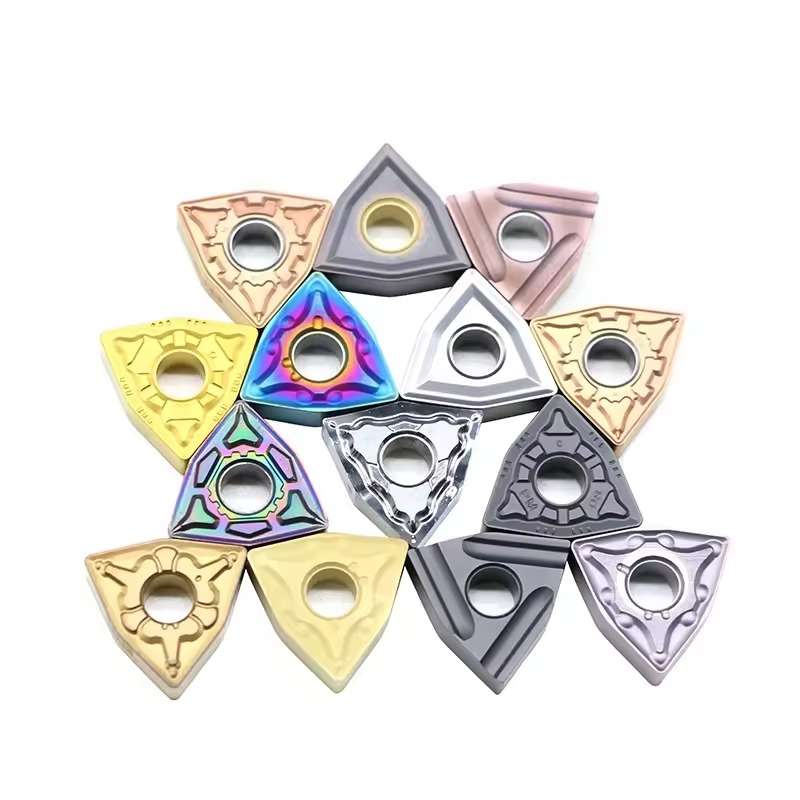
Browse APMT, CNMG, DNMG, SNMG, TNMG, VNMG, and WNMG carbide insert families.
Send the Complete Insert Code for Compatibility Checking
Provide the cutter-body model, complete insert designation, current grade or box label, workpiece material and hardness, machining operation, cutting depth, coolant method, machine condition, and order quantity. The correct APMT1135 chipbreaker, carbide grade, coating, and edge preparation can then be evaluated.
◆Specifications & Size Chart
APMT 1135 identifies the insert body family and size, while the full suffix and carbide grade identify the supplied cutting configuration. In the supplied APMT series chart, the H2, M2 and PM rows for APMT 1135 share the dimensions below. Values are in millimeters; confirm pocket fit and the actual coated grade from the complete ordered code.
| Model Reference | Suffix Shown | Length l | Width d | Thickness t | Corner R |
|---|---|---|---|---|---|
| APMT 1135–H2 | H2 | 11 mm | 6,35 mm | 3.5 mm | 0.8 mm |
| APMT 1135–M2 | M2 | 11 mm | 6,35 mm | 3.5 mm | 0.8 mm |
| APMT 1135–PM | PM | 11 mm | 6,35 mm | 3.5 mm | 0.8 mm |
◆APMT 1135 Designation
| Código | Meaning / Selection Check |
|---|---|
| A | 85° parallelogram insert shape. |
| P | 11° nominal clearance angle; positive-relief insert body. |
| M | Tolerance-class designation; use the supplier drawing for actual tolerances. |
| T | Insert hole / construction code; verify the hole and clamping form against the cutter pocket. |
| 1135 | Nominal size family; use the dimensions above for the listed variants. |
| Suffix + grade | Chipbreaker, cutting-edge preparation, coating and substrate require the complete supplier order code. “M2” as a variant suffix does not mean M2 high-speed steel. |
◆Material & Milling Application
| Selection Field | Datos que hay que confirmar |
|---|---|
| Steel · ISO P | State the exact carbon/alloy steel grade, hardness, scale and interrupted-cut conditions; select the suitable carbide grade and edge strength. |
| Stainless steel · ISO M | State the exact grade, such as 304 or 316, condition and coolant plan; check sharpness, adhesion control, heat resistance and chip evacuation. |
| Coating / grade | Coated carbide is the stated product type. Confirm the actual grade and coating system for the full insert code; no single coating is specified by “APMT 1135.” |
| Shoulder / face milling | Use a compatible cutter body; check pocket seat, insert projection, cutter diameter and recommended engagement. |
| Slot / ramp / helix | Only when the specific cutter body permits the operation; confirm slot depth, ramp angle, chip clearance and coolant access. |
◆How to Select the Insert
◆Starting Cutting Data
Obtain Vc, fz, axial depth (ap) and radial width (ae) from the supplier's recommendation for the complete grade and cutter body. Steel and stainless steel require separate starting settings. The insert-size code and photos alone do not provide validated cutting parameters.
◆Related Series & Resources
For a second insert-size family, compare the APMT 1135 / APMT 1604 R0.8 series. Our Guía sobre los tipos de insertos de carburo explains insert-family selection.
Send the full insert and cutter-body codes to confirm grade, coating, fit and availability.
◆Personalización de insertos de carburo y fabricación para terceros (OEM)
Especifique la plaquita para la operación de mecanizado, la pieza de trabajo y el portaplaquitas. Podemos analizar sustituciones estándar, geometrías específicas para cada aplicación y requisitos de marca propia utilizando su designación de plaquita, plano o muestra. Se confirman los grados, recubrimientos, dimensiones y cantidades de pedido disponibles para cada serie solicitada.
Geometría y control de virutas
Comprueba el rompevirutas, el ángulo de inclinación, la preparación del filo de corte, el radio de la punta y el diseño de las esquinas en función de la operación y la pieza de trabajo. Confirma la compatibilidad del portaherramientas antes de aprobar una geometría modificada.
Sustrato y recubrimiento
Seleccione un tipo de carburo y un recubrimiento adecuados para el material de la pieza de trabajo, las condiciones de corte y el equilibrio deseado entre resistencia al desgaste y tenacidad del filo.
Dimensiones y fabricantes de equipos originales (OEM)
Comprueba el tamaño, el grosor, las características de posicionamiento y sujeción, las tolerancias, el marcado láser y el embalaje con marca propia del inserto, comparándolos con las especificaciones aprobadas.
◆Opciones de personalización
Utiliza los campos que aparecen a continuación para enviar una consulta. Las opciones concretas dependen de la familia de insertos y se confirman en el presupuesto o en el plano aprobado.
| Especificación | Datos que hay que confirmar |
|---|---|
| Tipo de inserto | Insertos para torneado, fresado, roscado, ranurado o taladrado; envíenos la referencia o el plano. |
| Talla y ajuste | Forma, tamaño, grosor, círculo inscrito o longitud del borde, tipo de orificio o de sujeción, y modelo de soporte. |
| Geometría de corte | Rompevirutas, radio de punta o de esquina, preparación del filo, dirección de corte y perfil específico para cada aplicación. |
| Calidad y recubrimiento | Grupo y clase de pieza de trabajo, sustrato de metal duro, sistema de recubrimiento y condiciones de corte en seco o en húmedo. |
| Tolerancias e inspección | Dimensiones críticas, requisitos de perfil, método de inspección y cualquier informe necesario. |
| Presentación de OEM | Marcado en la etiqueta o en la caja, contenido de la etiqueta, formato del envase y cantidad por envase. |
◆Cómo solicitar un inserto personalizado

Envíanos tus requisitos para los encartes a través de nuestro formulario de contacto o consulta nuestra Servicio de fabricación para terceros (OEM) y de marca propia.
◆Control de calidad de las plaquitas de metal duro

La calidad de los insertos depende del grado homologado, la geometría, el recubrimiento y las especificaciones dimensionales. Revisamos los requisitos en el momento de la confirmación del pedido y adaptamos el alcance de la inspección a la serie de insertos y a cualquier plano del cliente. Indique las dimensiones críticas o los requisitos de documentación antes de la producción para que puedan incluirse en el plan de inspección acordado.
01 · Material recibido
Comprueba que el tipo de carburo especificado o la documentación del material se ajusten a los requisitos del pedido.
02 · Controles durante el proceso
Comprueba las dimensiones y las características más innovadoras durante la producción, comparándolas con las especificaciones aprobadas.
03 · Inspección final
Comprueba las dimensiones acordadas, el aspecto, el estado de los bordes, la identificación del recubrimiento y el marcado, según corresponda.
04 · Revisión del embalaje
Comprueba el código del artículo, la cantidad, las etiquetas y el embalaje protector comparándolos con el pedido aprobado.
◆Inspección y documentación
Se deben acordar los puntos de inspección y los criterios de aceptación para la serie solicitada. En el caso de los insertos a medida, el plano aprobado tiene prioridad sobre la descripción genérica del catálogo.
| Área de comprobación | Qué hay que comprobar |
|---|---|
| Dimensiones y ajuste | Indica las dimensiones, el grosor, el radio de las esquinas, las características de sujeción y cualquier tolerancia del plano. |
| Geometría de corte | Rompevirutas, preparación de aristas, esquinas aprovechables y perfil, cuando proceda. |
| Calidad y recubrimiento | Calidad y designación del recubrimiento aprobadas; cualquier método de verificación solicitado. |
| Aspecto y embalaje | Daños visibles en los bordes, marcas, código del artículo, número de unidades y formato de embalaje. |
| Documentos solicitados | Informe de inspección, documentación sobre materiales o recubrimientos, aprobación de muestras o identificación de lotes, cuando así se haya acordado. |
◆Pedidos y envíos
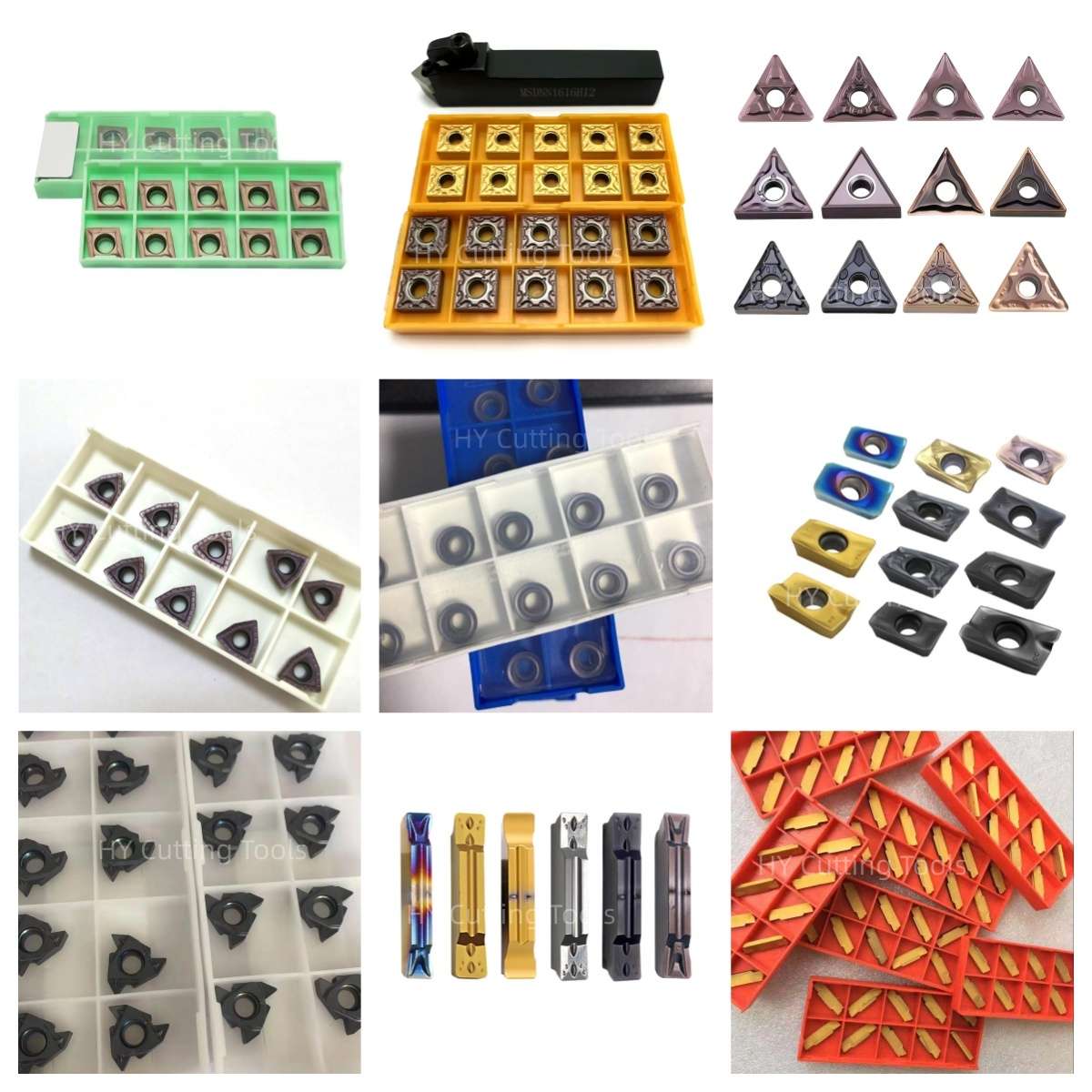

Se facilita una lista detallada, línea por línea, de los códigos de los artículos y las cantidades correspondientes a un presupuesto con tamaños mixtos. Se confirman el estado de existencias, la cantidad mínima, los requisitos de muestras y el plazo de producción para cada calidad, recubrimiento y configuración.
Envíanos tu lista de artículos y tus requisitos de calidad a través de nuestro formulario de contacto para consultar las especificaciones, la disponibilidad y la confirmación de la entrega.
◆Preguntas frecuentes sobre el producto
What does APMT 1135 identify?
APMT identifies an 85° parallelogram insert with 11° nominal clearance, M tolerance class and T construction/hole code. The 1135 portion identifies the size family. It does not specify a unique carbide grade, coating, chipbreaker or finished cutting edge; order by the full designation.
What dimensions are listed for APMT 1135?
The supplied series chart lists l = 11 mm, d = 6.35 mm, t = 3.5 mm and R = 0.8 mm for its APMT 1135 H2, M2 and PM rows. These are chart references; confirm the hole, tolerances and seating details using the specific product drawing.
Can the same coated insert mill steel and stainless steel?
Some coated grades may cover both ISO P steel and ISO M stainless steel, but the suitable grade, edge preparation and parameters must be verified for each workpiece. Specify the actual alloy, hardness, cutter body, coolant and operation when requesting a recommendation.
Do H2, M2 and PM indicate different steel grades?
They are model-variant suffixes shown in the reference chart. Their precise geometry and application range depend on the supplier's full designation. “M2” here is not a declaration that the carbide insert is made from M2 high-speed steel.
Is APMT 1135 suitable for slotting and ramping?
Shoulder and face milling are common uses with a compatible cutter. Slotting, ramping or helical entry require the cutter maker's approval and limits for axial depth, ramp angle and chip clearance. The insert designation alone cannot establish these capabilities.
How should I select cutting speed and feed?
Request grade-specific Vc and feed per tooth for the exact steel or stainless-steel grade, cutter diameter, tooth count and engagement. Start within that published range, then check chip formation, wear, chatter and surface finish during a trial cut.
◆Preguntas frecuentes sobre pedidos y OEM
Will any APMT 1135 insert fit my milling cutter?
Match the complete insert code against the cutter's approved insert list. Check the pocket, seating surface, screw, hole form, corner radius, cutting hand and chipbreaker. A shared APMT 1135 size name alone does not prove fit.
What should I send for an equivalent-insert request?
Provide the existing manufacturer's complete insert code and grade, box-label photos, front and back insert photos, cutter-body code, workpiece grade, cutting conditions, current wear problem and required quantity. Compare fit and cutting results with a sample before repeat purchasing.
Can I combine grades or chipbreakers in one order?
Send a line-by-line list with each complete insert code and quantity. Mixed-model availability, minimum quantity, pack count and lead time are confirmed per item rather than assumed from the APMT 1135 family name.
Are custom marking and private-label packaging available?
Send the requested insert or box marking, label artwork, packaging format and expected quantity. Confirm the approved insert specification and quotation before production or a repeat order.
◆Guías y referencias técnicas
Utiliza nuestro Guía sobre los tipos de insertos de carburo for insert-code and material-group selection. For stainless-steel process issues, see our stainless-steel machining guide.
For the specific coated grade, drawing and quotation, send the full insert and cutter-body codes.
¿Necesita medidas, precios u opciones a medida?
Envíanos tus especificaciones y la cantidad para que te enviemos un presupuesto.
- Tallas estándar
- Pedidos de prueba de pequeño volumen
- Tallas variadas
- OEM y herramientas personalizadas
Ver código QR – Ponte en contacto con el departamento de ventas a través de WeChat

Escanea el código para contactar con nosotros en WeChat.
Escanea el código para contactar con nosotros en WeChat.