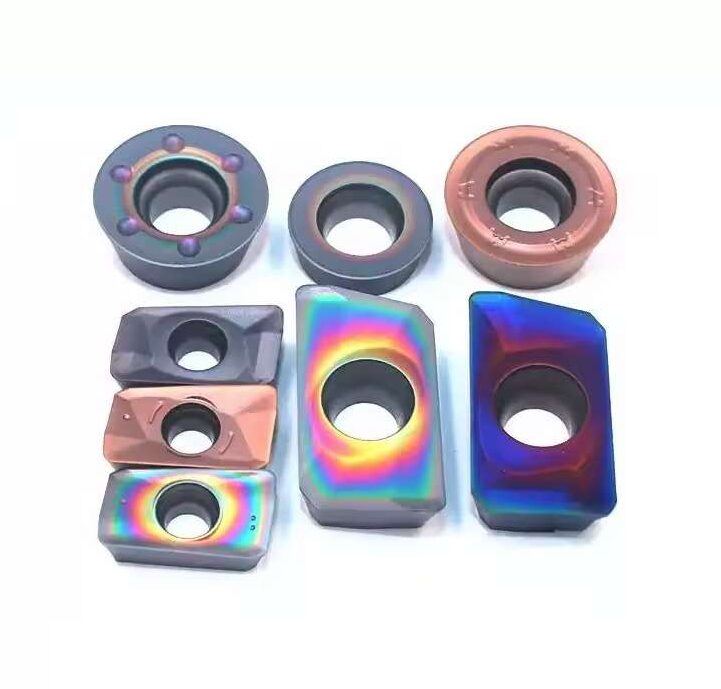
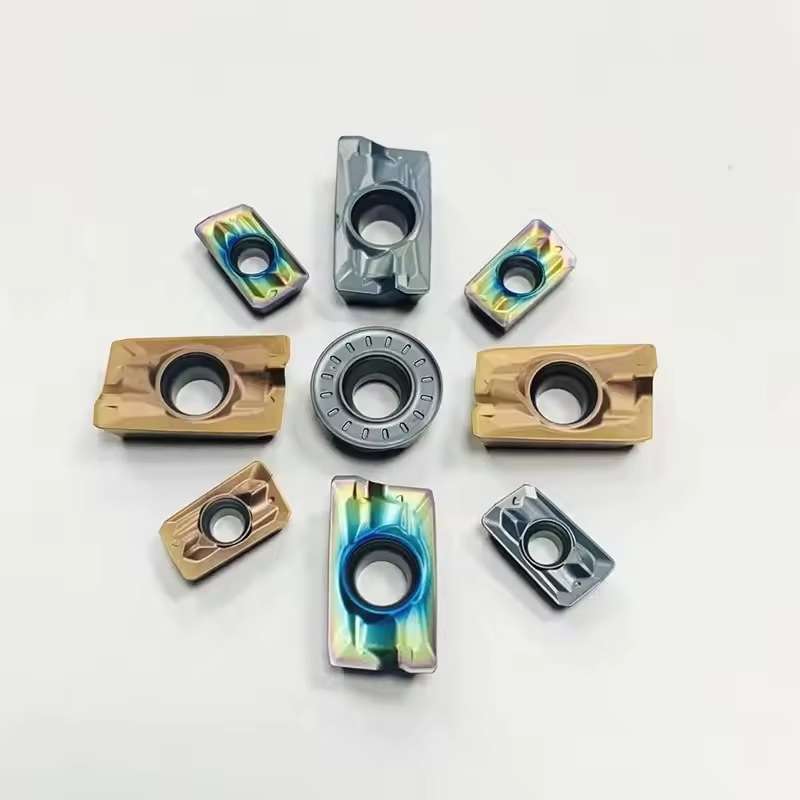



APMT 1135 – Beschichtete Hartmetall-Fräswendeschneidplatten für Stahl und Edelstahl
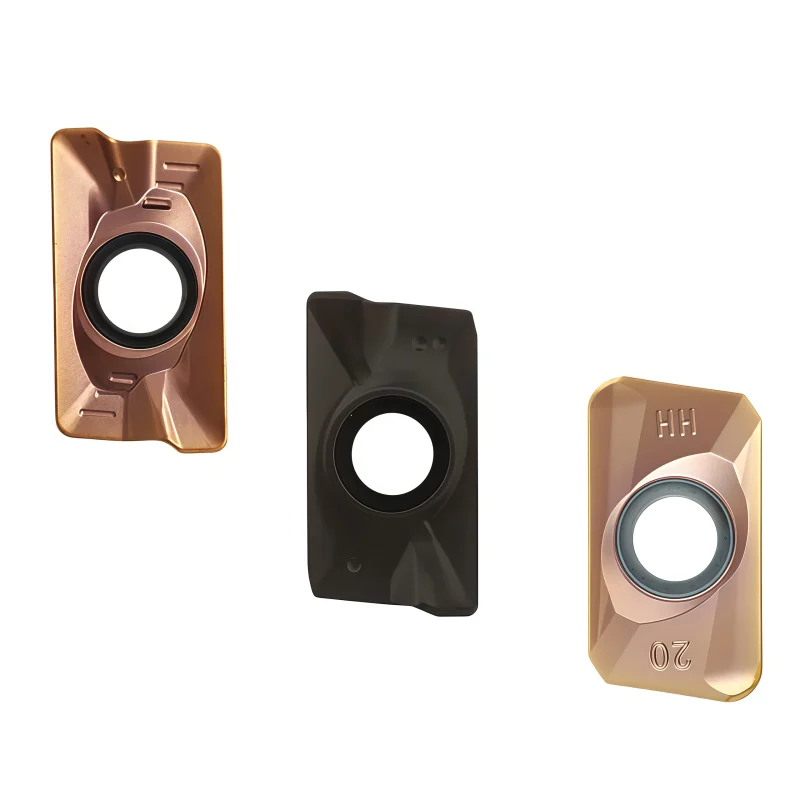
APMT 1135 coated carbide milling inserts feature positive geometry to help reduce cutting resistance in shoulder and face milling. Grade, coating and chipbreaker options support steel and stainless steel machining, with bulk supply and private-label packaging available.
Positive Geometrie
Wear-Resistant Coat
Rostfreier Stahl
OEM-Verpackungen
◆Produktübersicht
Die APMT 1135 Coated Carbide Milling Insert is a positive-relief indexable insert developed for shoulder milling, face milling, slotting, side milling, and profile machining with compatible APMT cutter bodies. Its coated carbide substrate is selected to balance cutting-edge strength, wear resistance, and heat control when machining steel and stainless steel.
Because steel and stainless steel generate different cutting conditions, the correct substrate, coating, edge preparation, and chipbreaker should be chosen for the actual material and operation. For a combined size comparison, see the APMT1604 / APMT1135 R0.8 milling insert series.
Coated Carbide
Steel & Stainless Steel
Indexable Milling

◆Understanding the APMT 1135 Designation
APMT 1135 identifies the basic insert family and size, but it does not fully define the cutting application. The suffix, chipbreaker, corner preparation, tolerance, coating, and carbide grade must also match the cutter pocket and workpiece.
Insert Shape Family
The first character identifies the standardized insert-shape family used by the compatible cutter pocket.
Positive Relief
Positive clearance helps the cutting edge enter the workpiece with lower rubbing and cutting pressure.
Tolerance & Type
These characters relate to dimensional tolerance and insert construction; the matching pocket remains essential.
Size Family
The numeric portion identifies the nominal insert-size family. Confirm actual dimensions from the supplier drawing.
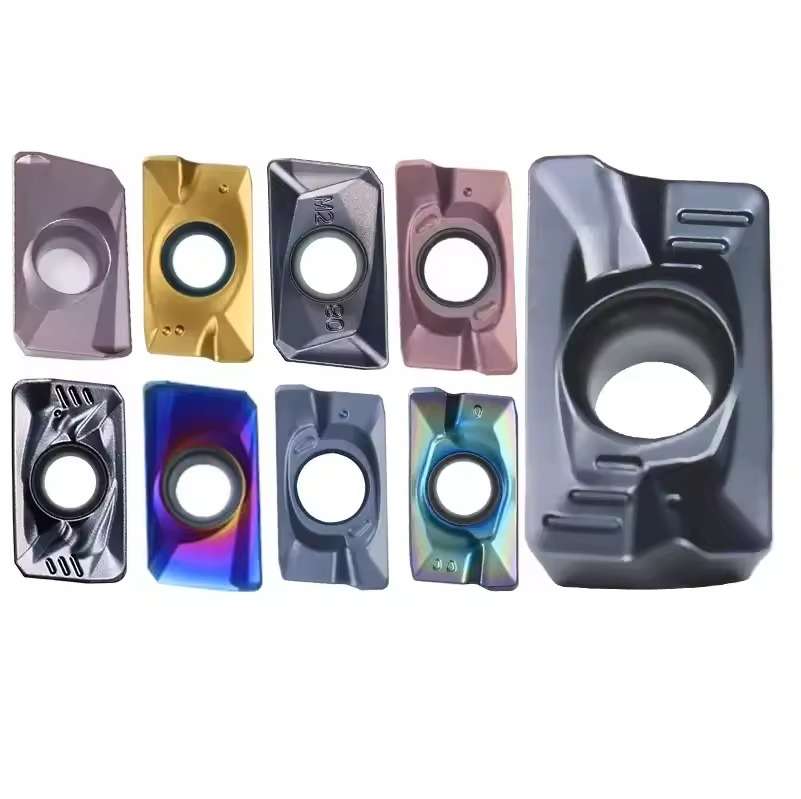
◆Insert Series & Geometry Reference

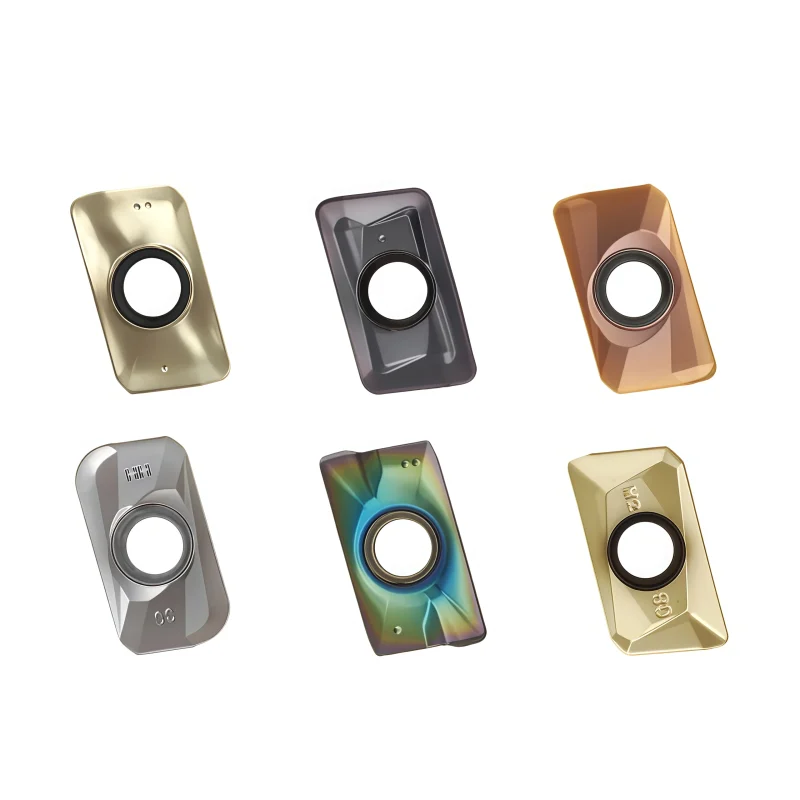
Use the product image together with the full model code and cutter-pocket drawing when checking compatibility.
◆Why Coated Carbide for Milling?
Protect the Cutting Edge
A correctly selected coating helps resist flank wear and abrasive contact during repeated production milling.
Maintain Edge Stability
Coating and substrate work together to maintain hardness and reduce thermal damage at the cutting zone.
Support Repeatable Production
Stable edge condition improves dimensional consistency and helps reduce unplanned insert changes across a batch.


◆Steel vs. Stainless Steel Selection
One insert grade should not automatically be treated as equally suitable for every ferrous material. Steel prioritizes wear resistance and edge strength, while stainless steel requires sharp cutting action, controlled heat, and reliable chip evacuation.
| Selection Point | Stahl | Rostfreier Stahl |
|---|---|---|
| Primary Concern | Verschleißfestigkeit und Kantenfestigkeit | Heat, adhesion, and work hardening |
| Edge Preparation | Balanced or reinforced edge according to load | Sharper positive edge with sufficient toughness |
| Chipbreaker | Selected for roughing, medium cutting, or finishing | Designed to shear cleanly and control long, tough chips |
| Coating / Grade | Wear-oriented selection based on cutting speed and interruption | Tough, low-friction, heat-resistant selection for the alloy |
| Programming Focus | Stable engagement and appropriate chip load | Avoid rubbing, dwell, and repeated passes that work-harden the surface |
For additional process guidance, read
how to prevent tool burning when machining stainless steel.
◆Recommended Milling Operations


◆Compatibility Checklist Before Ordering
If the existing tool uses another insert family, compare the broader
CNC turning and milling carbide insert range
before requesting an equivalent model.
◆Additional Product Details


◆Common Milling Problems & Checks
| Observed Problem | Mögliche Ursache | Was ist zu prüfen? |
|---|---|---|
| Premature Flank Wear | Speed too high or grade too soft | Verify material group, cutting speed, coating, and coolant strategy |
| Edge Chipping | Impact, vibration, weak edge, or unstable pocket | Check holder runout, cutter screws, machine rigidity, feed, and edge preparation |
| Built-Up Edge | Rubbing, low speed, unsuitable coating, or poor chip flow | Confirm chip load, sharpness, coolant delivery, and material-specific grade |
| Long or Recut Chips | Incorrect chipbreaker or insufficient evacuation | Review chipbreaker, engagement, coolant direction, and cutter flute space |
| Mangelhafte Oberflächenbeschaffenheit | Runout, worn edge, unstable setup, or incorrect feed | Inspect every insert seat, edge height, holder condition, and finishing allowance |
◆Related Inserts & Technical Resources
APMT1604 / APMT1135 R0.8 Inserts
Compare two common APMT size families for steel, stainless steel, and cast-iron milling.
LNMU / ENMU / BLMP Inserts
Consider double-sided high-feed geometry when productivity and shallow axial engagement are the main priorities.
Carbide Insert Types Explained
Review insert shapes, clearance styles, ISO workpiece groups, chipbreakers, and common selection mistakes.
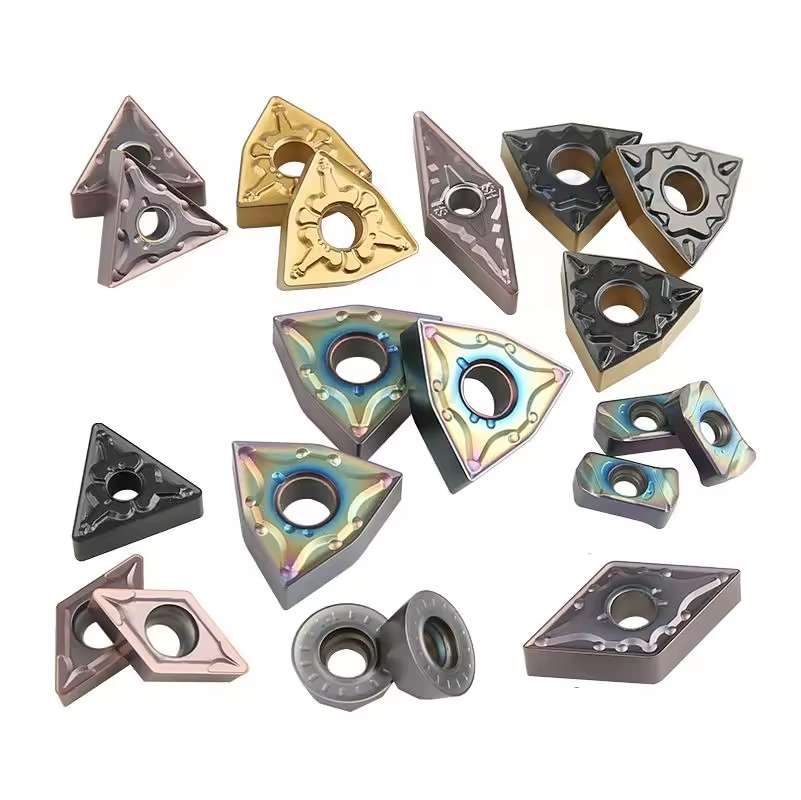
CNC Turning & Milling Inserts
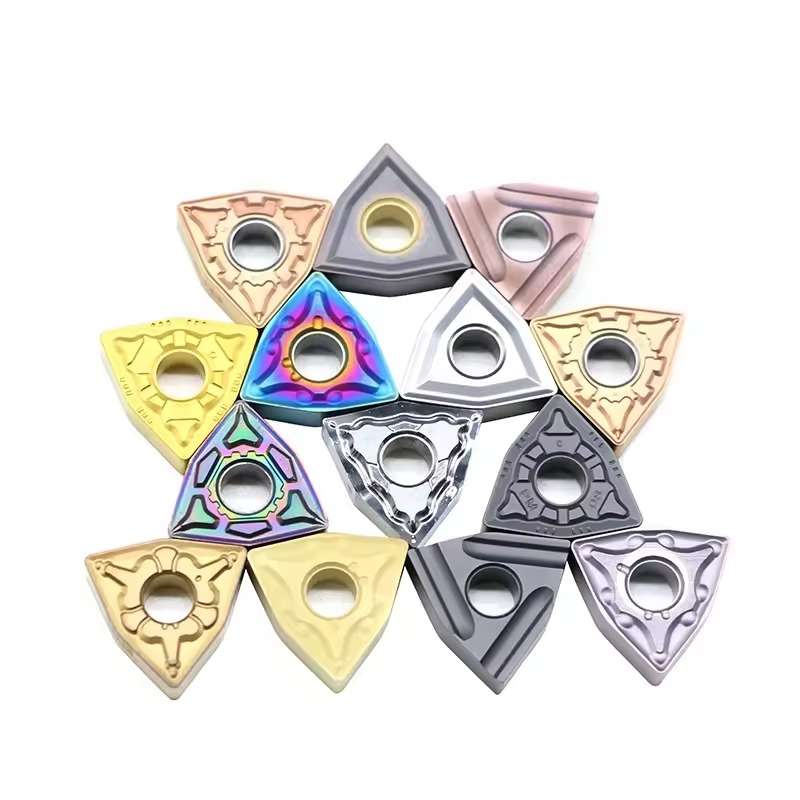
Browse APMT, CNMG, DNMG, SNMG, TNMG, VNMG, and WNMG carbide insert families.
Send the Complete Insert Code for Compatibility Checking
Provide the cutter-body model, complete insert designation, current grade or box label, workpiece material and hardness, machining operation, cutting depth, coolant method, machine condition, and order quantity. The correct APMT1135 chipbreaker, carbide grade, coating, and edge preparation can then be evaluated.
◆Technische Daten & Größentabelle
APMT 1135 identifies the insert body family and size, while the full suffix and carbide grade identify the supplied cutting configuration. In the supplied APMT series chart, the H2, M2 and PM rows for APMT 1135 share the dimensions below. Values are in millimeters; confirm pocket fit and the actual coated grade from the complete ordered code.
| Model Reference | Suffix Shown | Length l | Breite d | Thickness t | Corner R |
|---|---|---|---|---|---|
| APMT 1135–H2 | H2 | 11 mm | 6.35 mm | 3.5 mm | 0,8 mm |
| APMT 1135–M2 | M2 | 11 mm | 6.35 mm | 3.5 mm | 0,8 mm |
| APMT 1135–PM | PM | 11 mm | 6.35 mm | 3.5 mm | 0,8 mm |
◆APMT 1135 Designation
| Code | Meaning / Selection Check |
|---|---|
| A | 85° parallelogram insert shape. |
| P | 11° nominal clearance angle; positive-relief insert body. |
| M | Tolerance-class designation; use the supplier drawing for actual tolerances. |
| T | Insert hole / construction code; verify the hole and clamping form against the cutter pocket. |
| 1135 | Nominal size family; use the dimensions above for the listed variants. |
| Suffix + grade | Chipbreaker, cutting-edge preparation, coating and substrate require the complete supplier order code. “M2” as a variant suffix does not mean M2 high-speed steel. |
◆Material & Milling Application
| Selection Field | Zu bestätigende Details |
|---|---|
| Steel · ISO P | State the exact carbon/alloy steel grade, hardness, scale and interrupted-cut conditions; select the suitable carbide grade and edge strength. |
| Stainless steel · ISO M | State the exact grade, such as 304 or 316, condition and coolant plan; check sharpness, adhesion control, heat resistance and chip evacuation. |
| Coating / grade | Coated carbide is the stated product type. Confirm the actual grade and coating system for the full insert code; no single coating is specified by “APMT 1135.” |
| Shoulder / face milling | Use a compatible cutter body; check pocket seat, insert projection, cutter diameter and recommended engagement. |
| Slot / ramp / helix | Only when the specific cutter body permits the operation; confirm slot depth, ramp angle, chip clearance and coolant access. |
◆How to Select the Insert
◆Start der Schnittdaten
Obtain Vc, fz, axial depth (ap) and radial width (ae) from the supplier's recommendation for the complete grade and cutter body. Steel and stainless steel require separate starting settings. The insert-size code and photos alone do not provide validated cutting parameters.
◆Related Series & Resources
For a second insert-size family, compare the APMT 1135 / APMT 1604 R0.8 series. Our Leitfaden zu den verschiedenen Arten von Hartmetalleinsätzen explains insert-family selection.
Send the full insert and cutter-body codes to confirm grade, coating, fit and availability.
◆Maßanfertigung von Hartmetalleinsätzen & OEM
Geben Sie den Schneideinsatz für den Bearbeitungsvorgang, das Werkstück und den Halter an. Anhand Ihrer Schneideinsatzbezeichnung, Zeichnung oder Ihres Musters können wir Standardersatzteile, anwendungsspezifische Geometrien und Anforderungen für Eigenmarken prüfen. Die verfügbaren Sorten, Beschichtungen, Abmessungen und Bestellmengen werden für jede angefragte Serie bestätigt.
Geometrie und Spansteuerung
Überprüfen Sie den Spanbrecher, den Spanwinkel, die Schneidkantenvorbereitung, den Spitzenradius und die Eckenausformung im Hinblick auf den Bearbeitungsvorgang und das Werkstück. Vergewissern Sie sich vor der Freigabe einer geänderten Geometrie, dass der Halter kompatibel ist.
Substrat und Beschichtung
Wählen Sie eine geeignete Hartmetallsorte und Beschichtung entsprechend dem Werkstückmaterial, den Schnittbedingungen und dem gewünschten Verhältnis zwischen Verschleißfestigkeit und Schneidkantenzähigkeit aus.
Abmessungen & OEM
Überprüfen Sie Größe, Dicke, Positionierungs- und Befestigungsmerkmale, Toleranzen, Lasermarkierung und Eigenmarkenverpackung der Einlegeblätter anhand der genehmigten Spezifikation.
◆Anpassungsmöglichkeiten
Bitte nutzen Sie die folgenden Felder, wenn Sie eine Anfrage senden. Die genauen Optionen hängen von der Einbaufamilie ab und werden im Angebot oder in der freigegebenen Zeichnung bestätigt.
| Spezifikation | Zu bestätigende Details |
|---|---|
| Einfügetyp | Einsatz zum Drehen, Fräsen, Gewindeschneiden, Nuten oder Bohren; bitte senden Sie uns die Bezeichnung oder die Zeichnung. |
| Größe & Passform | Form, Größe, Dicke, Inkreis- oder Kantenlänge, Bohrung oder Spannform sowie Haltertyp. |
| Schnittgeometrie | Spanbrecher, Spitzen- oder Eckenradius, Kantenvorbereitung, Schnittrichtung und anwendungsspezifisches Profil. |
| Güteklasse und Beschichtung | Werkstückgruppe und -güte, Hartmetallsubstrat, Beschichtungssystem sowie Nass- oder Trockenschnittbedingungen. |
| Toleranz und Prüfung | Kritische Maße, Profilanforderungen, Prüfverfahren und gegebenenfalls erforderliche Berichte. |
| OEM-Präsentation | Einlage- oder Kartonbeschriftung, Etiketteninhalt, Verpackungsformat und Stückzahl pro Packung. |
◆So bestellen Sie eine individuelle Einlage

Senden Sie uns Ihre Anforderungen für Beilagen über unser Kontaktformular oder sehen Sie sich unsere OEM- und Eigenmarken-Service.
◆Qualitätskontrolle bei Hartmetall-Wendeschneidplatten

Die Qualität der Schneideinsätze hängt von der zugelassenen Güteklasse, der Geometrie, der Beschichtung und den Maßvorgaben ab. Wir prüfen die Anforderungen bei der Auftragsbestätigung und stimmen den Prüfumfang auf die Schneideinsatzserie sowie etwaige Kundenzeichnungen ab. Teilen Sie uns bitte vor Produktionsbeginn kritische Maße oder erforderliche Unterlagen mit, damit diese in den vereinbarten Prüfplan aufgenommen werden können.
01 · Wareneingang
Vergleichen Sie die angegebene Hartmetallsorte oder die Materialunterlagen mit den Anforderungen der Bestellung.
02 · Kontrollen während des Produktionsprozesses
Überprüfen Sie während der Produktion die Abmessungen und innovativen Funktionen anhand der genehmigten Spezifikation.
03 · Endabnahme
Überprüfen Sie die vereinbarten Abmessungen, das Aussehen, den Zustand der Kanten sowie gegebenenfalls die Beschichtungsangaben und Kennzeichnungen.
04 · Rückblick auf das Packen
Überprüfen Sie die Artikelnummer, die Menge, die Etiketten und die Schutzverpackung anhand des genehmigten Auftrags.
◆Prüfung und Dokumentation
Für die bestellte Serie sollten Prüfpunkte und Abnahmekriterien vereinbart werden. Bei kundenspezifischen Einsätzen hat die genehmigte Zeichnung Vorrang vor einer allgemeinen Katalogbeschreibung.
| Bereich prüfen | Was ist zu überprüfen? |
|---|---|
| Maße & Passform | Geben Sie Größe, Dicke, Eckenradius, Spannmerkmale und etwaige Zeichnungstoleranzen an. |
| Schnittgeometrie | Spanbrecher, Kantenvorbereitung, nutzbare Ecken und gegebenenfalls Profil. |
| Güteklasse und Beschichtung | Zugelassene Güteklasse und Beschichtungsbezeichnung; gegebenenfalls angegebene Prüfverfahren. |
| Aussehen und Verpackung | Sichtbare Beschädigungen an den Kanten, Kennzeichnungen, Artikelnummer, Stückzahl und Verpackungsform. |
| Angeforderte Unterlagen | Prüfbericht, Material- oder Beschichtungsunterlagen, Musterfreigabe oder Chargenidentifikation, sofern vereinbart. |
◆Bestellung & Lieferung
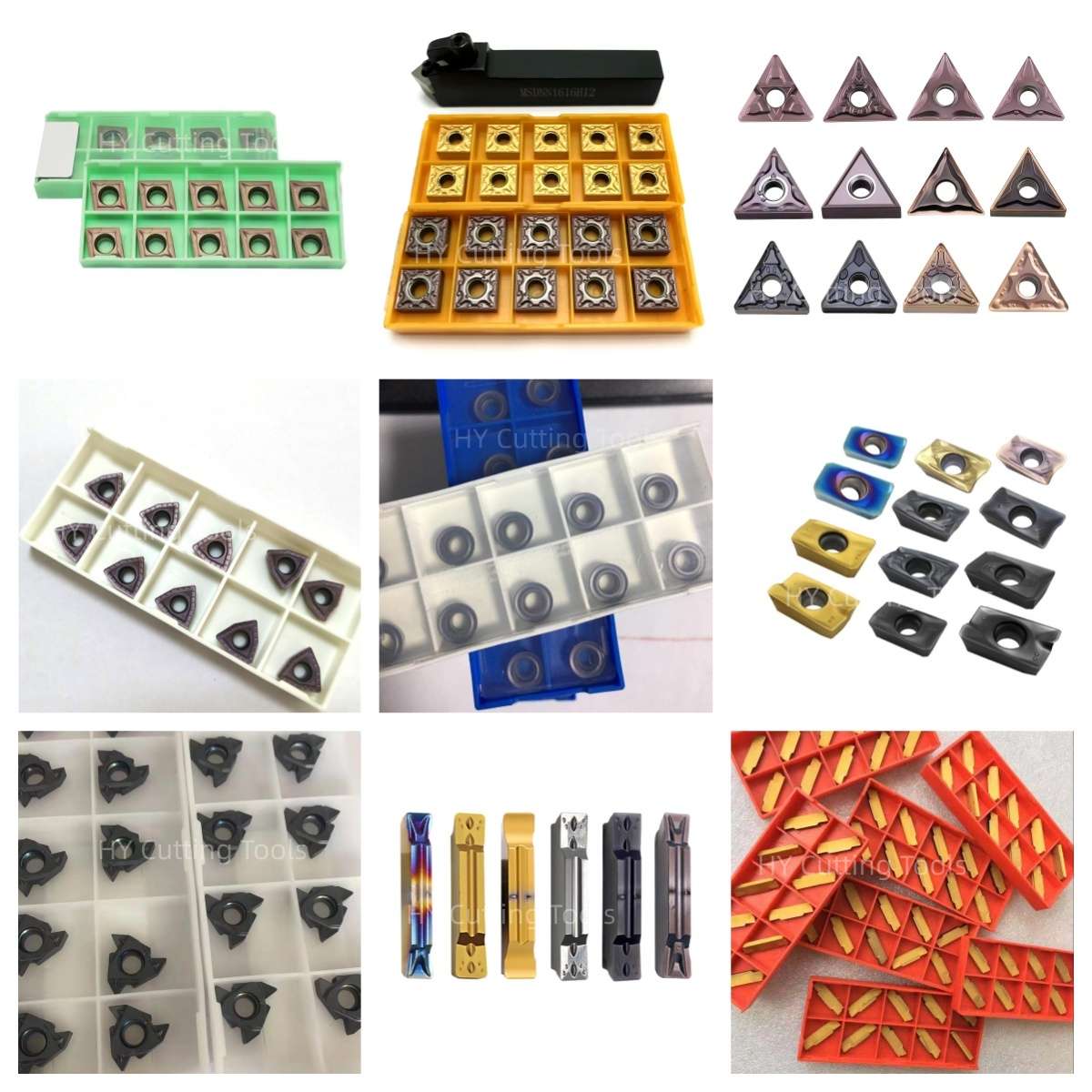

Bitte übermitteln Sie eine zeilenweise Auflistung der Artikelnummern und Mengen für ein Angebot mit unterschiedlichen Größen. Für jede Güteklasse, Beschichtung und Konfiguration werden Lagerbestand, Mindestbestellmenge, Musteranforderungen und Produktionsvorlaufzeit bestätigt.
Senden Sie uns Ihre Artikelliste und Qualitätsanforderungen über unser Kontaktformular bezüglich Spezifikation, Verfügbarkeit und Lieferbestätigung.
◆Häufig gestellte Fragen zu Produkten
What does APMT 1135 identify?
APMT identifies an 85° parallelogram insert with 11° nominal clearance, M tolerance class and T construction/hole code. The 1135 portion identifies the size family. It does not specify a unique carbide grade, coating, chipbreaker or finished cutting edge; order by the full designation.
What dimensions are listed for APMT 1135?
The supplied series chart lists l = 11 mm, d = 6.35 mm, t = 3.5 mm and R = 0.8 mm for its APMT 1135 H2, M2 and PM rows. These are chart references; confirm the hole, tolerances and seating details using the specific product drawing.
Can the same coated insert mill steel and stainless steel?
Some coated grades may cover both ISO P steel and ISO M stainless steel, but the suitable grade, edge preparation and parameters must be verified for each workpiece. Specify the actual alloy, hardness, cutter body, coolant and operation when requesting a recommendation.
Do H2, M2 and PM indicate different steel grades?
They are model-variant suffixes shown in the reference chart. Their precise geometry and application range depend on the supplier's full designation. “M2” here is not a declaration that the carbide insert is made from M2 high-speed steel.
Is APMT 1135 suitable for slotting and ramping?
Shoulder and face milling are common uses with a compatible cutter. Slotting, ramping or helical entry require the cutter maker's approval and limits for axial depth, ramp angle and chip clearance. The insert designation alone cannot establish these capabilities.
How should I select cutting speed and feed?
Request grade-specific Vc and feed per tooth for the exact steel or stainless-steel grade, cutter diameter, tooth count and engagement. Start within that published range, then check chip formation, wear, chatter and surface finish during a trial cut.
◆Häufig gestellte Fragen zu Bestellungen und OEM
Will any APMT 1135 insert fit my milling cutter?
Match the complete insert code against the cutter's approved insert list. Check the pocket, seating surface, screw, hole form, corner radius, cutting hand and chipbreaker. A shared APMT 1135 size name alone does not prove fit.
What should I send for an equivalent-insert request?
Provide the existing manufacturer's complete insert code and grade, box-label photos, front and back insert photos, cutter-body code, workpiece grade, cutting conditions, current wear problem and required quantity. Compare fit and cutting results with a sample before repeat purchasing.
Can I combine grades or chipbreakers in one order?
Send a line-by-line list with each complete insert code and quantity. Mixed-model availability, minimum quantity, pack count and lead time are confirmed per item rather than assumed from the APMT 1135 family name.
Are custom marking and private-label packaging available?
Send the requested insert or box marking, label artwork, packaging format and expected quantity. Confirm the approved insert specification and quotation before production or a repeat order.
◆Anleitungen und technische Referenzen
Nutzen Sie unser Leitfaden zu den verschiedenen Arten von Hartmetalleinsätzen for insert-code and material-group selection. For stainless-steel process issues, see our stainless-steel machining guide.
For the specific coated grade, drawing and quotation, send the full insert and cutter-body codes.
Benötigen Sie Informationen zu Größen, Preisen oder individuellen Optionen?
Senden Sie uns Ihre Spezifikationen und die gewünschte Menge, damit wir Ihnen ein Angebot unterbreiten können.
- Standardgrößen
- Kleine Probestellungen
- Verschiedene Größen
- OEM & Sonderanfertigungen
QR-Code anzeigen – Vertrieb über WeChat kontaktieren

Scannen Sie den QR-Code, um uns über WeChat zu kontaktieren.
Scannen Sie den QR-Code, um uns über WeChat zu kontaktieren.