
Custom Carbide Thread Mills: A Drawing-Based Customer Case
CUSTOMER CASE / CUSTOM CARBIDE THREAD MILLS
Carbide thread mills can look similar in a photograph while having different pitches, tooth forms and working lengths. For a buyer sourcing a replacement or a custom cutter, those differences determine whether the tool matches the job.
This custom thread mill project is shown through a rotating design model and a dimensioned reference illustration. For a similar order, three questions matter: Does the profile match the thread? Can the cutter reach the feature? How will the result be checked?
Case at a Glance
TOOL · DESIGN · BUYER CHECKSThe Tool
A custom multi-row carbide thread mill with helical flutes.
Design References
A rotating tool model and a dimensioned reference illustration.
สิ่งที่ต้องตรวจสอบ
Thread form, pitch, working reach and acceptance requirements.
Contents Browse the design, technical checks and enquiry details
01Review the Tool Design
Three Details to Review
- Tooth rows and pitch Match the repeated tooth layout to the required thread form and pitch.
- Cutting length and access Check the working section against the required thread length and available clearance.
- Profile details Identify the radii, angles and dimensions that need confirmation on the drawing.
This is a design-model preview for geometry review, not a machining trial.
02Confirm the Thread and Tool Dimensions
Start with the complete thread callout, rather than the cutter diameter alone. If you are buying for an end customer, request the thread detail or relevant part-drawing section.

| Buyer question | What to confirm |
|---|---|
| Which thread? | Standard, nominal size, pitch or TPI, tolerance class and thread hand. |
| Where is the feature? | Internal or external thread, feature location and approach space. |
| How much full thread? | Usable thread length, relief and prepared-hole dimensions for internal threading. |
| Any special profile? | Critical radii, flank geometry, crest/root details and their tolerances. |
| Which material? | Workpiece grade, condition, hardness where relevant and machining setup. |
Keep the references clear: a local tool angle, flute helix angle and workpiece thread angle describe different features. Clarify an uncertain callout before treating it as a manufacturing requirement.
03Key Checks for Custom Carbide Thread Mills
Match the Profile and Pitch
- Thread form: confirm the required standard or special profile.
- Tooth spacing: match the fixed row spacing to the intended pitch.
- Working length: check the cutter’s supported thread length and application range.
Key point: changing the programmed pitch does not change a multi-row cutter’s ground tooth spacing.
Check the Whole Tool Envelope
- Thread depth: state the required full-thread length.
- Prepared hole: provide diameter and depth for an internal thread.
- การเคลียร์: review the cutting head, neck, shank and holder throughout the toolpath.
Useful reference: a section view showing shoulders, walls and restricted access.
Define the Details That Control Fit
- Radii and angles: identify critical features and their tolerances.
- Dimension ownership: distinguish cutter dimensions from finished-thread requirements.
- Special profiles: include mating requirements and defined crest/root details.
Key point: evaluate the generated thread for the intended diameter and toolpath, not only the cutter’s side-view profile.
Give the Application Before Choosing a Coating
- ชิ้นงาน: provide material grade and hardness where relevant.
- การตั้งค่า: include available coolant, holder and overhang information.
- Replacement: send the existing coating specification if known and explain the current problem.
Review together: carbide grade, edge geometry and coating.
Explore Tool Options or Send Your Requirement
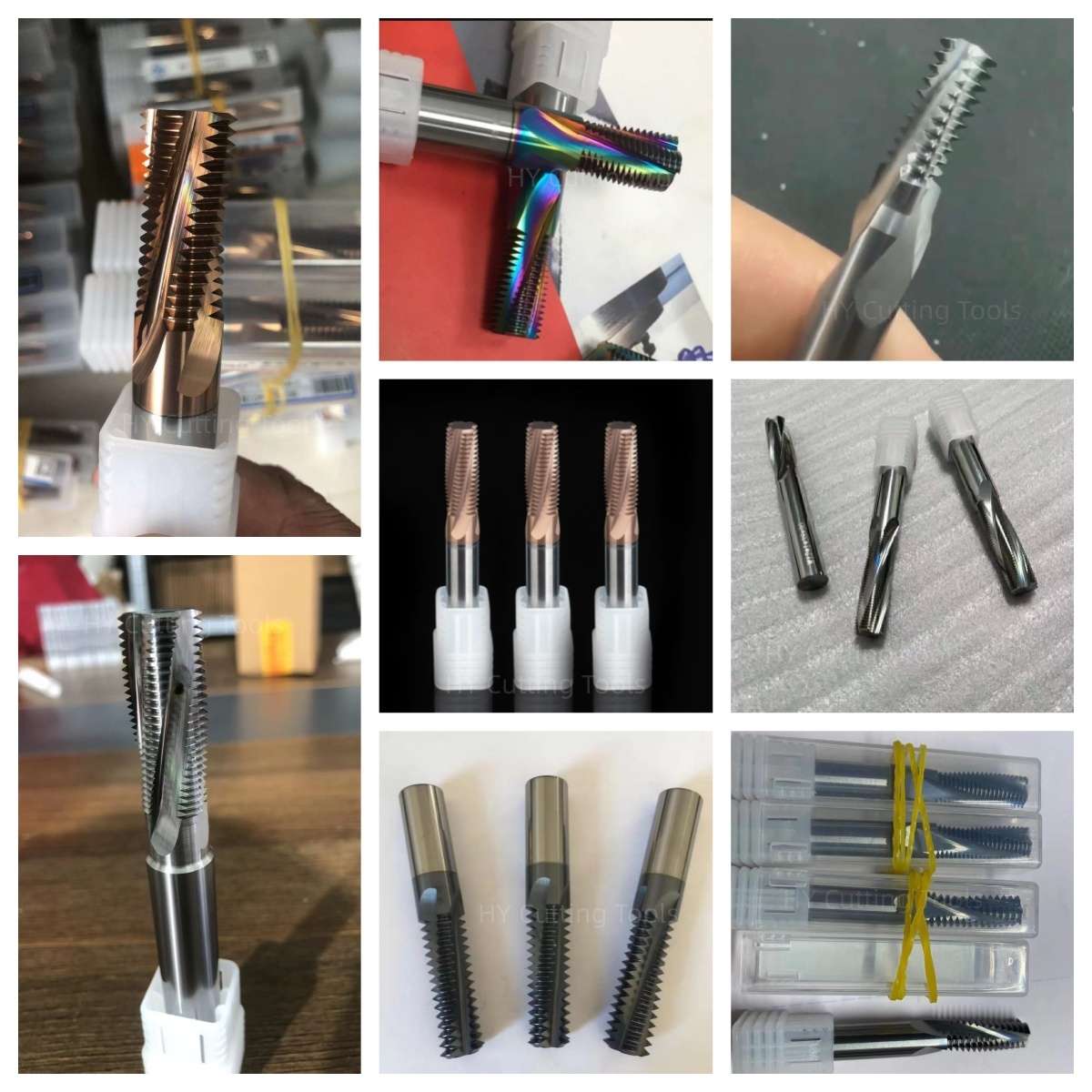
ดอกกัดเกลียวโซลิดคาร์ไบด์
Compare available thread forms, pitches and working dimensions.
View thread mill options →
Have a Drawing to Review?
Send your drawing or reference, material and required quantity.
Submit your custom tool request →04Agree the Inspection Requirements
Before manufacture, agree what will be checked, the applicable limits and how each feature will be measured.
- Tooth geometry Profile, row spacing and critical local features against the approved drawing.
- Working dimensions Cutting diameter, cutting length, neck clearance, shank and overall length.
- Measurement method Agreed references, measuring locations and methods for critical features and runout.
- First-part acceptance Applicable standard and gauging for standard threads; agreed dimensions, methods and limits for special profiles.
For repeat orders, use the approved drawing number and revision, including any agreed changes following the first trial.
05Prepare Your Custom Thread Mill Enquiry
You can start with these three items. Mark missing specifications for discussion instead of guessing.
Explain the change you need: for example, a profile mismatch, insufficient reach or restricted access. Identify the dimensions that must stay fixed and those needing a proposal.
Additional details that help the technical review
- หัวข้อ: complete designation, tolerance class, hand and required thread length.
- Internal feature: prepared-hole diameter, depth and through- or blind-hole condition.
- Existing tool: full model code, readable markings, photos or sample dimensions.
- การตั้งค่า: holder, overhang, access restrictions and coolant where known.
- คำสั่งซื้อ: destination, required timing and any agreed inspection records.
For distributors, forwarding the end customer’s original thread detail helps avoid losing a pitch, tolerance or depth requirement during transcription. Redact information that is not needed for the review.
06Questions Before Ordering
Can you make a thread mill with a special profile or different working length?
Yes. Custom threading tools can be reviewed for changes to the profile, diameter, cutting length, reach and shank. Send the required thread details and any access restrictions so we can assess the proposed design.
What if I only have a part drawing or an existing cutter?
You can start with the part drawing, photographs or existing tool details. If important dimensions are missing, an existing cutter or physical sample can be evaluated. The manufacturing specification needs to be confirmed before production.
Can the same cutter cover different thread sizes?
Some designs can machine several diameters within a compatible thread form and pitch. For a multi-row cutter, the fixed tooth spacing limits pitch compatibility. Send the required thread sizes so the profile, bore clearance and working reach can be checked.
Can I order a few pieces for testing first?
Yes. Small trial orders can be reviewed. Some custom tools can start at approximately three pieces, but the minimum for your thread mill depends on its dimensions and manufacturing requirements. Samples normally carry a charge, with freight paid by the buyer.
How long would a custom thread mill take?
The production schedule is confirmed after reviewing the design and coating requirements. Complex custom geometries need an individual lead-time assessment, so the general timing for simple custom tools should not be assumed for this cutter.
How will you handle my drawing and tool specifications?
Customer technical files are handled confidentially for quotation, manufacturing and quality checks. Please tell us about any additional confidentiality requirements before sharing the files.
Need Carbide Thread Mills for a Similar Requirement?
Send your thread drawing or existing tool details, workpiece material and quantity. Tell us which dimensions are fixed and where you need a proposed design.
คู่มือที่เกี่ยวข้อง
How to Choose a Thread Mill →
Review thread form, pitch, cutter style and working clearance.

Custom Cutting Tools Made to Drawing →
Prepare drawings, application details and the points needing advice.
ข้อมูลอ้างอิงทางเทคนิค: Sandvik Coromant’s thread milling guidance .