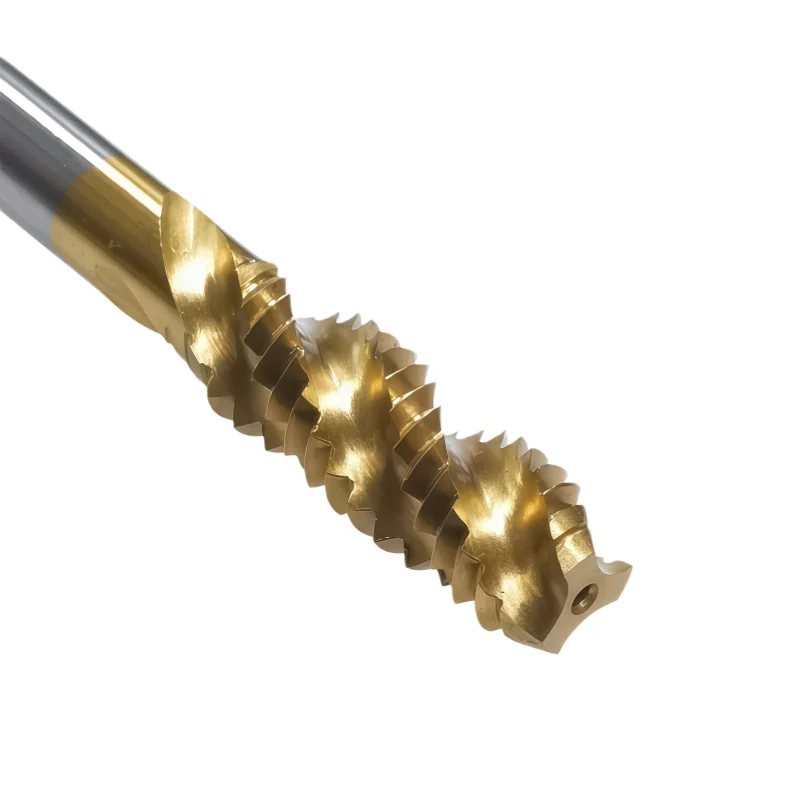


TiCN-Coated HSS-E Spiral Flute Taps – M2–M24
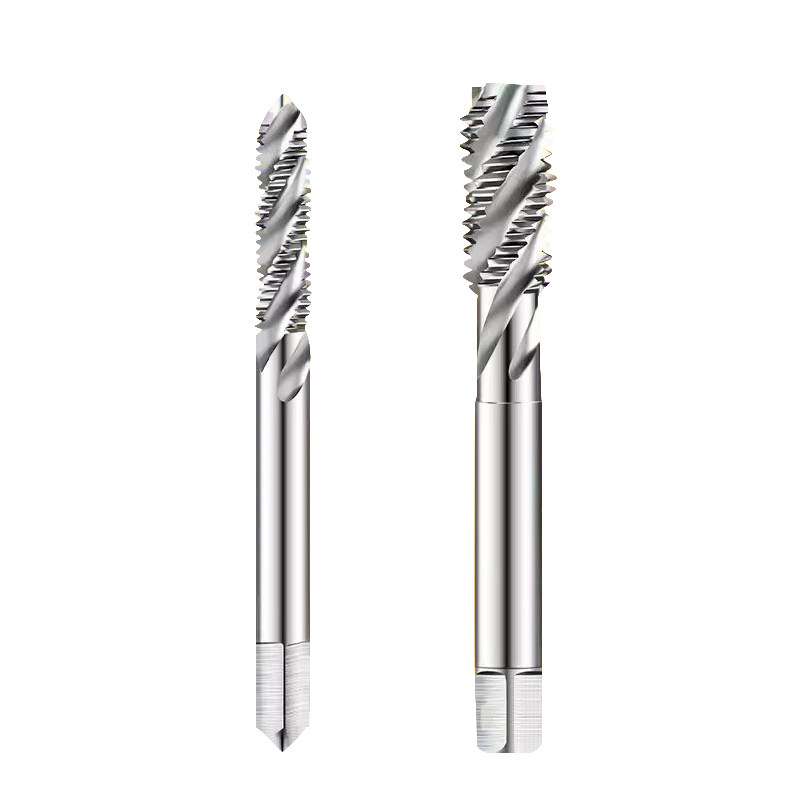
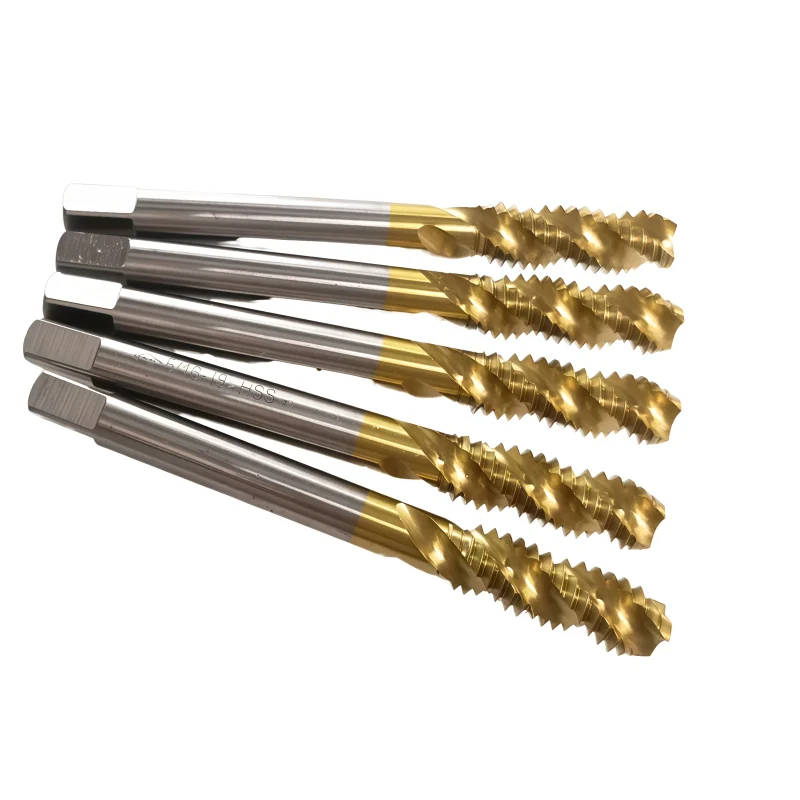
TiCN-coated HSS-E spiral flute machine taps for metric blind-hole threading from M2 to M24. The helical flute geometry carries chips back toward the shank for controlled evacuation from enclosed holes, while the HSS-E substrate and wear-resistant TiCN coating support stable production tapping across a broad range of metric thread sizes.
Product Specifications
10 Pieces per Size
1–3 Days for In-Stock Sizes
Dimensions / Thread Tolerance / Coating / OEM
Consistent Quality
Consistent geometry across repeat orders.
Flexible Orders
Small batches and mixed sizes available.
OEM Support
Custom marking, labels and packaging.
Standard & Custom
Standard sizes and custom configurations.
TiCN-Coated HSS-E Spiral Flute Taps – M2–M24
TiCN-coated HSS-E spiral flute machine taps for metric blind-hole threading from M2 to M24. The helical flute geometry carries chips back toward the shank and out of the hole, helping control chip accumulation in enclosed holes. HSS-E provides a tough high-speed steel substrate for production tapping, while the TiCN coating adds wear resistance for repeated machining. The series covers 16 metric coarse-thread sizes with specified flute length, shank diameter, overall length and recommended drill size.
Key Configuration
Helical flutes transport chips back toward the shank, supporting controlled chip evacuation during blind-hole tapping.
HSS-E combines toughness with improved heat and wear resistance for repeated machine-tapping applications.
TiCN provides a hard, wear-resistant coated surface intended to support longer service life under properly selected tapping conditions.
Key Product Advantages
Blind-Hole Tapping
Spiral flute geometry helps move chips away from the bottom of enclosed holes during thread cutting.
Wear-Resistant Coating
TiCN supports wear resistance during repeated production tapping when speed, lubrication and hole preparation are correctly controlled.
M2–M24 Size Range
Sixteen metric coarse-thread specifications cover small precision threads through larger M24 machine-tapping requirements.
Machine-Tapping Range
Designed for controlled CNC and tapping-center applications with synchronized feed, accurate alignment and suitable lubrication.
Tapping Applications
This series is primarily configured for blind-hole metric threading where chips need to be evacuated back through the flutes. Workpiece grade, hardness, hole depth, thread tolerance and lubrication should be confirmed before selecting production cutting conditions.
Application Note:
Blind-hole depth must include sufficient clearance for the tap lead and evacuated chips. Confirm the required full-thread depth and actual hole depth before production.
Workpiece Material Selection

| MATERIAL GROUP | TYPICAL MATERIALS | SELECTION NOTE |
|---|---|---|
| P Steel | Carbon and alloy steels | Suitable — confirm grade & hardness |
| M Stainless Steel | Selected stainless steel grades | Application review recommended |
| N Non-Ferrous | Aluminum and selected non-ferrous alloys | Confirm chip behavior & lubrication |
Material Note:
HSS-E and TiCN broaden the useful application range, but they do not make one geometry universal for every steel, stainless steel or non-ferrous grade. Confirm material grade, hardness and chip behavior before setting the tapping speed.
Product Details & Available Configuration
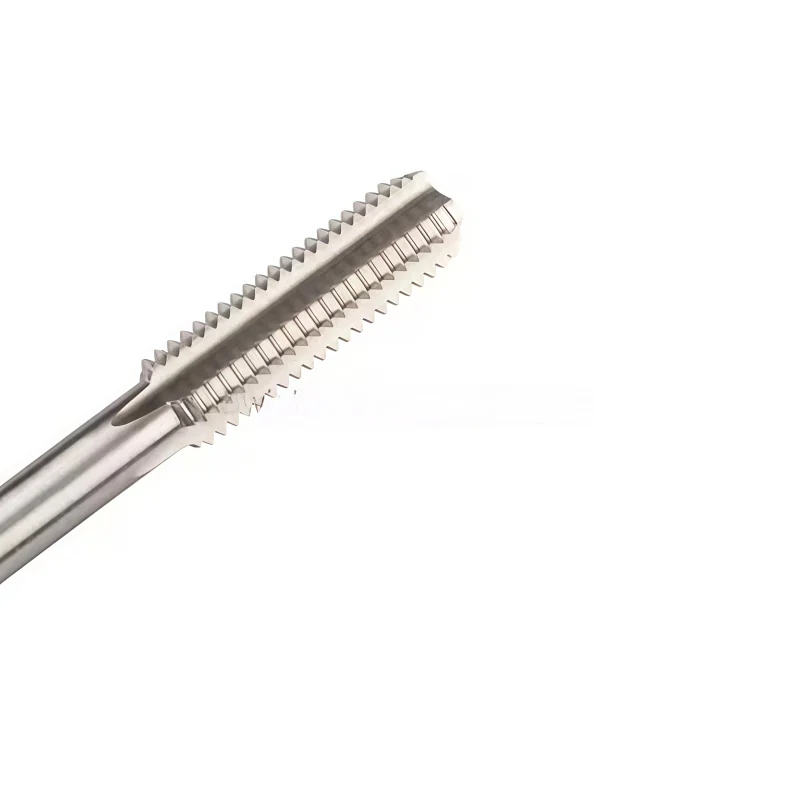
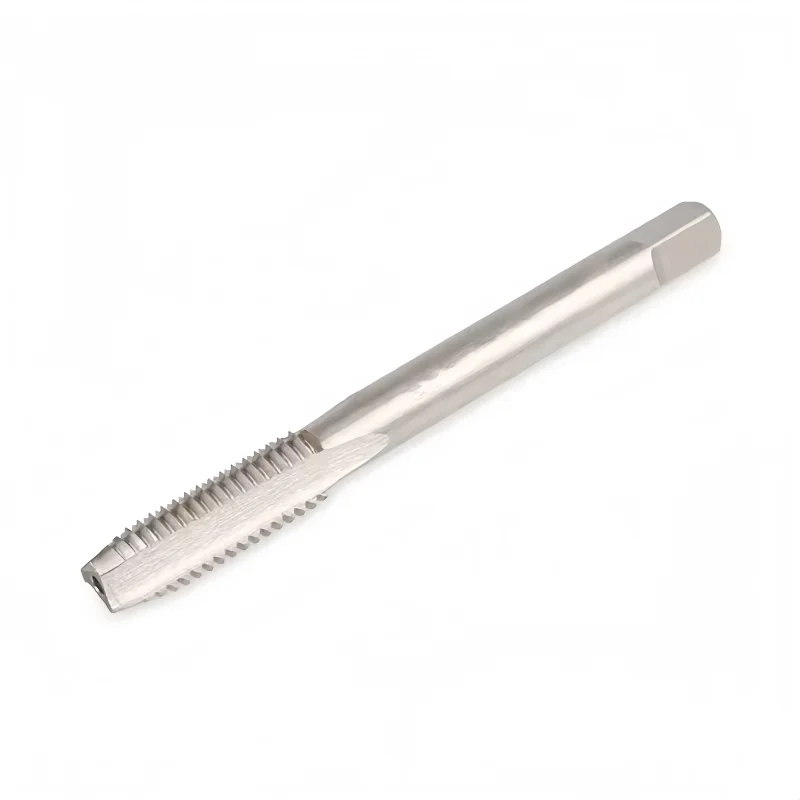
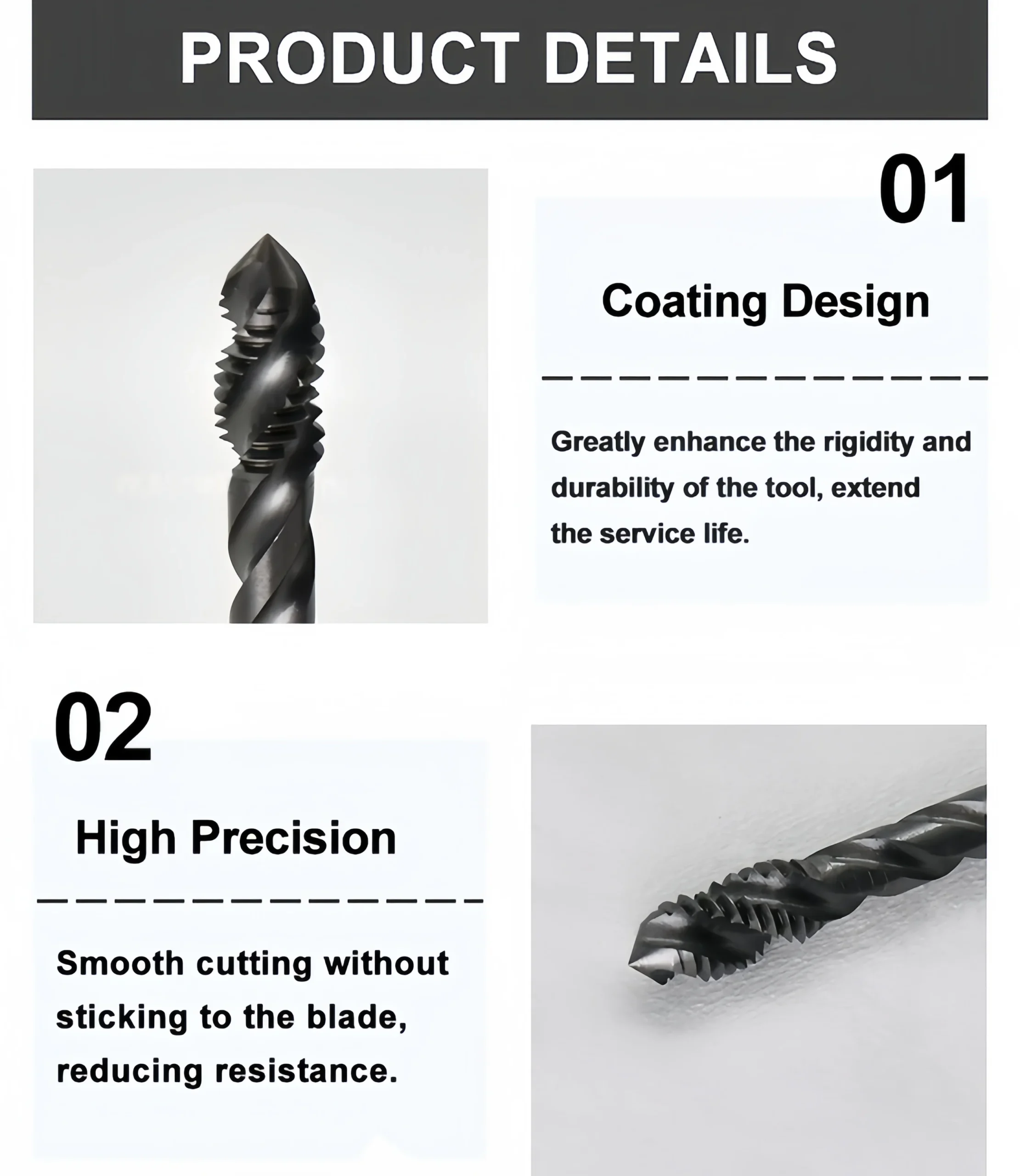
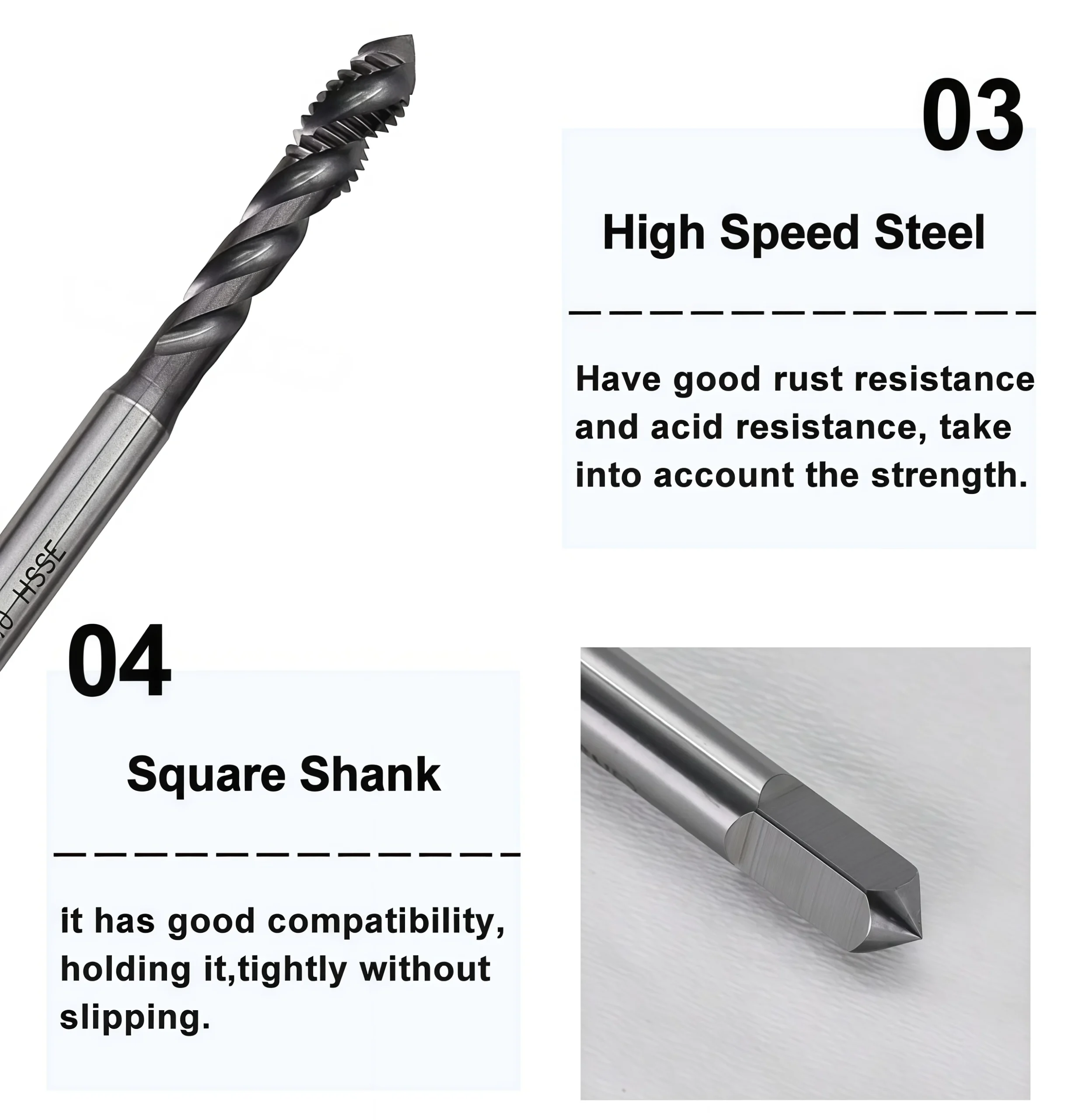
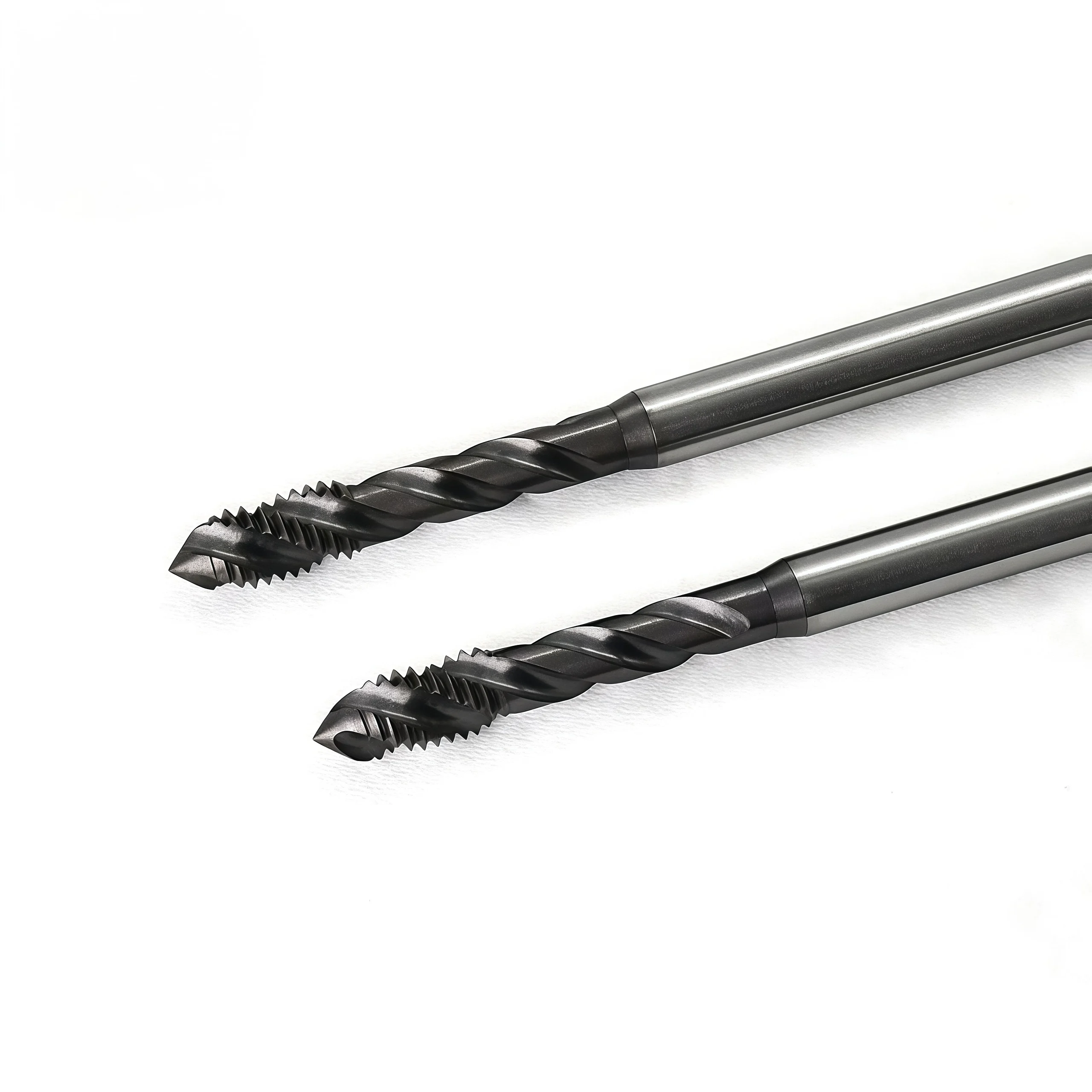
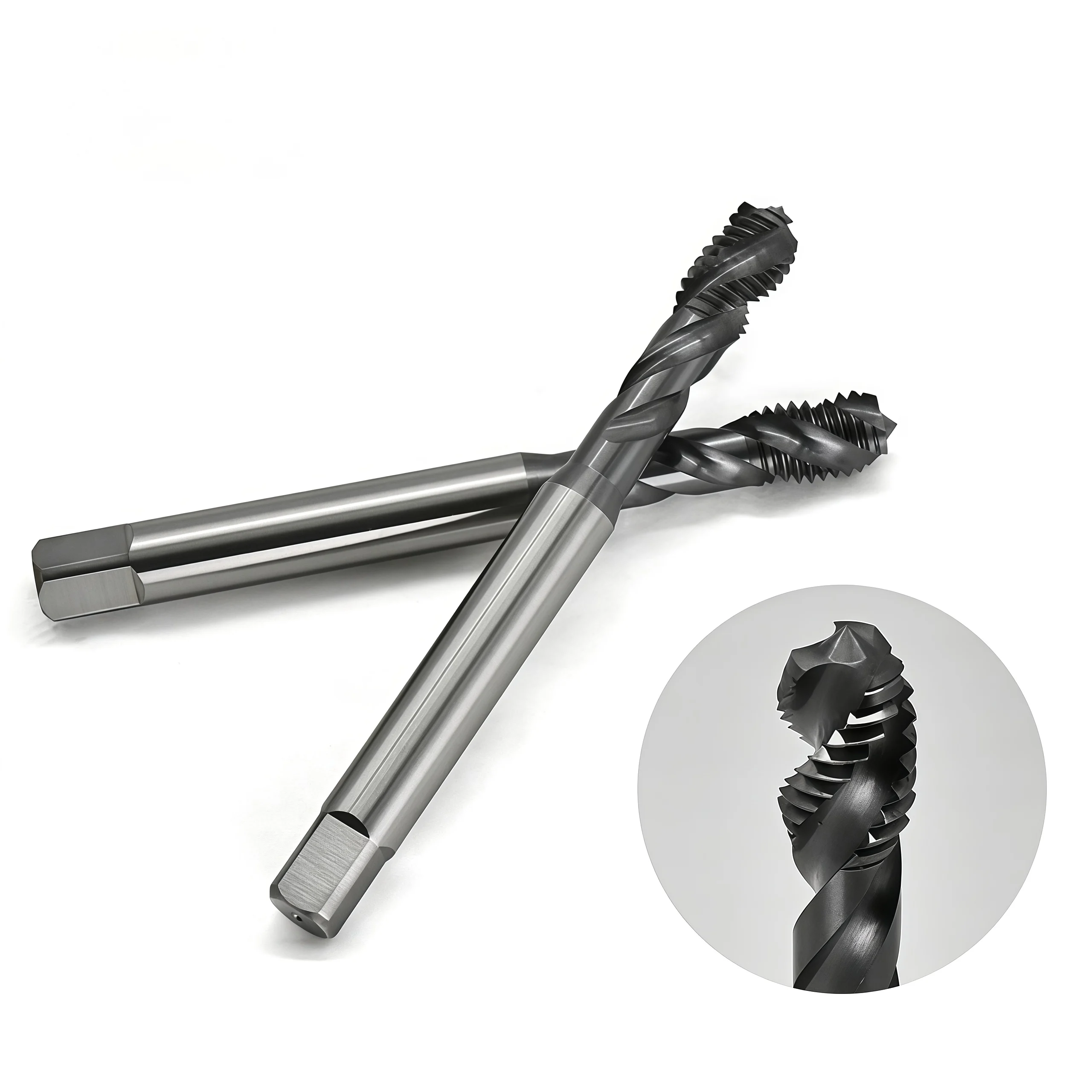
The product views below show the TiCN-coated HSS-E spiral flute tap configuration. Use the current M2–M24 size chart for dimensional selection and confirm thread tolerance, coating, hole depth and workpiece requirements when ordering.
HSS Spiral & Straight Flute Tap Product Video
For additional machine-tapping configurations, browse our HSS Tap Range.
M2–M24 Size Chart & Specifications
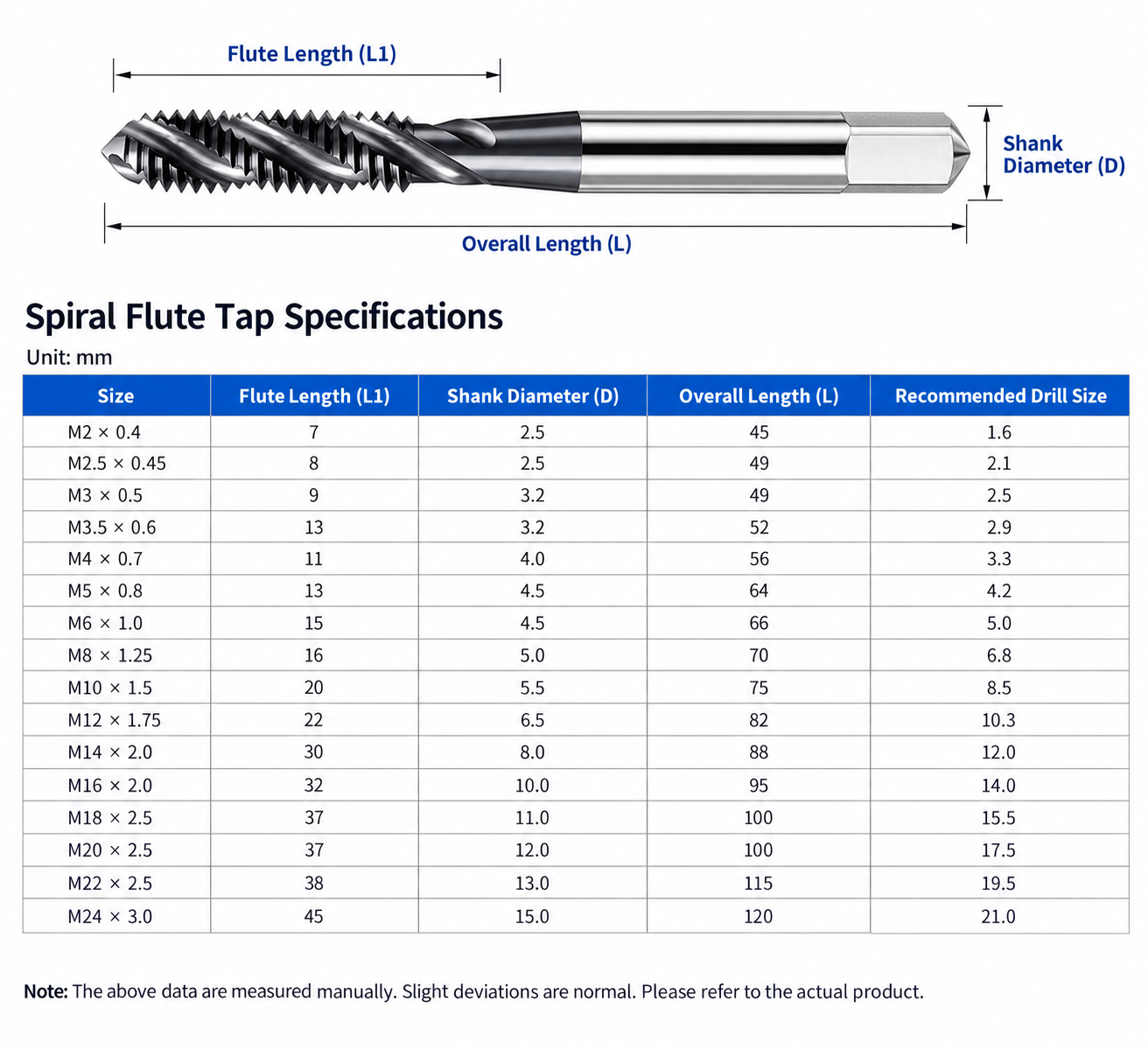
The series covers 16 metric coarse-thread specifications from M2 × 0.4 to M24 × 3.0. Flute lengths range from 7 to 45 mm, shank diameters from 2.5 to 15 mm and overall lengths from 45 to 120 mm. The chart also provides a recommended drill size for each thread. Confirm the required full-thread depth, thread tolerance, workpiece material and actual pilot-hole condition before production.
Complete Size Range
| Size | Flute Length L1 (mm) | Shank Dia. D (mm) | Overall Length L (mm) | Recommended Drill (mm) |
|---|---|---|---|---|
| M2 × 0.4 | 7 | 2.5 | 45 | 1.6 |
| M2.5 × 0.45 | 8 | 2.5 | 49 | 2.1 |
| M3 × 0.5 | 9 | 3.2 | 49 | 2.5 |
| M3.5 × 0.6 | 13 | 3.2 | 52 | 2.9 |
| M4 × 0.7 | 11 | 4.0 | 56 | 3.3 |
| M5 × 0.8 | 13 | 4.5 | 64 | 4.2 |
| M6 × 1.0 | 15 | 4.5 | 66 | 5.0 |
| M8 × 1.25 | 16 | 5.0 | 70 | 6.8 |
| M10 × 1.5 | 20 | 5.5 | 75 | 8.5 |
| M12 × 1.75 | 22 | 6.5 | 82 | 10.3 |
| M14 × 2.0 | 30 | 8.0 | 88 | 12.0 |
| M16 × 2.0 | 32 | 10.0 | 95 | 14.0 |
| M18 × 2.5 | 37 | 11.0 | 100 | 15.5 |
| M20 × 2.5 | 37 | 12.0 | 100 | 17.5 |
| M22 × 2.5 | 38 | 13.0 | 115 | 19.5 |
| M24 × 3.0 | 45 | 15.0 | 120 | 21.0 |
How to Select the Correct Spiral Flute Tap
Spiral Flute Tap Speed & Feed Setup
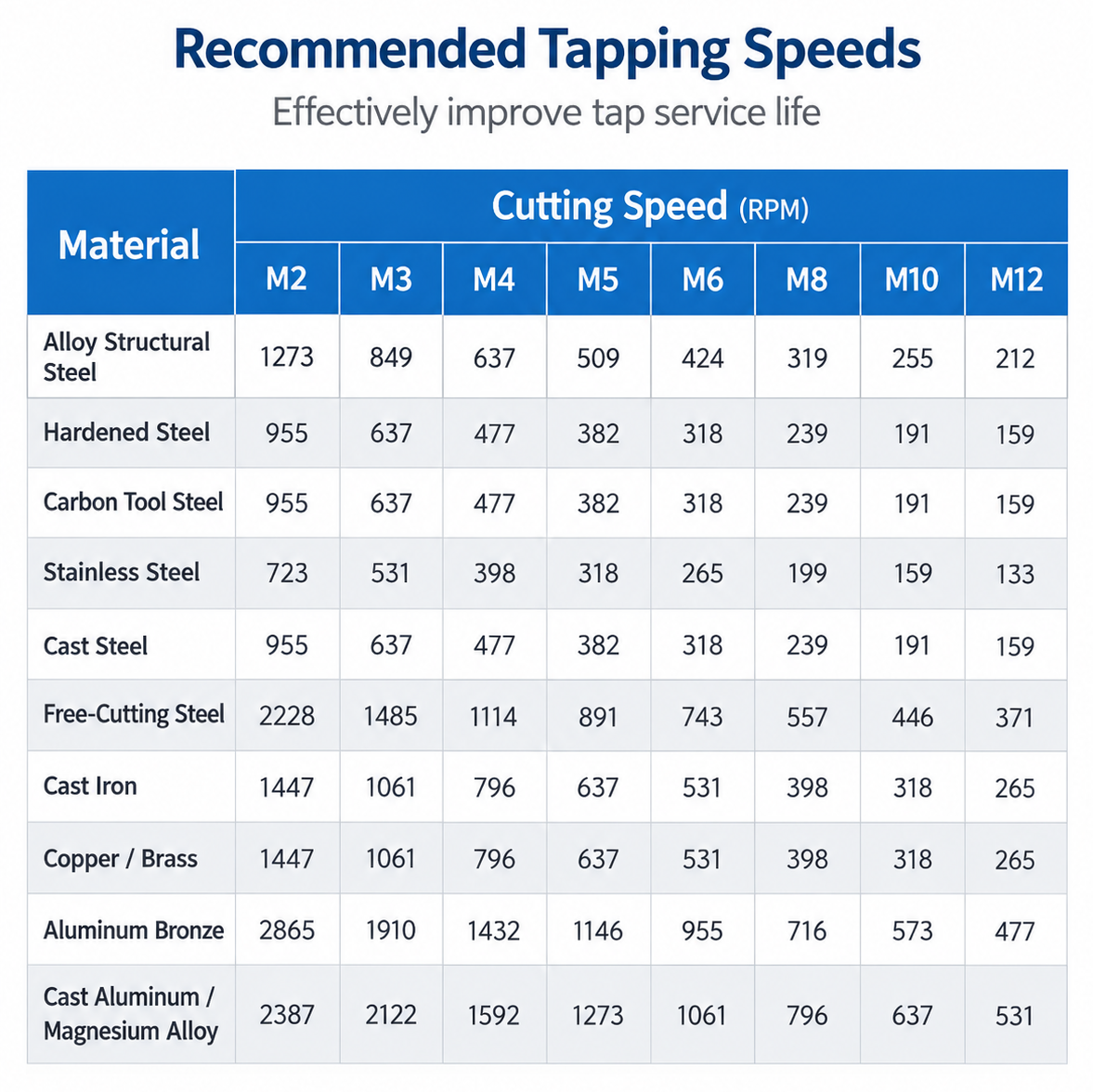
Starting speed should be selected according to the actual workpiece grade, hardness, tap diameter, TiCN-coated tool condition, blind-hole depth, lubrication and machine rigidity. Use application-specific cutting data whenever available rather than applying one speed to the complete M2–M24 range.
Setting Feed
 Feed per revolution:
For a single-start metric thread, synchronized feed per revolution must equal the thread pitch.
Feed per revolution:
For a single-start metric thread, synchronized feed per revolution must equal the thread pitch.
Feed calculation: Feed (mm/min) = spindle speed (RPM) × thread pitch (mm).
Example: For M6 × 1.0 at 300 RPM, synchronized feed is 300 mm/min. This is a feed-calculation example only and is not a recommended cutting speed.
For additional reference, see our HSS Cutting Tools Speeds & Feeds Guide .
For other HSS-E, spiral flute and machine-tapping configurations, browse our HSS Tap Range .
For general tool-material and application selection, see How to Choose HSS Cutting Tools .
View HY Taps Catalog — for additional tap series, sizes and threading configurations.
HSS Tap Customization
For requirements beyond the standard range, send your tap drawing or application details. Custom HSS cutting and forming taps can be reviewed for the following specifications.
| PARAMETER | CUSTOMIZATION OPTIONS |
|---|---|
| Thread Specification | Metric, UNC/UNF and pipe threads; special diameters, pitches and left-hand threads. |
| Thread Accuracy | Tap limits and oversize allowances to suit the required internal-thread tolerance and gauging requirements. |
| Tap Geometry | Straight flute, spiral flute, spiral point or forming design; chamfer and working geometry matched to the application. |
| Length & Reach | Overall length, threaded-section length and neck clearance to suit thread depth and component access. |
| Shank & Drive Square | Shank diameter, square dimensions and holding length to match the tapping holder. |
| Material & Surface Finish | HSS or cobalt HSS grades; uncoated, TiN or TiCN options, depending on the tap design and workpiece material. |
Options depend on tap type and size. Final specifications, minimum order quantity and lead time are confirmed with the quotation. Explore Custom Tooling Services
OEM & Private Label
Customer branding and packaging can be specified for distributor and tooling-brand orders.
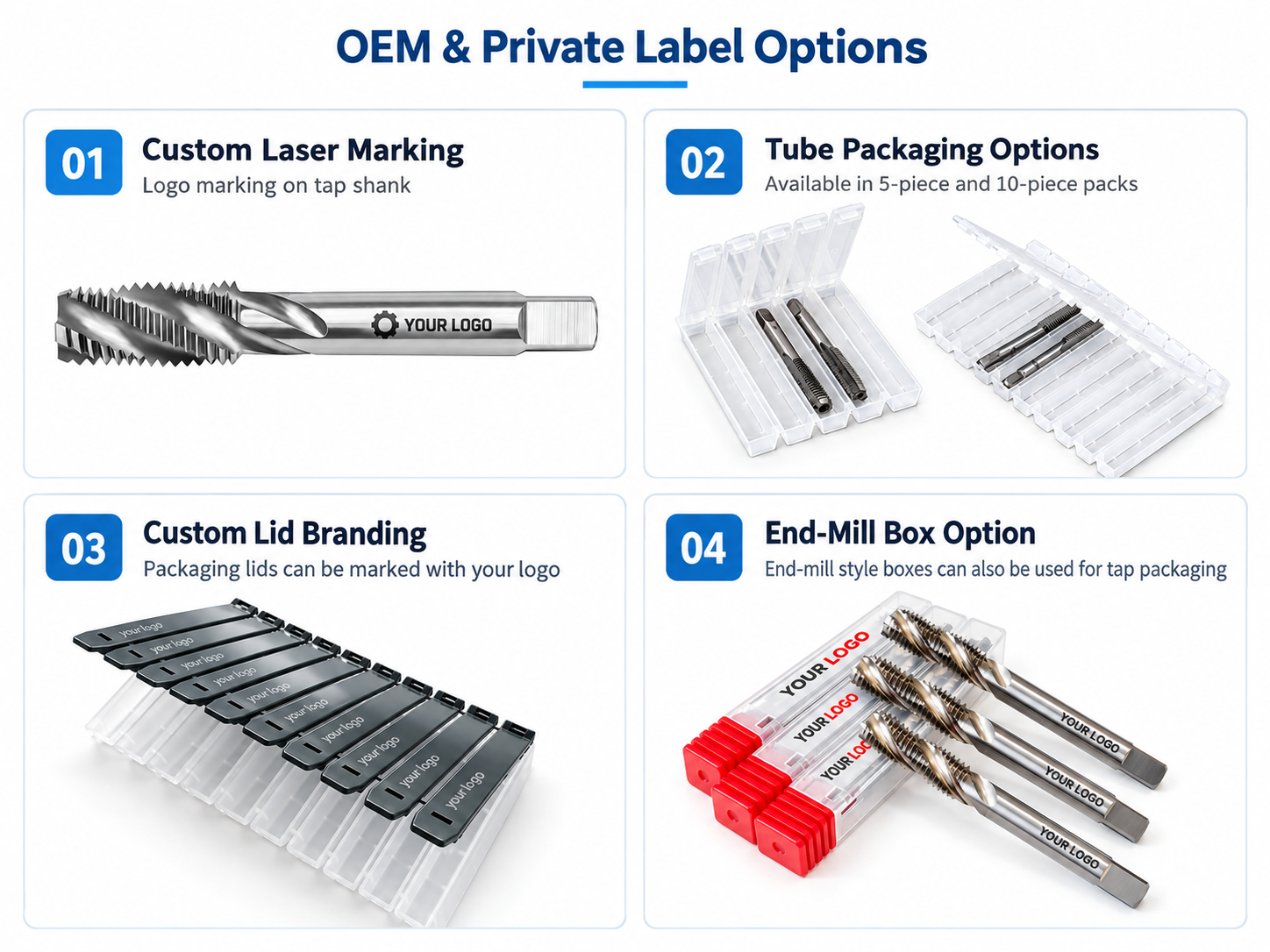
Laser marking: Logo, thread size, product code and batch identification, subject to available shank space. Labels & packaging: Protective tubes, product labels and branded packaging to the approved artwork.
For a quotation: Send a drawing or thread specification, required tolerance, workpiece material and hardness, blind or through-hole details, thread depth and quantity. Include machine, holder and lubrication details for application-specific requests.
HSS Tap Quality & Inspection
HSS cutting and forming taps are checked against the confirmed product specification or approved drawing. Material verification, in-process dimensional checks and final inspection focus on thread accuracy, tool geometry and consistent identification before packing.

Key Inspection Points
Inspection items and acceptance criteria depend on the tap type, size and agreed requirements.
| INSPECTION ITEM | CHECK POINTS |
|---|---|
| Material & Hardness | HSS or cobalt HSS grade and material records; hardness requirements and verification agreed for the selected grade. |
| Thread Form & Accuracy | Thread size, pitch, profile and specified tap limits against the confirmed specification or drawing. |
| Working Geometry | Flutes, spiral point and cutting edges for cutting taps; forming lobes and lubrication grooves, where present, for forming taps. Chamfer geometry checked for each design. |
| Tool Dimensions | Threaded-section length, overall length, shank diameter and drive-square dimensions. |
| Runout & Surface Condition | Specified runout, burrs, chipped edges and visible defects on cutting or forming surfaces. |
| Coating & Identification | Specified surface finish or coating, visible condition, tool marking and label accuracy. |
Inspection documentation: Specify any required material records, dimensional reports or sample-thread validation before ordering. Availability and inspection scope are confirmed with the quotation.
Packaging & Batch Identification
Individual protective packaging helps prevent damage to tap threads and working surfaces. Labels identify the tool specification and order or batch reference. Models, quantities and packing details are checked before dispatch.

Export Packing & Delivery
Outer cartons, cushioning and export packing are selected for the order quantity and shipping method. Dispatch dates, freight and payment terms are confirmed with the order.


FAQ & Technical Support
Selection, blind-hole preparation, chip evacuation and ordering guidance for M2–M24 TiCN-coated HSS-E spiral flute machine taps.
Product & Application FAQs
Which sizes are available in this series?
The size chart lists 16 metric coarse-thread specifications from M2 × 0.4 through M24 × 3.0. Flute lengths range from 7 to 45 mm, shank diameters from 2.5 to 15 mm and overall lengths from 45 to 120 mm.
Why are spiral flute taps commonly used for blind holes?
The helical flutes carry chips back toward the shank and out of the hole. This chip-flow direction is useful in blind holes because chips cannot pass through the bottom of the workpiece and need to be removed away from the cutting zone.
How deep can these taps thread a blind hole?
Usable full-thread depth depends on the tap size, flute length, cutting lead and available bottom clearance. The listed flute length should not automatically be treated as guaranteed full-thread depth. Confirm the required thread depth and provide additional space for the tap lead and evacuated chips.
What is the benefit of the TiCN coating?
TiCN provides a hard, wear-resistant coated surface that can help reduce cutting-edge wear during repeated tapping operations. Actual tool life still depends on workpiece material, hardness, pilot-hole accuracy, tapping speed, lubrication, alignment and hole depth.
Which workpiece materials can these taps be used for?
The product is intended for machine tapping in steels, selected stainless steels and other machinable metal grades where the spiral flute geometry and TiCN-coated HSS-E substrate are suitable. Confirm the exact material grade and hardness before selecting production cutting conditions.
How should I use the recommended drill sizes in the chart?
The listed drill diameters are starting reference values for the corresponding metric thread sizes. Confirm the actual pilot-hole diameter according to the required thread tolerance, workpiece material and gauging requirements. Verify the drilled hole and inspect a trial thread before batch production.
Can these spiral flute taps be used for through holes?
The series is primarily configured for blind-hole tapping because the spiral flutes evacuate chips toward the shank. A spiral point tap is generally a more application-specific choice for through holes when chips can be directed forward through the open bottom of the hole.
What machine setup and tapping conditions are required?
Use accurate tool alignment, a compatible tapping holder, synchronized feed and suitable tapping lubricant. Feed per revolution must match the metric thread pitch. Spindle speed should be selected according to the workpiece grade, hardness, tap diameter, blind-hole depth and machine rigidity.
Ordering & Customization FAQs
What information is needed for a quotation?
Provide the complete metric thread size and pitch, quantity per size, workpiece material and hardness, blind-hole depth, required full-thread depth and finished-thread tolerance. Include machine, holder, coating, marking, packaging or other special requirements when applicable.
Can dimensions, thread tolerance or OEM branding be customized?
Custom dimensions, metric thread specifications, thread tolerance, coating options, laser marking and packaging can be reviewed according to the application and order quantity. Critical dimensions and inspection requirements should be confirmed before production.
Are sample orders and mixed M2–M24 sizes available?
Sample and mixed-size orders can be reviewed. MOQ, stock availability and dispatch timing depend on the selected sizes, quantities and customization requirements. Send the required size-and-quantity list for confirmation.
Selection Guides
Use the HSS guide for general tool-material selection, compare tapping with thread milling where appropriate, and browse the HSS tap range for alternative blind-hole and through-hole tapping geometries.
Catalog & Technical Downloads
HY Taps Catalog (PDF)General tap series reference. Use this product page’s Specifications & Sizes section for the current M2–M24 dimensions and recommended drill sizes; specifications in other tap series may differ.
HSS Cutting Tools Speeds & Feeds Guide (PDF)General HSS tapping reference. Confirm starting conditions for the actual workpiece material, tap size and blind-hole depth. During synchronized tapping, feed per revolution must match the selected metric thread pitch.
Need Sizes, Pricing or Custom Options?
Send us the required tool type, sizes, quantities, workpiece material and any OEM or custom requirements. We will confirm suitable specifications, availability, lead time and quotation details.
Drawings, size lists and reference photos are welcome.