

HRC45-HRC65 4-Flute Solid Carbide Corner Radius End Mill for Steel and Mold Steel
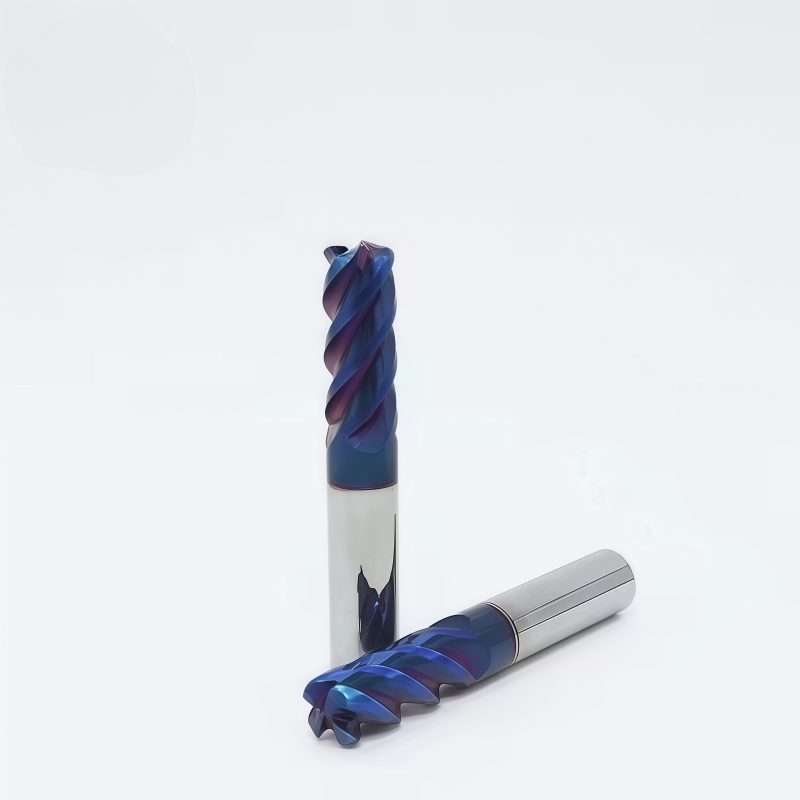
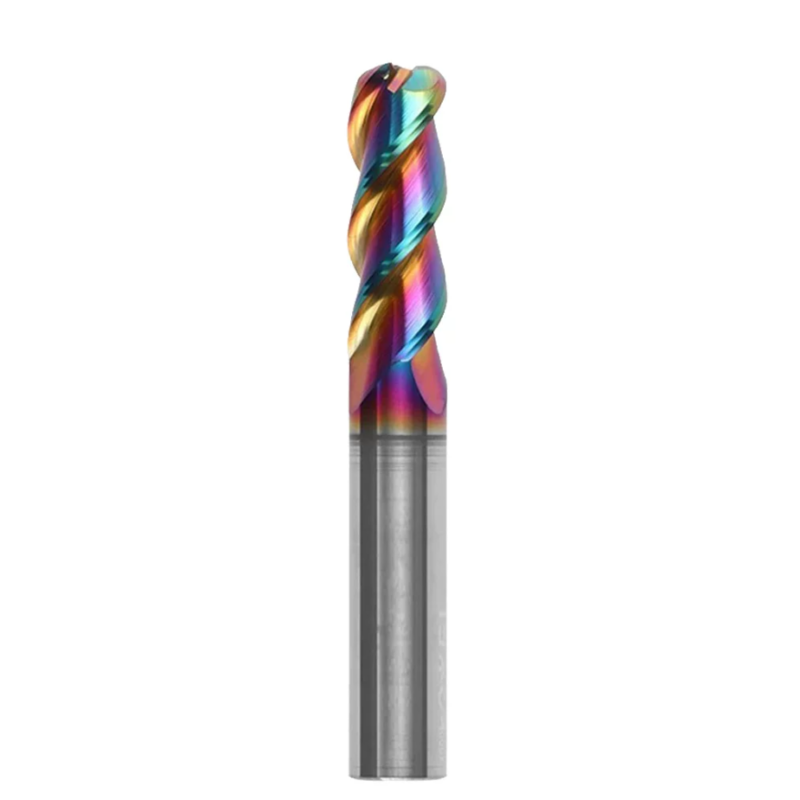
This solid carbide corner radius end mill is designed for stable and high-precision metal machining. The 4-flute geometry improves cutting efficiency and surface finish, while the corner radius enhances edge strength. Suitable for materials from HRC45 to HRC65 in CNC milling applications.
⚙️ Configurations de produits
-
Flûte Compte : 4 Flute
-
Hardness Range: HRC45 / HRC55 / HRC65
-
Helix Angle: Standard (optional variants available)
-
Overall Length: Standard / extended length
-
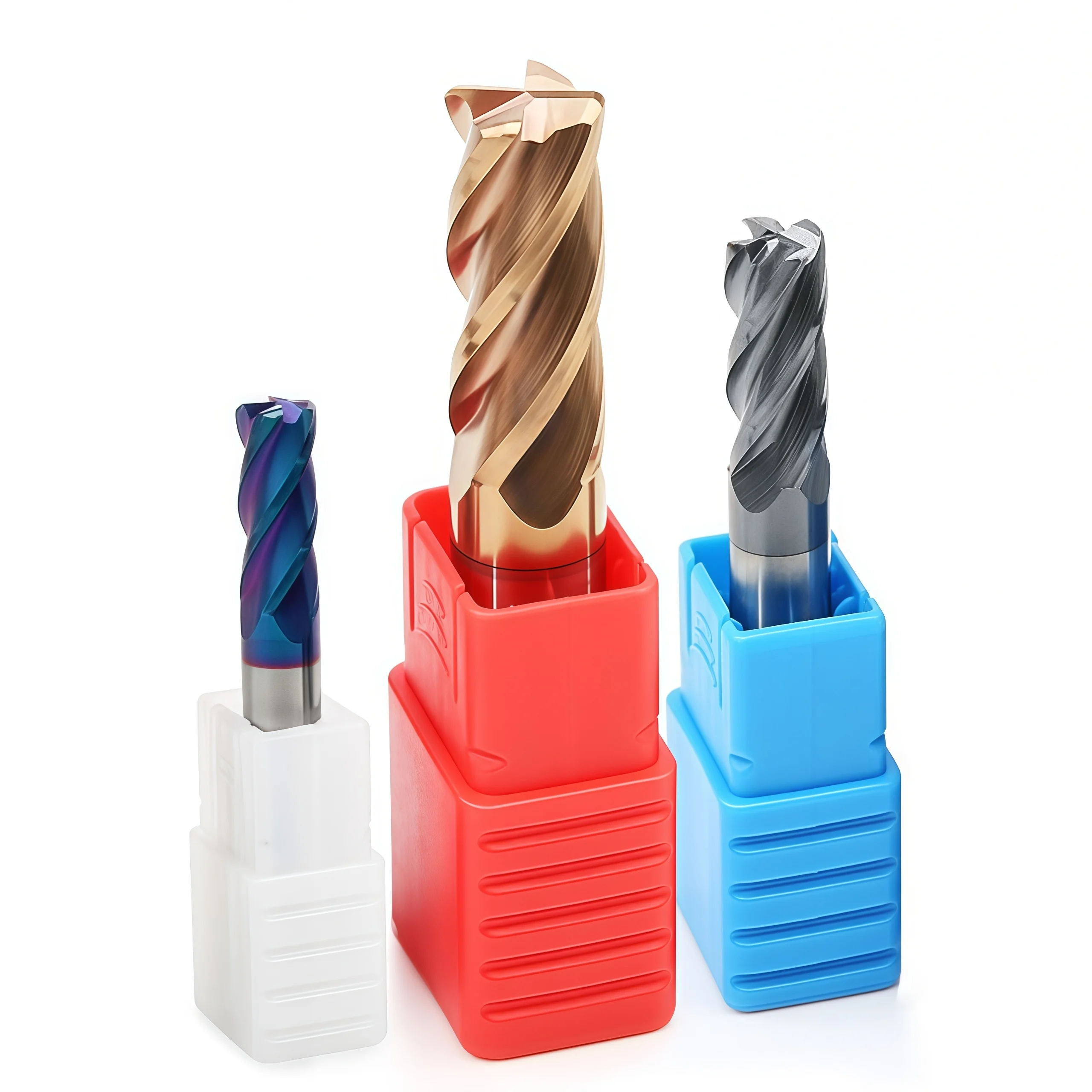
Coating Options: TiAlN / AlTiN / TiSiN / Uncoated
-
Matériel de candidature : Carbon steel, alloy steel, pre-hardened & hardened steel
-
Personnalisation : OEM / ODM disponibles
Une qualité constante
Une géométrie constante d'une commande à l'autre.
Commandes flexibles
Petits lots et formats variés disponibles.
Assistance OEM
Marquage, étiquettes et emballages personnalisés.
Modèles standard et sur mesure
Dimensions standard et configurations sur mesure.
HRC45–HRC65 4-Flute Solid Carbide Corner Radius End Mill Overview
This 4-flute solid carbide corner radius end mill series provides selectable HRC45, HRC55 and HRC65 configurations for carbon steel, alloy steel, tool and mold steel, and confirmed hardened-steel applications. Its reinforced corner radius improves edge strength and reduces chipping risk while retaining a flat-bottom cutting profile. The four-flute geometry supports stable side milling, pocketing, 2D/3D contouring and semi-finishing, with carbide grade, coating and edge preparation selected according to the workpiece hardness and cutting conditions.
Key Configuration
Reinforced Corner Radius
The radiused corner reduces local edge stress and chipping risk while maintaining a usable flat-bottom profile.
Four-Flute Cutting Geometry
Four cutting edges support productive side milling, profiling and semi-finishing with stable engagement.
Application-Matched Grade
Carbide grade, coating and edge preparation are selected for the confirmed steel hardness and operation.
Key Product Advantages
Stronger Corner
Improved corner strength compared with a sharp-edge square end mill.
Productive Engagement
Four flutes provide more cutting contacts per revolution for stable steel milling.
Three Grade Levels
HRC45, HRC55 and HRC65 options cover different hardness and application demands.
Flexible Configuration
Diameter, radius, length, coating and geometry can be reviewed for custom supply.
Recommended Milling Operations
The corner-radius profile is particularly useful where a sharp corner is unnecessary and improved tool-edge reliability is preferred.
Compatibilité avec les matériaux des pièces à usiner
| GROUPE DE MATÉRIAUX | EXAMPLES | APPLICATION LEVEL |
|---|---|---|
| P Carbon Steel | General carbon and structural steels | Primary application |
| P Alloy & Tool Steel | Alloy steel, tool steel and mold steel | Confirm grade and hardness |
| H Hardened Steel | Confirmed tool, mold and heat-treated steels up to the selected series level | HRC55/HRC65 review required |
Product Details & Milling Demonstration
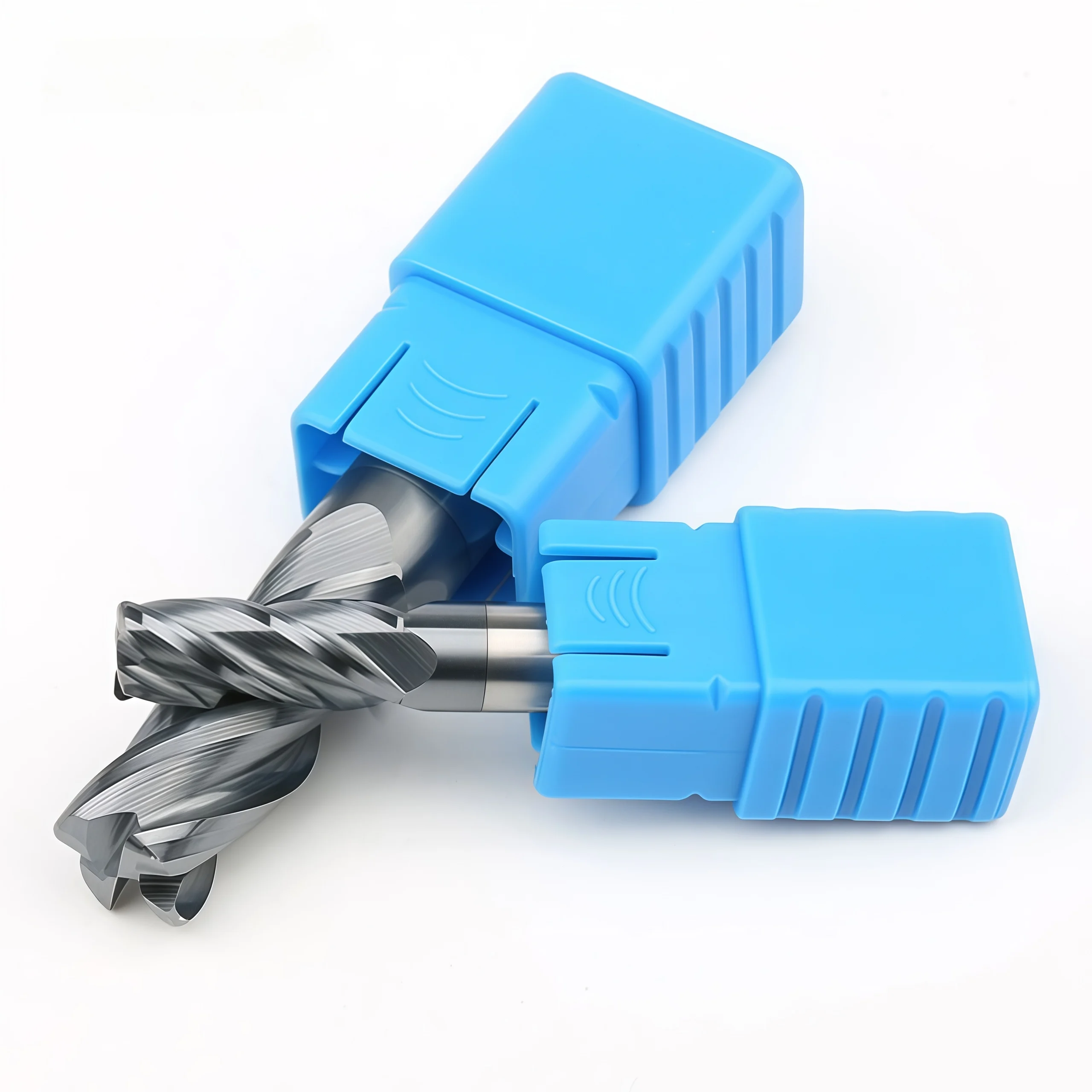
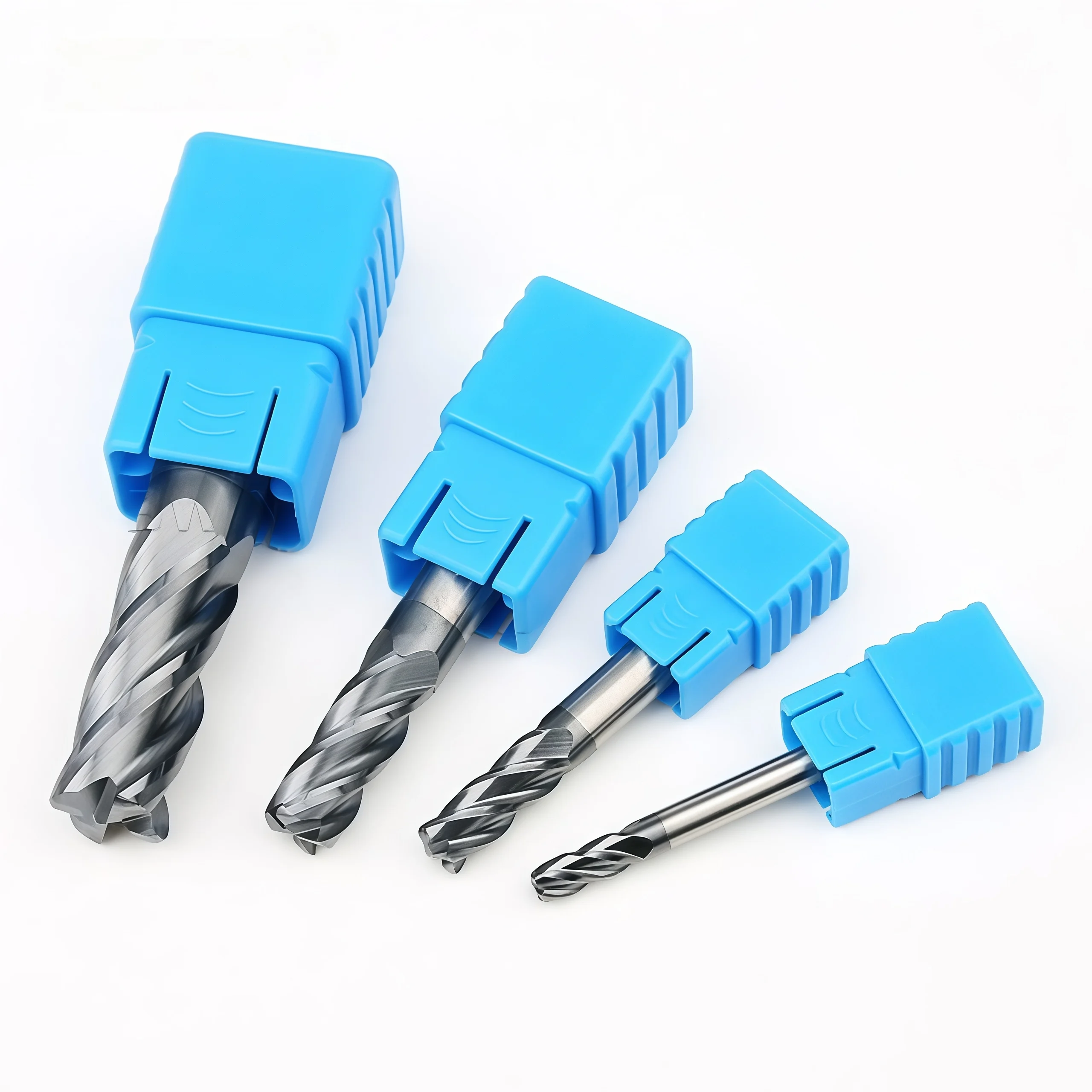

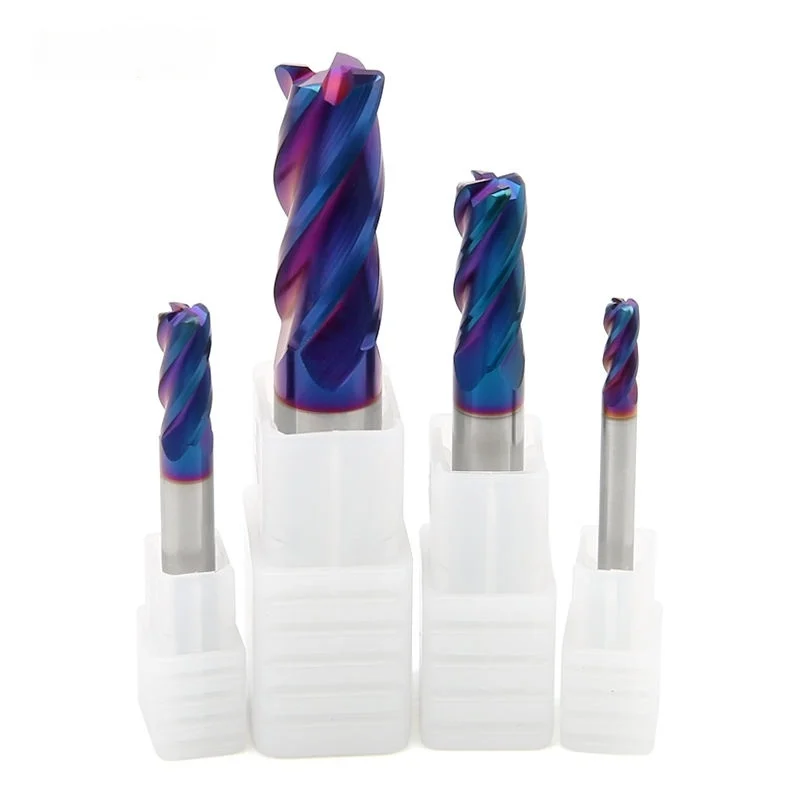
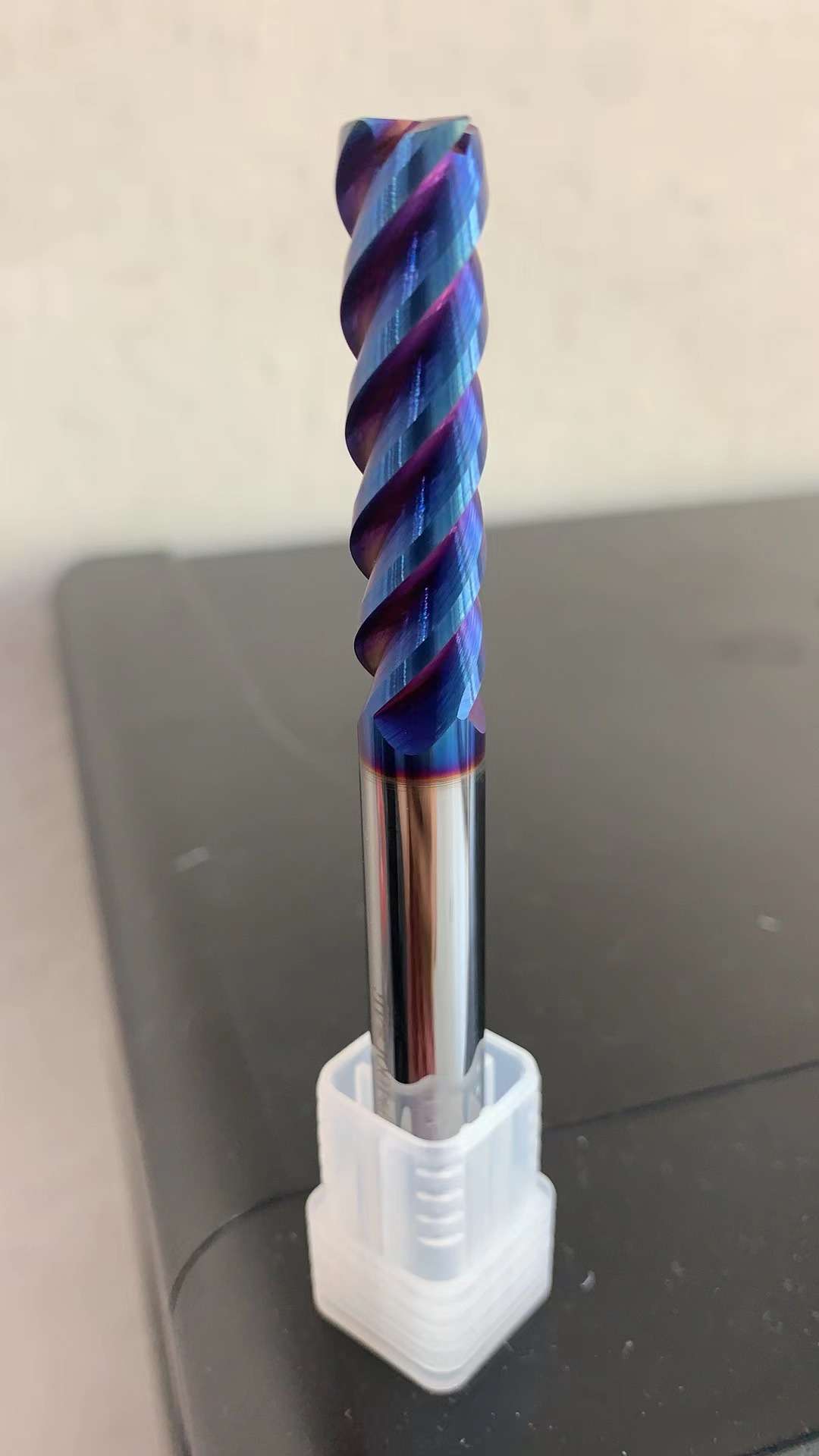
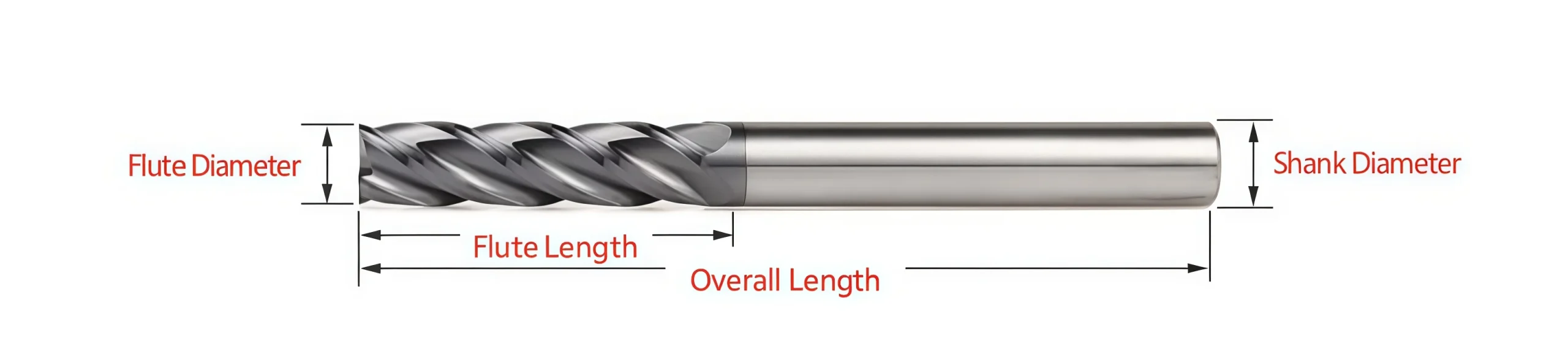
Tool Nomenclature & Dimensions
Reference dimensions and standard configurations for the HRC45–HRC65 4-flute solid carbide corner radius end mill series. All listed dimensions are in millimeters.

Configuration technique
| PARAMÈTRE | CARACTÉRISTIQUES TECHNIQUES |
|---|---|
| Matériau de l'outil | Micro-Grain Solid Carbide |
| End Profile | Flat Bottom with Reinforced Corner Radius |
| Hardness Series | HRC45 / HRC55 / HRC65 |
| Revêtement | Selected according to carbide grade, workpiece hardness and application |
| Nombre de flûtes | 4 cannelures |
| Standard DC Range | Ø1–Ø12 mm in the listed size matrix |
| Matières premières | Carbon Steel / Alloy Steel / Tool & Mold Steel / Confirmed Hardened Steel |
| Compatibilité des machines | CNC Machining Centers / Milling Machines |
| Custom Supply | Drawing-based diameter, radius, flute length, shank and overall-length configurations |
Standard Size Matrix
The configurations below are consolidated from the original product table. Model strings have been normalized to DC × R × DCON × OAL for clearer distributor and purchasing review. Select the carbide and coating series separately according to workpiece hardness.
| CARACTÉRISTIQUES TECHNIQUES | DC | R | DCON | OAL | FLUTES |
|---|---|---|---|---|---|
| Ø1×R0.2×D4×50L | 1 | 0.2 | 4 | 50 | 4 |
| Ø1.5×R0.2×D4×50L | 1.5 | 0.2 | 4 | 50 | 4 |
| Ø2×R0.2 / R0.3 / R0.5×D4×50L | 2 | 0.2 / 0.3 / 0.5 | 4 | 50 | 4 |
| Ø2.5×R0.2 / R0.5×D4×50L | 2.5 | 0.2 / 0.5 | 4 | 50 | 4 |
| Ø3×R0.2 / R0.5×D3×50L | 3 | 0.2 / 0.5 | 3 | 50 | 4 |
| Ø3×R0.2 / R0.3 / R0.5 / R1×D4×50L | 3 | 0.2 / 0.3 / 0.5 / 1 | 4 | 50 | 4 |
| Ø4×R0.2 / R0.3 / R0.5 / R1×D4×50L | 4 | 0.2 / 0.3 / 0.5 / 1 | 4 | 50 | 4 |
| Ø5×R0.5 / R1×D6×50L | 5 | 0.5 / 1 | 6 | 50 | 4 |
| Ø6×R0.2 / R0.3 / R0.5 / R1×D6×50L | 6 | 0.2 / 0.3 / 0.5 / 1 | 6 | 50 | 4 |
| Ø6×R0.2 / R0.5 / R1×D8×60L | 6 | 0.2 / 0.5 / 1 | 8 | 60 | 4 |
| Ø8×R1.5 / R2×D8×60L | 8 | 1.5 / 2 | 8 | 60 | 4 |
| Ø10×R0.5 / R1 / R1.5 / R2 / R3×D10×75L | 10 | 0.5 / 1 / 1.5 / 2 / 3 | 10 | 75 | 4 |
| Ø12×R0.5 / R1 / R2 / R3×D12×75L | 12 | 0.5 / 1 / 2 / 3 | 12 | 75 | 4 |
Hardness-Series Selection
| SERIES | SELECTION POSITIONING |
|---|---|
| HRC45 | General carbon and alloy steel under stable machining conditions |
| HRC55 | Tool steel, mold steel and selected pre-hardened steel applications |
| HRC65 | Confirmed hardened-steel finishing and light semi-finishing after technical review |
Corner Radius End Mill Application Guidance
- Radius Selection: Select an R value equal to or smaller than the required part fillet.
- Side Milling: Use appropriate radial engagement to benefit from the four-flute geometry and control cutting temperature.
- Pocket Machining: Confirm center-cutting and entry capability before plunging or helical interpolation.
- Toolholding: Use a low-runout holder and minimize unnecessary overhang, especially for small DC and small R sizes.
- Chip Control: Use air blow or a suitable coolant strategy to prevent chip recutting in enclosed pockets.
HRC45–HRC65 4-Flute Corner Radius End Mill Customization
Cutting diameter, corner radius, flute length, overall length, shank configuration, cutting-edge geometry, carbide grade and coating can be configured for steel-milling applications. HRC45, HRC55 and HRC65 series options are selected according to the workpiece grade and hardness, while non-standard dimensions and application-specific geometries can be reviewed according to the required part fillet, milling operation, tool engagement, machine rigidity and dimensional accuracy.
| PARAMÈTRE | CAPACITÉS DE FABRICATION |
|---|---|
| Hardness Series | HRC45, HRC55 and HRC65 configurations selected according to the actual workpiece grade, hardness, milling operation and required balance between cutting-edge strength and wear resistance |
| Cutting Diameter | Reference standard sizes cover selected cutting diameters from Ø1 to Ø12 mm, with intermediate and non-standard diameters available after drawing review |
| Corner Radius | Standard and drawing-defined R values can be produced according to the required component fillet, cutting-edge strength, machining allowance and surface transition |
| Nombre de flûtes | 4-flute configuration for side milling, pocket machining, contour milling, roughing, semi-finishing and selected finishing operations |
| Longueur de la cannelure | Standard, short-flute and drawing-defined flute lengths can be configured according to the machining depth, axial engagement and tool-rigidity requirement |
| Reach & Overall Length | Standard and extended-reach overall lengths can be reviewed according to the required machining depth, holder clearance and allowable tool overhang |
| Configuration de la tige | Precision cylindrical shanks with standard or drawing-defined diameter, clamping length and cutting-section transition |
| Corner-Radius Geometry | Reinforced transition between the end and peripheral cutting edges can be matched to the required part fillet while retaining a flat-bottom cutting profile |
| Une préparation à la pointe de la technologie | Rake geometry, relief geometry, edge honing and corner preparation can be adjusted according to the selected hardness series, cutting load and surface-finish requirement |
| Carbide Grade | Micro-grain carbide grades can be matched to the HRC45, HRC55 or HRC65 series according to the required toughness, hardness resistance and machining stability |
| Choix du revêtement | AlTiN, TiAlN, TiSiN, AlTiSiN or another application-specific coating can be selected according to the workpiece hardness, cutting temperature, coolant method and required tool life |
| Milling Application | Geometry can be optimized for side milling, pocket machining, 2D and 3D contouring, roughing, semi-finishing and finishing; slotting requires additional chip-evacuation and engagement review |
| Tolérance dimensionnelle | Drawing-defined requirements for cutting diameter, corner radius, flute length, shank diameter, overall length, cutting-edge runout and profile accuracy |
Services OEM et de marque de distributeur
OEM manufacturing and private-label supply are available for industrial distributors, tooling brands and repeat-production customers. The selected HRC series, corner-radius specification, coating identification, laser marking, product labels and protective packaging can be configured according to the approved tool drawing and order requirements.

Gravure au laser
Custom logos, tool codes, cutting diameter, corner radius, HRC series, coating identification and batch numbers can be marked according to the available shank area.
Étiquettes et emballages personnalisés
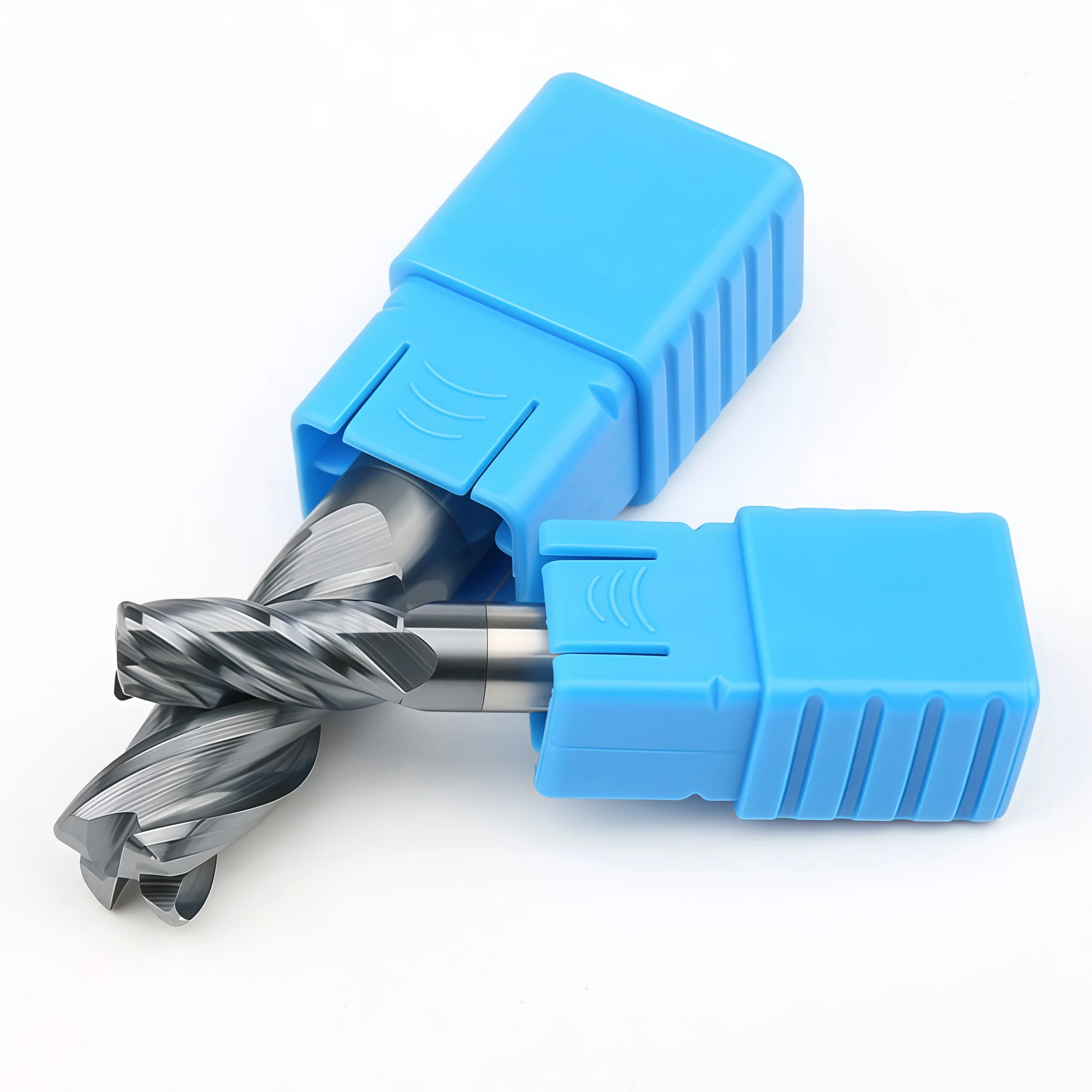
Individual protective tubes, specification labels, hardness-series identification, colored packaging tubes and private-label packaging can be reviewed.
Coating & Series Identification
Coating appearance, HRC-series labeling and product codes can be coordinated to help distributors distinguish different application grades.
Conditions commerciales
La quantité minimale de commande (MOQ), l'évaluation des échantillons, les essais de dimensions personnalisées, les commandes répétées et les programmes d'approvisionnement planifiés sont confirmés en fonction de la configuration choisie.
Processus technique
A structured review process is used to confirm standard, customized and private-label corner radius end mill requirements before production.
Demande de renseignements
Veuillez indiquer le matériau, la dureté, l'opération de fraisage, les dimensions, les tolérances et la quantité.
Ingénierie
Vérifier la géométrie de la canule, l'angle d'hélice, la préparation des bords, le revêtement, ainsi que les paramètres ap et ae.
Commercial
Confirmez le devis, la quantité minimale de commande (MOQ), les exigences relatives aux échantillons, le calendrier de production et les conditions de livraison.
Production
Rectification CNC, usinage des faces d'extrémité, préparation des arêtes, revêtement et marquage laser.
Contrôle qualité
Vérifiez le diamètre, la longueur de la rainure, la tige, le faux-rond, la géométrie de l'extrémité carrée et les arêtes de coupe.
Qualité, contrôle et livraison
Nos fraises à bout carré en carbure monobloc font l'objet d'un contrôle comprenant la vérification des matériaux, la rectification de précision, des mesures en cours de fabrication et un contrôle final. Les dimensions clés, la géométrie du bout carré, l'état des arêtes de coupe, l'aspect du revêtement et l'identification du produit sont vérifiés conformément au cahier des charges ou au plan approuvé avant l'emballage.

Contrôle qualité en trois étapes
Des points de contrôle sont mis en place tout au long du processus de fabrication afin de garantir la cohérence dimensionnelle et de faciliter le suivi des commandes récurrentes.
Contrôle des entrées de marchandises
La qualité du substrat en carbure, les dimensions des ébauches et les informations relatives au matériau fourni sont vérifiées par rapport aux exigences de production.
Contrôle du broyage en cours de fabrication
Le diamètre de coupe, la géométrie des goujures, la longueur des goujures, le profil de l'extrémité carrée et les dimensions de la tige sont contrôlés pendant le meulage CNC.
Inspection finale des outils
Les outils finis font l'objet d'un contrôle portant sur les cotes spécifiées, le faux-rond, l'état des arêtes de coupe, l'aspect du revêtement, le marquage et l'identification sur l'emballage.
Caractéristiques clés d'inspection
Les exigences en matière d'inspection sont définies conformément au cahier des charges standard du produit ou au plan personnalisé approuvé.
| POINT D'INSPECTION | POINT FORT : LE CONTRÔLE | BASE DE CONFIRMATION |
|---|---|---|
| Diamètre de coupe (DC) | Diamètre et homogénéité dimensionnelle | Cahier des charges standard ou plan homologué |
| Longueur de la flûte (APMX) | Longueur de coupe effective | Dimensions du produit confirmées ou exigences relatives au dessin |
| Diamètre de la tige (DCON) | Dimensions de la section de serrage et état de surface | Spécifications applicables à la tige |
| Longueur totale (OAL) | Longueur totale de l'outil | Matrice aux dimensions standard ou plan homologué |
| Faux-rond radial | Concentricité entre la partie coupante et la tige | Exigence d'inspection convenue |
| Géométrie à extrémité carrée | Profil de la face d'extrémité, état des angles et forme de la coupe centrale | Configuration de l'outil sélectionnée |
| Profil cannelé et hélicoïdal | Nombre de cannelures, forme de l'hélice et régularité de l'affûtage | Configuration de fabrication approuvée |
| Techniques de découpe et de revêtement | État des bords, défauts visibles et aspect du revêtement | Exigences de production spécifiques à l'application |
| Marquage et identification | Code de l'outil, dimensions et informations sur le lot, le cas échéant | Confirmation de la commande et spécifications d'emballage |
Mesure et traçabilité des lots
Les systèmes de mesure optique, les équipements de contrôle des outils et les jauges dimensionnelles adaptées sont choisis en fonction de la caractéristique à contrôler.
Mesure optique
Vérification du profil et des cotes des éléments de découpe spécifiés.
Vérification du faux-rond
Contrôle de la concentricité sur la base des exigences convenues pour le produit.
Inspection des bords
Examen approfondi de l'état de la face d'extrémité, des angles et du tranchant.
Identification des lots
Les informations relatives à la commande, au produit et au lot sont associées lorsque cela est nécessaire pour assurer la continuité de l'approvisionnement.
Procédé d'emballage de protection
Les fraises finies sont protégées afin de limiter le contact entre les arêtes de coupe et de garantir une identification claire des produits pendant le stockage et le transport.

Emballage pour commandes en gros et exportation
Les expéditions en vrac peuvent être organisées à l'aide de cartons renforcés, d'emballages de protection, d'un chargement sur palettes ou de caisses d'exportation, en fonction de la quantité commandée, du poids de l'envoi et des exigences de transport convenues.

Coordination des livraisons
La finalisation de la production, le mode d'emballage et les modalités d'expédition sont confirmés conformément à la commande validée. Les options d'expédition (par coursier, par avion, par voie maritime ou selon les instructions du client) peuvent être examinées en fonction du volume de l'envoi et de sa destination. Le délai de livraison définitif est confirmé une fois que les spécifications du produit, la quantité et les exigences d'emballage ont été validées.
FAQ et téléchargements
Review common product, application and ordering questions for the HRC45–HRC65 4-flute solid carbide corner radius end mill series, then access the current end mill catalog and starting cutting-data guide.
FAQ sur les produits et leurs applications
Selection guidance for different steel hardness levels and corner-radius milling applications.
What is the difference between the HRC45, HRC55 and HRC65 series?
The three series use application-oriented carbide, cutting-edge and coating configurations for different workpiece hardness levels. HRC45 is generally selected for carbon and alloy steel, HRC55 for tool steel, mold steel and selected pre-hardened steel, and HRC65 for confirmed hardened-steel finishing or light semi-finishing. Final selection should be based on the actual material and hardness.
Does the HRC rating guarantee machining at that exact hardness?
No. The HRC rating indicates the product-series positioning rather than a universal machining guarantee. Actual performance depends on the steel grade, operation, cutting diameter, corner radius, cutting data, holder runout, tool overhang, machine rigidity and coolant strategy.
What materials can this corner radius end mill machine?
The series is intended for carbon steel, alloy steel, tool steel, mold steel, pre-hardened steel and selected hardened steel. Please provide the exact workpiece grade and hardness so the appropriate HRC series, coating and cutting geometry can be confirmed.
What is the advantage of a corner radius end mill?
The corner radius reinforces the transition between the end and peripheral cutting edges. It helps reduce stress concentration and edge chipping compared with a sharp-corner square end mill while retaining a flat-bottom profile for pockets, steps and contour features.
How should I select the correct corner radius?
Select a cutter radius equal to or smaller than the required internal fillet of the component. A larger R value generally increases corner strength, but the cutter cannot produce an internal fillet smaller than its own radius. A component drawing is recommended when the fillet dimension is critical.
Which machining operations are suitable for the 4-flute design?
The 4-flute geometry is suitable for side milling, pocket machining, 2D and 3D contouring, roughing, semi-finishing and selected finishing operations. Four cutting edges provide stable engagement and productive feed capability when radial engagement and chip evacuation are properly controlled.
Can this 4-flute end mill be used for full-width slotting?
Selected configurations can be used for slotting, but a 4-flute cutter has less chip space than a 2-flute cutter. Use reduced engagement, suitable cutting parameters and reliable chip removal for full-width slots. Center-cutting and plunge capability should be confirmed for the selected configuration.
FAQ sur les commandes et la personnalisation
Ordering information for distributors, tooling brands and customers requiring standard or drawing-based configurations.
What standard sizes are available?
The reference matrix covers selected cutting diameters from Ø1 to Ø12 mm with multiple corner radii, shank diameters and overall lengths. Availability should be confirmed using the complete specification, including DC, R, flute length, DCON, OAL and required HRC series.
Can non-standard sizes and geometry be manufactured?
Yes. Cutting diameter, corner radius, flute length, reach, shank diameter, overall length, cutting-edge preparation, flute geometry and coating can be reviewed according to the tool drawing, component drawing and machining application.
Can I order samples before placing a wholesale order?
Yes. Sample orders can be reviewed according to the required HRC series, cutting diameter, corner radius, coating and quantity. Please contact us to confirm sample availability, cost and shipping arrangements.
What is the lead time?
In-stock standard sizes are generally ready for shipment within 1–3 days. Lead time for customized or made-to-order tools is confirmed after reviewing the required dimensions, HRC series, coating, quantity and packaging requirements.
Proposez-vous le marquage OEM et le conditionnement sous marque de distributeur ?
Yes. Laser marking, customized tool codes, private labels, protective tubes and branded packaging are available for distributors, resellers and OEM orders. Final options depend on the tool size, marking area and order quantity.
What information is required for an accurate quotation?
Please provide the workpiece material and hardness, cutting diameter, corner radius, flute length, shank diameter, overall length, machining operation, axial depth ap, radial engagement ae, coating requirement, dimensional tolerance and order quantity. A tool or component drawing is recommended for custom projects.
Téléchargements techniques
Access current product-range information and starting cutting references for solid carbide end mill selection.
Solid Carbide End Mills Catalog
Product families, hardness series, flute options and reference sizes.
Guide des vitesses et des avances des fraises en bout
Starting cutting speeds, chip loads, engagement guidance and adjustment notes.
Cutting data are starting references only. Adjust the values according to the selected HRC series, cutting diameter, corner radius, workpiece hardness, engagement, tool overhang, holder condition and machine rigidity.
Vous avez besoin d'informations sur les tailles, les prix ou les options personnalisées ?
Veuillez nous indiquer le type d'outil requis, ses dimensions, les quantités, le matériau de la pièce à usiner ainsi que toute exigence spécifique à un équipementier ou toute demande sur mesure. Nous vous confirmerons les caractéristiques techniques adaptées, la disponibilité, le délai de livraison et les détails du devis.
Les croquis, les listes de dimensions et les photos de référence sont les bienvenus.