U Drill for Stainless Steel: 7 Proven Tips for Better Tool Life and Chip Control
Stainless steel is widely used in industries such as automotive, medical, food processing, energy, and general engineering. However, it is also one of the more challenging materials to drill. Heat buildup, long chips, work hardening, and unstable tool life often make stainless steel hole machining less predictable than drilling carbon steel or cast iron.
This is where a U drill for stainless steel can offer real advantages. With the right drill body, insert geometry, coolant strategy, and cutting parameters, a U drill can improve drilling efficiency, reduce tooling cost, and deliver more stable performance in batch production.
In this article, we will share 7 proven tips to help you get better tool life and chip control when using a U drill for stainless steel.
| Tip | Key Action | Main Benefit |
|---|---|---|
| 1 | Choose the right U drill diameter and depth | Better stability and more reliable drilling performance |
| 2 | Select suitable inserts for stainless steel | Longer tool life and improved cutting consistency |
| 3 | Use internal coolant whenever possible | Better heat control and chip evacuation |
| 4 | Optimize cutting speed and feed rate | More stable cutting and reduced insert wear |
| 5 | Focus on chip control | Less chip clogging and better hole surface quality |
| 6 | Reduce vibration and runout | Improved hole accuracy and insert life |
| 7 | Monitor insert wear and replace in time | More consistent results and lower risk of tool damage |
Why Stainless Steel Is Difficult to Drill
Stainless steel is known for its toughness, heat resistance, and corrosion resistance. While these properties are valuable in finished parts, they also make drilling more difficult.
During drilling, stainless steel tends to generate and retain more heat around the cutting zone. It also produces chips that are often long and sticky, which makes chip evacuation harder than in cast iron or other freer-cutting materials. In addition, some grades of stainless steel are prone to work hardening. If the cutting action becomes unstable, the material may harden and place even more stress on the inserts.
These machining characteristics can quickly lead to reduced tool life, poor hole quality, and inconsistent production results if the drilling setup is not chosen carefully.
Common Challenges in Stainless Steel Drilling
| Challenge | What It Means | Impact on Drilling |
|---|---|---|
| Heat buildup | Stainless steel tends to retain heat near the cutting zone | Faster insert wear and unstable performance |
| Work hardening | The material can harden during machining if cutting is unstable | More difficult cutting and shorter tool life |
| Long, stringy chips | Chips do not break as easily as in brittle materials | Poor chip evacuation and possible hole scratching |
| Built-up edge | Material may stick to the cutting edge during drilling | Reduced cutting efficiency and poorer hole quality |
| Vibration sensitivity | Stainless steel drilling is less forgiving of unstable setups | Rough hole surface and inconsistent results |
Is a U Drill Good for Stainless Steel?
Yes, a U drill for stainless steel can be an efficient and economical choice, especially for medium and larger diameter holes in repeat production.
Compared with standard drills, a U drill offers several practical advantages:
- Higher productivity in many drilling applications
- Replaceable inserts reduce tooling cost
- Easier maintenance compared with replacing a full solid tool
- Good performance for rough and semi-finish hole making
- Greater flexibility through insert selection for different stainless steel grades
In many holemaking applications, indexable drilling is commonly used for larger hole diameters, especially above 15 mm, where productivity and tool economy become more important.
That said, success depends on more than the drill body alone. Stainless steel drilling performance is strongly influenced by insert geometry, coolant delivery, machine rigidity, clamping stability, and cutting parameters.
Not sure which U drill is best for your application?
Tip 1: Choose the Right U Drill Diameter and Depth
The first step is to select the proper drill diameter and body length for the application.
A drill body that is longer than necessary may reduce rigidity and increase vibration. In stainless steel drilling, this often leads to unstable cutting, shorter insert life, and poorer hole quality. For many standard applications, a shorter and more rigid setup is the safer choice.
When choosing a U drill, consider:
- Hole diameter
- Hole depth
- Machine spindle condition
- Workpiece clamping stability
- Coolant availability
For shallower holes, shorter drill bodies are usually easier to control. For deeper holes, chip evacuation and coolant delivery become even more important. In many cases, the most stable solution is more valuable than the most aggressive one.
Tip 2: Select Suitable Inserts for Stainless Steel
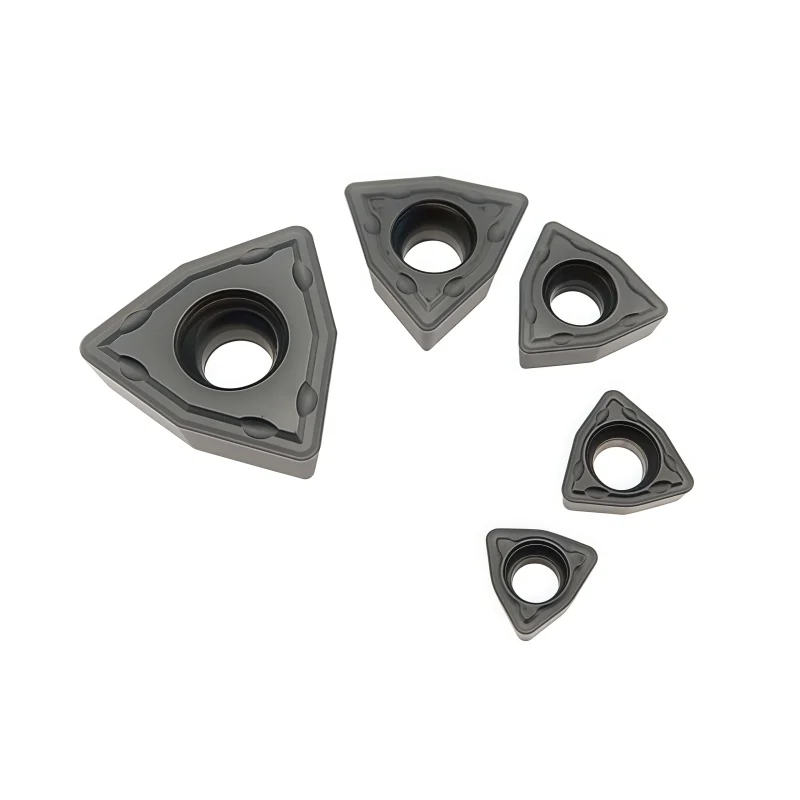
Insert selection has a major effect on tool life, cutting stability, and chip control.
When drilling stainless steel, the inserts should provide a good balance between wear resistance and toughness. If the cutting edge is too weak, it may chip too early. If it is too blunt, cutting heat may rise quickly and make chip control worse.
A suitable insert for stainless steel drilling should ideally provide:
- Smooth cutting action
- Good resistance to built-up edge
- Effective chip control
- A balance of toughness and wear resistance
- Stable performance at practical feed rates
Both center and peripheral inserts matter. If either one is not well matched to the material and working condition, the drilling result may become inconsistent.
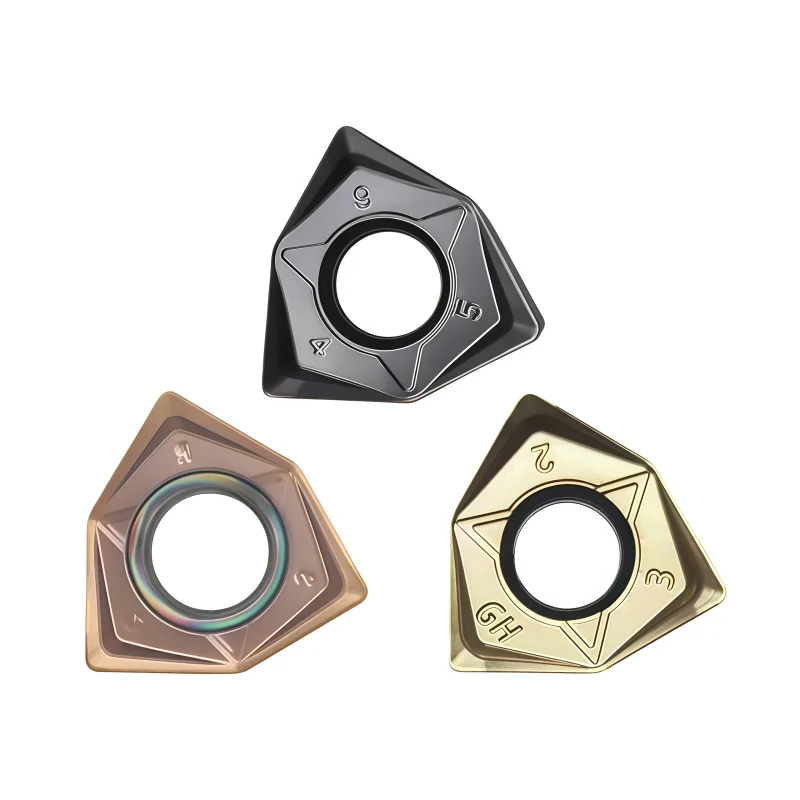
For stainless steel drilling, choosing the right insert is just as important as choosing the right drill body. You can also explore our indexable inserts to find suitable options for different machining conditions.
Tip 3: Use Internal Coolant Whenever Possible
Coolant is one of the most important factors in stainless steel drilling. Stainless steel tends to retain heat near the cutting zone, and chip evacuation is often more difficult than in short-chipping materials. Internal coolant is generally preferred because it helps reduce heat, improves chip evacuation, and lowers the risk of chip jamming. Dry drilling is generally not recommended for stainless steel applications, and stronger coolant delivery can significantly improve process stability, insert life, and hole quality.
Key benefits of internal coolant include:
- Better heat control
- Improved chip evacuation
- Reduced built-up edge
- More stable insert wear
- Better hole surface quality
If internal coolant is not available, the drilling process can still work, but cutting conditions often need to be more conservative. In such cases, chip evacuation should be monitored more closely.
Practical Parameter Notes for U Drill Applications in Stainless Steel
In many holemaking applications, indexable drilling is often the most efficient and economical solution for larger hole diameters, especially above 15 mm. For stainless steel drilling, however, process stability depends heavily on insert geometry, coolant delivery, and cutting data selection.
How to Calculate Speed and Feed
Spindle speed can be calculated as:
n = (1000 × vc) / (π × D)
Feed rate can be calculated as:
vf = n × fn
Where:
- vc = cutting speed (m/min)
- D = drill diameter (mm)
- fn = feed per revolution (mm/rev)
- n = spindle speed (rpm)
- vf = feed rate (mm/min)
These formulas are standard drilling calculations and provide a practical starting point for setting up cutting parameters.
Starting Adjustment Strategy by Hole Depth
| Drilling Depth | Suggested Starting Strategy |
|---|---|
| Up to 3×D | Use standard starting parameters |
| Over 3×D | Prioritize internal coolant and reduce aggressiveness if chip evacuation becomes unstable |
| Deeper hole applications | Increase attention to coolant delivery, chip control, and machine rigidity before increasing speed or feed |
As hole depth increases, chip evacuation becomes more difficult and process stability becomes more sensitive. Internal coolant is especially important for deeper holes and for long-chipping materials such as stainless steel. Guidance from major tooling suppliers emphasizes through-coolant particularly when drilling beyond about 3 × drill diameter.
Refer to the holemaking/insert drill from Walter.
Tip 4: Optimize Cutting Speed and Feed Rate
Even a high-quality U drill may not perform well if the cutting parameters are not suitable.
When using a U drill for stainless steel, excessive cutting speed often increases heat and accelerates insert wear. On the other hand, feed that is too low may cause rubbing instead of cutting, which can increase work hardening and reduce tool life.
A stable starting point is usually better than an aggressive one. After observing chip shape, insert wear, and hole quality, the parameters can then be adjusted step by step.
When optimizing cutting data, pay close attention to:
- Chip shape
- Cutting sound
- Insert wear pattern
- Hole surface finish
- Machine load
- Coolant performance
There is no single cutting parameter that suits every stainless steel grade, drill diameter, insert geometry, and machine condition. In practice, cutting speed and feed should be treated as starting values and then adjusted according to chip shape, insert wear, coolant effectiveness, and drilling stability.
Parameter Adjustment Priorities
| Problem Observed | Adjust First | Then Check |
|---|---|---|
| Excessive heat | Reduce cutting speed | Coolant delivery and insert suitability |
| Long, stringy chips | Review feed and chip control | Coolant direction and pressure |
| Built-up edge | Lower heat generation | Insert geometry and coolant condition |
| Rough hole surface | Check runout and feed stability | Insert wear and chip scratching |
| Short tool life | Review cutting speed and setup rigidity | Coolant effectiveness and insert choice |
When drilling stainless steel, parameter adjustment should not focus on speed alone. Chip shape, coolant effectiveness, insert wear, and setup rigidity should all be evaluated together. Troubleshooting guidance from major tooling suppliers consistently highlights chip control, coolant flow, and setup stability as key factors in drilling performance.
Tip 5: Focus on Chip Control
Chip control is often one of the biggest differences between stable drilling and recurring production problems.
In stainless steel, chips tend to be long and sticky. If they do not break properly or cannot evacuate smoothly, they may scratch the hole wall, damage the inserts, increase cutting heat, and eventually cause failure.
To improve chip control:
- Use inserts designed for stainless steel machining
- Ensure coolant reaches the cutting zone effectively
- Avoid unstable cutting parameters
- Stop and inspect when chips look abnormal
- Maintain a rigid and stable machine setup
Good chips are often a sign of a healthy drilling process. Poor chips are usually an early warning that something should be adjusted.
Tip 6: Reduce Vibration and Runout
Stainless steel drilling is much less forgiving when the setup is unstable.
Even slight vibration can cause uneven insert wear, rough hole surfaces, and premature edge chipping. Excessive runout may also place uneven load on the inserts and reduce process consistency.
To reduce vibration and runout:
- Minimize tool overhang
- Use a stable holder and clamping system
- Check spindle condition
- Secure the workpiece properly
- Avoid overly aggressive cutting conditions on weak setups
A stable setup helps improve both tool life and hole quality while making troubleshooting easier.
Tip 7: Monitor Insert Wear and Replace in Time
Many drilling problems become expensive only because inserts are replaced too late.
Once insert wear becomes severe, hole quality often declines first. Then chip control worsens, cutting heat rises, and the risk of damaging the drill body becomes higher.
Operators should monitor:
- Edge chipping
- Excessive flank wear
- Poorer surface finish
- Abnormal cutting sound
- Changes in chip shape
- Increased machine load
Timely insert replacement helps protect production stability and tool body life. In stainless steel drilling, problems can escalate quickly once edge condition becomes unstable.
Common Problems When Using a U Drill for Stainless Steel
In actual production, stainless steel drilling problems are often caused by a combination of heat, chip evacuation, insert selection, and setup rigidity. A simple troubleshooting table can help identify the root cause more quickly.
U Drill Troubleshooting for Stainless Steel
| Problem | Possible Cause | Suggested Solution |
|---|---|---|
| Built-up edge | Excessive heat, unsuitable insert geometry, or poor coolant delivery | Use suitable inserts, improve coolant supply, and optimize cutting parameters |
| Poor chip evacuation | Long chips, insufficient coolant pressure, or unstable cutting conditions | Improve chip control, check coolant flow, and adjust feed and speed |
| Short tool life | High cutting temperature, vibration, or incorrect insert choice | Improve setup rigidity, choose proper inserts, and reduce excessive heat |
| Rough hole surface | Insert wear, vibration, or chip scratching inside the hole | Check insert condition, reduce runout, and improve chip evacuation |
| Inconsistent hole quality | Tool runout, unstable clamping, or uneven insert wear | Improve clamping stability, control runout, and replace worn inserts in time |
Why Application Support Matters
For many buyers, the challenge is not simply purchasing a U drill. The real challenge is selecting a drilling solution that matches the actual machining condition.
Different stainless steel grades, machine types, coolant conditions, and production targets may require different drill body and insert combinations. That is why application support, insert recommendation, and parameter advice are often just as important as the tool itself.
A professional supplier should be able to help evaluate:
- Material type
- Hole diameter
- Hole depth
- Machine rigidity
- Coolant method
- Production volume
- Tool life target
- Cost-per-hole expectation
This kind of support can save testing time, reduce tooling waste, and improve production efficiency.
If your stainless steel drilling application involves specific hole sizes, depth requirements, or machine limitations, contact us for a more suitable drilling solution.
FAQ
Is a U drill good for stainless steel?
Yes. A U drill can be a good solution for stainless steel, especially in medium and large diameter drilling where productivity and insert economy are important.
What is the biggest challenge when drilling stainless steel?
Heat buildup and poor chip evacuation are two of the most common challenges.
Do I need internal coolant for a U drill for stainless steel?
Internal coolant is strongly recommended because it improves both heat control and chip evacuation. Dry drilling is generally not recommended for stainless steel.
Why is insert life short in stainless steel drilling?
Possible reasons include excessive heat, poor coolant delivery, unstable setup, unsuitable inserts, or incorrect cutting parameters.
Can a U drill replace a solid carbide drill in stainless steel?
It depends on the application. A U drill is often more economical in certain diameter ranges and batch production, while solid carbide drills may be preferred in some precision or smaller-hole applications.
Conclusion
Using a U drill for stainless steel successfully is not only about choosing a drill body. It is about matching the drill, inserts, coolant, and cutting conditions to the real machining environment.
When the setup is correct, a U drill can help improve productivity, control chips more effectively, and achieve better tool life in stainless steel applications. For manufacturers, distributors, and end users, that means more stable performance and lower drilling cost over time.
If you are looking for a suitable U drill for stainless steel, it is best to evaluate the full application rather than focusing on only one parameter.
Need help choosing the right U drill for stainless steel? Contact us with your material grade, hole diameter, hole depth, machine type, and coolant condition for application support and quotation.
Looking for more U drill options?