
Broca U para acero inoxidable: 7 consejos para mejorar la vida útil y el control de virutas
Short insert life, tangled chips and scratched holes are common reasons customers ask for a different U drill. Before recommending a replacement, confirm the stainless grade, hole size and current body and inserts. “Stainless steel” alone is not enough to select a suitable insert combination.
For a replacement, first check whether the existing body and insert stock can still be used. For a new drilling application, confirm the hole requirements, machine setup and coolant supply. The seven tips below explain what to check to improve tool life and chip control.
Respuesta rápida
For stainless-steel U drilling, check the complete tool system and machining conditions. Review these seven points before a trial or replacement.
Confirm diameter, usable depth and overhang.
Match grade, geometry and cutting position.
Check flow and pressure at the drill.
Use starting data for the tool and alloy.
Watch for wrapping, packing and scratching.
Check alignment, clamping and overhang.
Monitor both inserts before wear damages the body.
Índice
Seven tips for better tool life and chip control, followed by troubleshooting and buyer FAQs.
Why Stainless Steel Is Difficult to Drill
Stainless steels do not all machine the same way. Confirm the alloy and condition: 304, 316, duplex and hardened grades may need different insert choices and starting data.
Common austenitic grades can work-harden and form long, adhesive chips. Rubbing edges and poor chip evacuation can accelerate wear and damage the hole surface. Check the material, cutting edges and chip path together.
Common stainless-steel drilling problems
Heat buildup
Stainless steel tends to retain heat near the cutting zone.
Machining Impact
Faster insert wear and more frequent insert changes.
Work hardening
Austenitic stainless steels can work-harden during cutting, making subsequent cutting more difficult.
Machining Impact
More difficult cutting and shorter tool life.
Long, stringy chips
Chips do not break as easily as in brittle materials.
Machining Impact
Poor chip evacuation and possible hole scratching.
Borde reforzado
Material may stick to the cutting edge during drilling.
Machining Impact
Edge buildup, less predictable cutting and poorer hole quality.
Vibration sensitivity
Stainless steel drilling is less forgiving of unstable setups.
Machining Impact
Poor hole finish and variation between holes.
Is a U Drill Good for Stainless Steel?
Yes, a Broca en U para acero inoxidable can be an efficient and economical choice, especially for medium and larger diameter holes in repeat production.
For repeat purchasing, the useful features of an indexable U drill include:
- Replace worn inserts while retaining a serviceable drill body
- Specify the insert grade and geometry for the actual stainless material
- Record the approved body and insert combination for repeat orders
Check the available diameter range, usable depth and hole capability of the exact drill series before comparing it with other drilling methods.
Before promising longer tool life, check the insert geometry, coolant delivery, machine rigidity, clamping and cutting data. A replacement body alone may not resolve the customer’s machining problem.
Already have a model? Review My Current Model
Tip 1: Choose the Right U Drill Diameter and Depth
Confirm the required diameter and actual drilling depth with the end user, then check the usable depth on the body drawing. A diameter and a “3D” or “5D” description alone do not identify the complete tool.
A drill body that is longer than necessary may reduce rigidity and increase vibration. In stainless steel drilling, this often leads to unstable cutting, shorter insert life, and poorer hole quality. For many standard applications, a shorter and more rigid setup is the safer choice.
Before recommending a body, confirm:
- Hole diameter
- Hole depth
- Machine spindle condition
- Workpiece clamping stability
- Coolant availability
If you need to confirm the drill-body series, usable depth, machine interface and insert compatibility before ordering, start with our U Drill Selection Guide.

Tip 2: Select Suitable Inserts for Stainless Steel
When a customer reports short insert life, identify which insert position is affected before recommending a different grade or geometry.
When drilling stainless steel, the inserts should provide a good balance between wear resistance and toughness. If the cutting edge is too weak, it may chip too early. If it is too blunt, cutting heat may rise quickly and make chip control worse.
Before ordering inserts, confirm:
- The full insert code for each position
- The grade and chipbreaker recommended for the stainless material
- Compatibility with the drill body, pocket and screw
- The required quantity for each insert specification
Check the center and peripheral inserts separately. Their cutting speeds and loads differ, and the body’s approved combination may specify different grades or chipbreakers.
To compare common WC and SP systems before selecting a replacement, see our Comparación entre las brocas tipo WC y las tipo SP U.
Browse our Insertos U-drill to identify the family, then confirm the full code and grade against your body model.


Tip 3: Use Internal Coolant Whenever Possible
Coolant is one of the most important factors in stainless steel drilling. Stainless steel tends to retain heat near the cutting zone, and chip evacuation is often more difficult than in short-chipping materials. Internal coolant is generally preferred because it helps reduce heat, improves chip evacuation, and lowers the risk of chip jamming. Dry drilling is generally not recommended for stainless steel. Confirm adequate coolant flow and pressure at the tool; a high pump-pressure rating alone does not establish sufficient delivery.
Effective internal coolant can help with:
- Heat removal at the cutting zone
- Chip removal from the hole
- Lubrication to reduce material adhesion
If internal coolant is unavailable, confirm the selected tool’s requirements before use. External coolant may be suitable for shallow holes with reliable chip evacuation, where the tool supplier permits it. Reducing cutting speed alone does not establish suitability. See Sandvik Coromant’s coolant guidance for general principles.
If the customer is unsure about coolant capacity, ask for the machine’s through-tool coolant details and a description of delivery at the drill. Share these with the tool supplier before confirming suitability.
Tip 4: Optimize Cutting Speed and Feed Rate
Obtain starting cutting speed and feed for the exact body, insert combination and stainless grade. Include these recommendations with the trial tools.
When using a Broca en U para acero inoxidable, excessive cutting speed often increases heat and accelerates insert wear. On the other hand, feed that is too low may cause rubbing instead of cutting, which can increase work hardening and reduce tool life.
Inspect the chips, both cutting edges and hole quality during the trial. Change one setting at a time within the supplier’s recommended range so the results can be compared.
Record the following during the trial:
- Chip shape
- Cutting sound
- Insert wear pattern
- Hole surface finish
- Machine load
- Coolant performance
Keep the speed, feed and coolant conditions with the completed-hole count and the reason each insert was indexed or replaced. A claim such as “the insert only lasted 20 holes” is difficult to assess without those details.
When drilling stainless steel, parameter adjustment should not focus on speed alone. Evaluate chip shape, coolant delivery, wear on both inserts and setup rigidity together. Sandvik Coromant’s indexable-drill troubleshooting guidance gives separate checks for wear, chip jamming and unstable hole quality.
Cutting-data reference: formulas and depth checks
Use the recommended cutting data for the selected body and inserts. Check that it covers the actual stainless grade, hole depth and coolant conditions.
- vc = cutting speed (m/min)
- D = drill diameter (mm)
- fn = feed per revolution (mm/rev)
- n = spindle speed (rpm)
- vf = feed rate (mm/min)
Check the drilling depth
| Drilling Depth | Suggested Starting Strategy |
|---|---|
| Up to 3×D | Use the selected series’ starting data and verify coolant delivery and chip formation |
| Over 3×D | Prioritize through-tool coolant and verify the series’ depth capability; review geometry and cutting data if chips do not evacuate reliably |
As hole depth increases, chip evacuation becomes more difficult and process stability becomes more sensitive. Internal coolant is especially important for deeper holes and for long-chipping materials such as stainless steel. Guidance from major tooling suppliers emphasizes through-coolant particularly when drilling beyond about 3 × drill diameter.
For a series-specific example, see Walter’s D4120 cutting-data reference (PDF). Its values apply to the specified Walter system; request starting data for the drill body, inserts and stainless grade you plan to order.
Tip 5: Focus on Chip Control
Check chip evacuation during the trial before approving the tool for repeat supply. If chips wrap around the tool or pack in the hole, collect photos before recommending another insert.
In stainless steel, chips tend to be long and sticky. If they do not break properly or cannot evacuate smoothly, they may scratch the hole wall, damage the inserts, increase cutting heat, and eventually cause failure.
A long chip formed as the drill first enters the material is not, by itself, evidence of poor chip control. Focus on persistent wrapping, chip packing, hole-wall scoring or irregular machine load during drilling.
Checks to discuss with the end user:
- Use inserts designed for stainless steel machining
- Ensure coolant reaches the cutting zone effectively
- Avoid unstable cutting parameters
- Stop and inspect when chips look abnormal
- Maintain a rigid and stable machine setup
Inspect chips from both insert positions; they may have different shapes. Wrapping or packed chips are an early warning to check the process. Confirm any peck cycle against the selected drill’s application guidance rather than adding repeated retracts automatically.
Tip 6: Reduce Vibration and Runout
If a customer reports chipping or inconsistent hole quality, ask about the holder, overhang, alignment and workpiece clamping as well as the tool specification.
Even slight vibration can cause uneven insert wear, rough hole surfaces, and premature edge chipping. Excessive runout may also place uneven load on the inserts and reduce process consistency.
Checks to reduce vibration and runout:
- Minimize tool overhang
- Use a stable holder and clamping system
- Check spindle condition
- Secure the workpiece properly
- Avoid overly aggressive cutting conditions on weak setups
Identify whether the drill rotates in a machining centre or remains stationary on a lathe. Include the setup type and measured alignment or runout, where available, with any report of inconsistent hole size.
Tip 7: Monitor Insert Wear and Replace in Time
Agree on when the end user will index or replace the inserts during the trial. Continuing with heavily worn edges can affect hole quality, chip control and the condition of the drill body.
Signs that an edge needs inspection:
- Desgastamiento de los bordes
- Excessive flank wear
- Poorer surface finish
- Abnormal cutting sound
- Changes in chip shape
- Increased machine load
Record wear and indexing separately for the center and peripheral inserts, and check seats and screws during replacement. Timely indexing or replacement helps protect the drill body and hole quality.
Common Problems When Using a U Drill for Stainless Steel
Use the table to decide what information to request when a customer reports a problem. Send the body and insert codes, photos of both used inserts and chips, and the actual cutting conditions to the supplier for review.
| Problema | Possible Cause | Suggested Solution |
|---|---|---|
| Borde reforzado | Adhesion associated with cutting conditions, unsuitable edge geometry or inadequate lubrication | Identify the affected insert position and inspect adhesion and coolant delivery. Review geometry and cutting speed within the supplier’s range; lowering speed is not a universal remedy. |
| Poor chip evacuation | Long chips, insufficient coolant pressure, or unstable cutting conditions | Review feed and chip control. Check coolant flow, direction and pressure. |
| Short tool life | High cutting temperature, vibration, or incorrect insert choice | Review cutting speed and setup rigidity, then coolant effectiveness and insert choice. |
| Rough hole surface | Insert wear, vibration, or chip scratching inside the hole | Check runout and feed stability, then insert wear and chip scratching. |
| Inconsistent hole quality | Tool runout, unstable clamping, or uneven insert wear | Improve clamping stability, control runout, and replace worn inserts in time |
Before You Order
Before placing the order, confirm the drill body and both insert specifications against the stainless grade, hole requirement and available coolant supply.
Use the trial result to agree on hole quality and tool life. Keep the approved tool configuration and test conditions with the order record. For test planning and feedback records, see our Guía para realizar pedidos de prueba de herramientas de corte.
Preguntas frecuentes para compradores
What information do you need to quote a U drill for stainless steel?
Send the stainless grade, hole diameter and depth, quantity and destination. For a replacement, include the body model and photos of both insert labels. State whether you need bodies, inserts or complete sets. Add machine and coolant details where available.
Can you suggest an alternative to the U drill our customer already uses?
Yes. Send the existing brand, full body and insert codes, or a catalogue page and clear photos. We can compare the specifications. Pocket fit, insert pairing, usable depth and application suitability need confirmation before approving a replacement.
Can we keep our current drill body and change only the inserts?
That may be possible if the body and pockets are serviceable and a compatible insert configuration suits the stainless material. Send the complete body model and insert codes for both positions. A similar shape alone does not establish compatibility.
Can we place a small trial order before buying larger quantities?
Yes. Send the proposed body and matching insert quantities so we can confirm the MOQ for each item. Samples are generally charged, with freight paid by the buyer. Agree on the hole-quality and tool-life checks before the end user tests the tools.
Are the drill bodies and matching inserts available from stock?
Availability depends on the body model, insert specification and quantity. Some standard items are stocked; others need production. Send the full list so we can check both the bodies and matching inserts and confirm the dispatch date with the quotation.
Our customer reports short insert life or chip problems. What should we send?
Start with the body and insert codes, photos of both used inserts and chips, and the number of holes completed. Add the material grade, hardness, hole size, machine, speed, feed and coolant conditions where known. These help us review the likely cause.
How can we keep repeat orders consistent with the approved trial?
We retain confirmed specifications and order records for repeat supply. Reference the approved order and identify the body model, insert codes, grades and chipbreakers for both positions. Confirm any proposed substitution before ordering. Keep the trial conditions with your customer’s approval record.
For payment, shipping and other order questions, see our Preguntas frecuentes para compradores.
Guías relacionadas con U-Drill
 U Drill Selection Guide
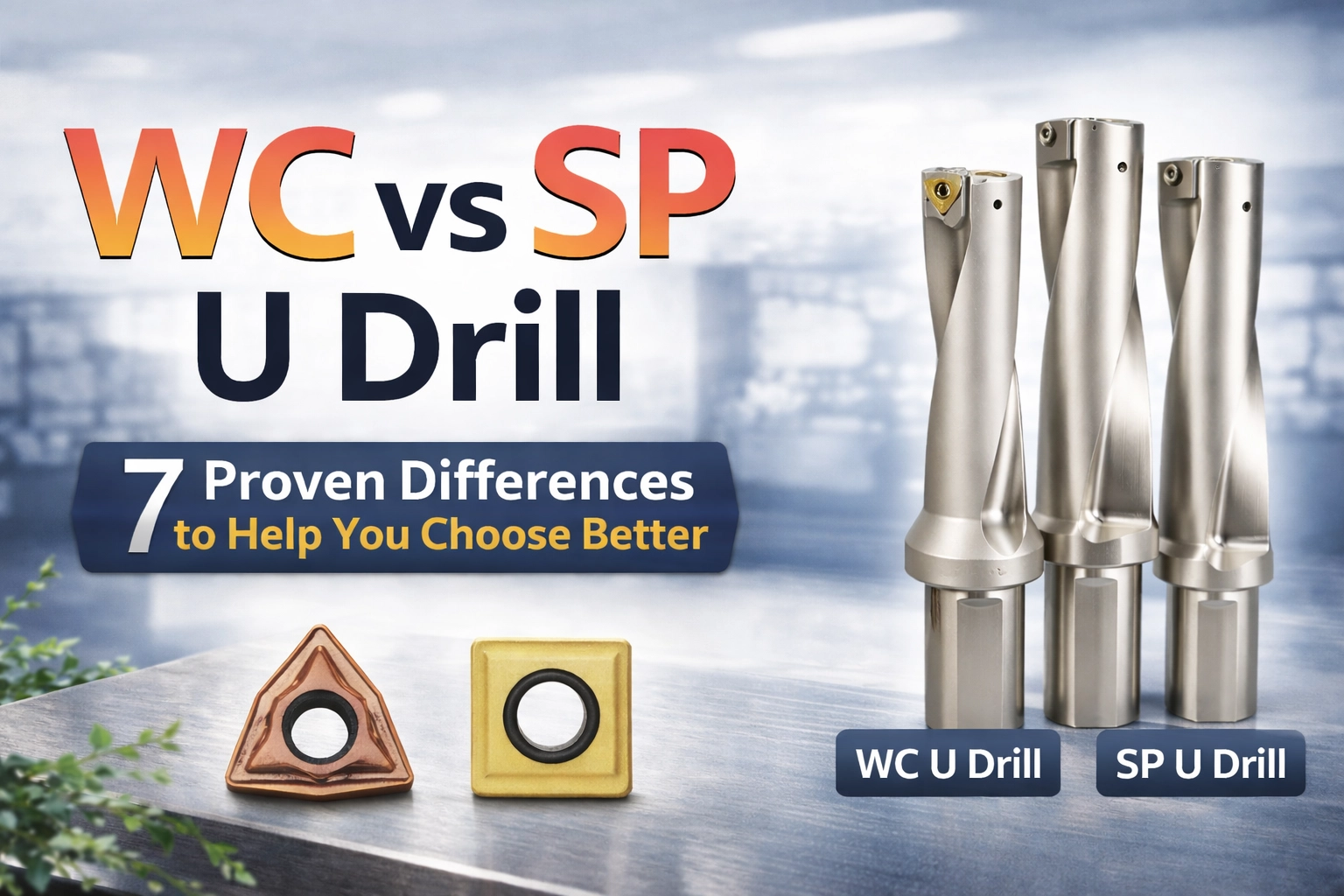 Taladro en U tipo WC frente a tipo SP
Send Your U-Drill Requirements
Start with your current model or clear tool photos and quantities. We can review a replacement or help check a new application.
Replacing a tool
Body model, both insert labels or photos, quantity and the current issue.
Selecting for a new application
Stainless grade, hole diameter and depth, machine and coolant details.
Tell us whether you need bodies, inserts or complete sets.