
Machining Stainless Steel: 7 Proven Ways to Prevent Tool Burning
Series: Material-Specific Machining Solutions
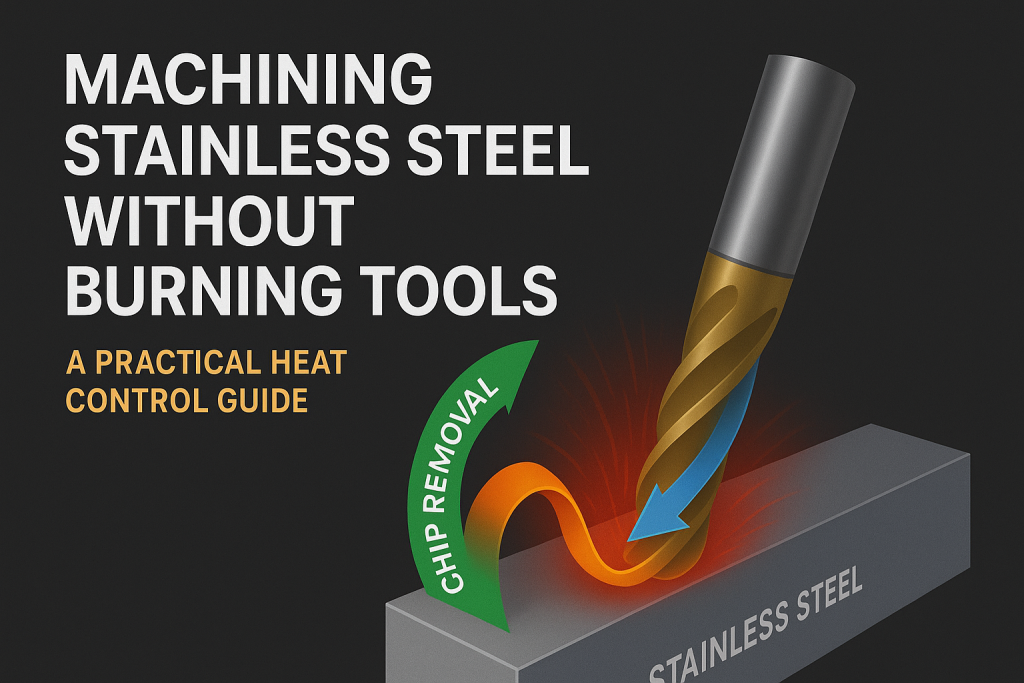
When machining stainless steel, tool burning is one of the most common and costly challenges manufacturers face. The material’s low thermal conductivity traps heat at the cutting edge, accelerating wear, causing work hardening, and compromising surface finish. This guide explains seven proven heat-management strategies to help you improve tool life, stability, and machining efficiency.
1. Understand Why Machining Stainless Steel Generates Excessive Heat
Stainless steel retains heat instead of dispersing it. When heat accumulates at the tool–workpiece interface, it leads to:
- tool softening
- flank wear & crater wear
- work hardening
- blue or black burn marks
- unstable cutting forces
Proper heat control is essential for preventing this cycle.
2. Choose a Heat-Resistant Carbide Tool
A high-toughness carbide substrate is the foundation of successful stainless steel machining. Look for carbide grades engineered for thermal shock resistance and edge stability. These substrates allow the tool to maintain hardness even under intense heat.
For more information on carbide materials, feel freely to contact us immediately.
3. Use Sharp, Positive Geometry to Reduce Heat Generation
A sharp cutting edge with a positive rake angle reduces cutting force, allowing the tool to shear the material instead of rubbing it. This is critical in machining stainless steel, where rubbing instantly produces heat and work hardening.
Best practices include:
- high positive rake
- polished flutes
- honed cutting edges for stability
- consistent chip formation
4. Apply a Thermal-Barrier PVD Coating
A high-performance coating such as AlTiN forms a heat-resistant shield around the carbide substrate. During machining stainless steel, this coating acts as a thermal barrier and prevents chemical adhesion between the alloy and the tool.
Common PVD coatings suitable for stainless steel:
- AlTiN
- TiAlN
- AlTiSiN
5. Balance Cutting Speed & Feed to Control Heat
Slowing down may seem safer, but cutting too slowly increases rubbing and creates more heat, not less. Maintain a healthy chip load so heat is evacuated with the chip instead of staying in the tool.
Recommended practices:
- increase feed slightly
- avoid extremely low chip thickness
- use steady, consistent cutting
6. Use Proper Depth of Cut to Avoid Work-Hardened Zones
Stainless steel tends to work-harden. Using a very light depth of cut results in the tool constantly re-cutting a hardened layer.
To avoid this:
- use a stable axial depth
- avoid skim passes
- ensure engagement is consistent
7. Utilize High-Pressure Coolant for Maximum Heat Removal
Coolant is the final pillar of heat control when machining stainless steel. Through-tool high-pressure coolant (70 bar or higher) penetrates deep into the chip–tool zone.
Best practices:
- aim coolant precisely at the cutting edge
- keep coolant concentration appropriate for stainless steel
- use through-tool delivery whenever possible
Research from Naves etc. 2013 shows high-pressure coolant can extend tool life significantly in stainless steel applications:
Evaluation of the effect of appli… preview & related info | Mendeley
Internal Links
You can place these inside your content for SEO benefit:
- Learn more about our carbide end mills → Carbide End Mill – HY Cutting Tools
- Explore our stainless-steel machining solutions → Carbide Cutting Tools | End Mills, Inserts & Holders | HY Cutting Tools
🔚 Conclusion
Machining stainless steel does not have to result in burning, tool failure, or inconsistent finishing. By combining optimized tool geometry, heat-resistant substrates, PVD coatings, correct parameters, and high-pressure coolant, you can transform stainless steel machining from a challenge into a repeatable and profitable process.
FAQ
H2:FAQ – Machining Stainless Steel
Q1. Why does stainless steel burn during machining?
Because stainless steel has low thermal conductivity, heat concentrates at the cutting edge, causing burning, work-hardening, and tool failure.
Q2. What is the best tool material for machining stainless steel?
A tough, heat-resistant carbide grade with PVD coating such as AlTiN or AlCrN provides excellent thermal stability.
Q3. Does coolant help reduce heat when machining stainless steel?
Yes. High-pressure coolant is essential for removing heat from the cutting zone and preventing chip welding.
Q4. What cutting parameters work best?
Avoid too light of a chip load, use a stable depth of cut, and balance cutting speed and feed to transfer heat into the chip.
Q5. How do I prevent work-hardening?
Use sharp tools, proper chip load, and avoid rubbing by maintaining continuous cutting engagement.