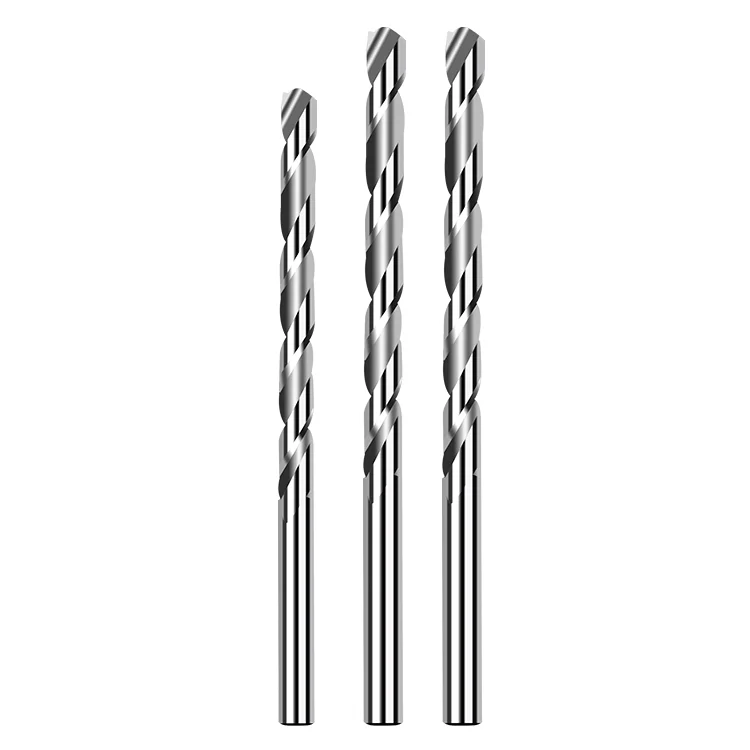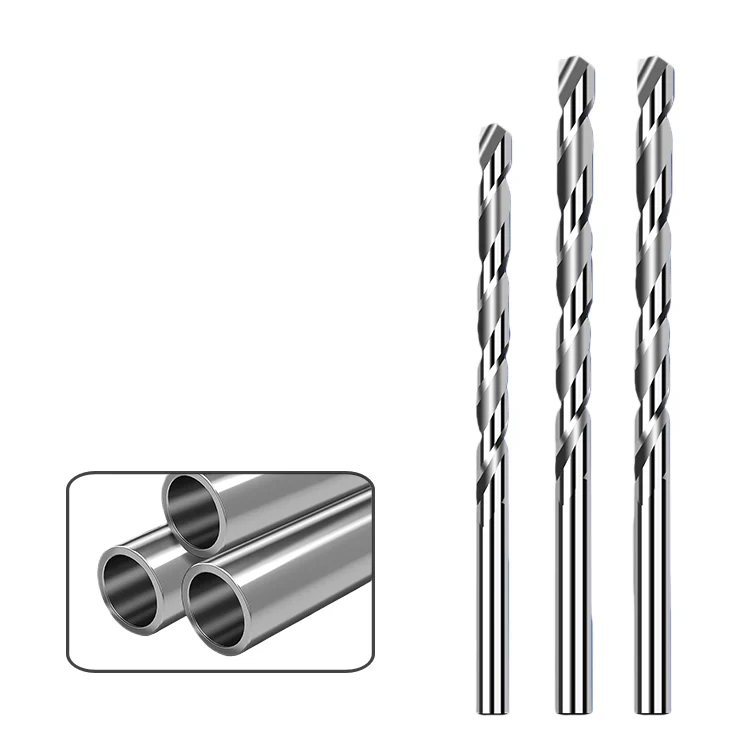
Solid Carbide Twist Drill for Brass & Copper
Alloy-Matched Point
Controlled Entry
Sharp Edges
Clean Cutting
Smooth Flutes
Less Adhesion
3D / 5D / 8D
Depth Options
Solid Carbide Drill for Brass & Copper
Controlled Cutting & Smooth Chip Evacuation
This solid carbide twist drill for brass and copper is designed for precision CNC drilling in non-ferrous metals. Its sharp cutting edges and smooth two-flute geometry support clean cutting and efficient chip removal.
Drill-point preparation can be matched to the alloy: controlled cutting action for brass and reduced material adhesion for softer copper grades. Polished uncoated and optional DLC configurations can be reviewed.
Ø3–20 mm
3D / 5D / 8D
2 Flutes / Straight Shank
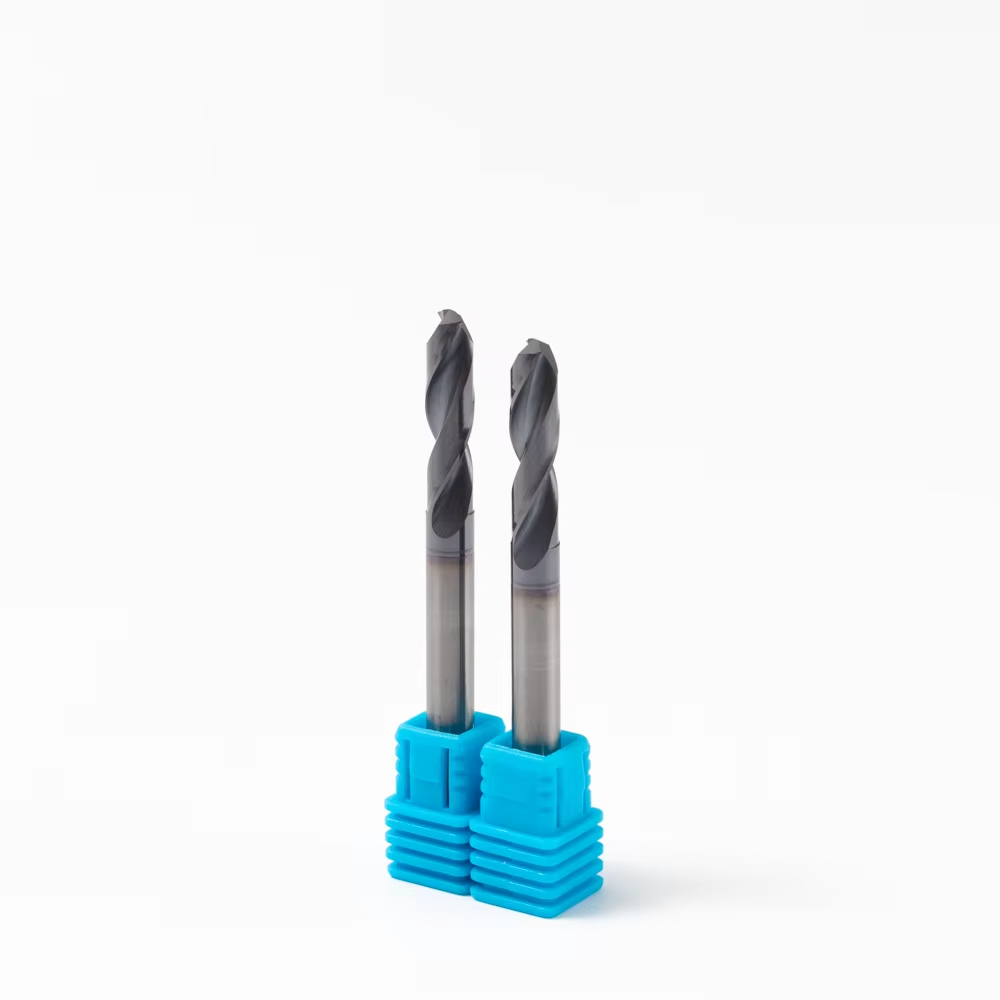
Brass vs. Copper Drilling — Tool Selection
Brass and copper have different cutting characteristics. Drill-point geometry, edge preparation and coolant selection should match the specific alloy grade.
Brass Drilling — Controlled Entry
Suitable point and rake geometry can help reduce excessive grabbing in certain brass grades.
Materials:
Free-cutting brass, lead-free brass and selected brass alloys.
Copper Drilling — Reduced Adhesion
Sharp edges, smooth flutes and suitable lubrication help manage built-up edge and chip sticking.
Materials:
Pure copper and selected copper alloys.
Carbide Drill Geometry for Non-Ferrous Metals
The cutting-edge design, flute finish and tool rigidity work together to support brass and copper hole machining.
Alloy-Matched Point
Point and edge preparation selected for the workpiece grade.
Smooth Two-Flute Design
Spiral flutes support chip clearance in blind and through holes.
Surface Options
Polished uncoated or optional DLC, according to the application.
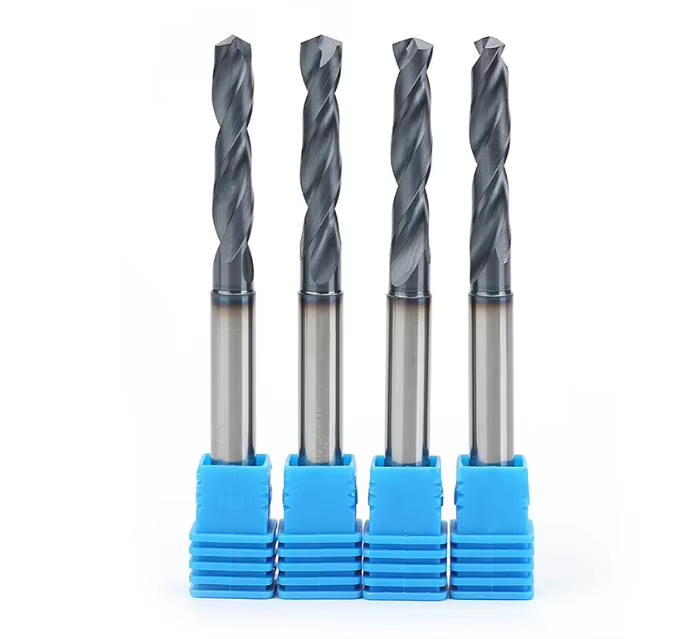
Precision Brass & Copper Drilling Applications
Best For
- Brass valves, fittings and connectors
- Copper electrical and conductive components
- Precision CNC blind and through holes
- Repeat drilling in non-ferrous parts
Not Ideal For
- Using one unverified geometry for every copper alloy
- Steel or titanium drilling without tool review
- Deep holes without reliable chip evacuation
Application Tips:
Choose the shortest suitable drill length, minimize runout and select air, MQL or coolant according to the alloy and hole depth.
Carbide Drill for Brass & Copper — Specifications
This straight-shank solid carbide drill for brass and copper features two spiral flutes and application-matched point geometry. Sharp edges and smooth flute surfaces support chip evacuation, while point preparation is selected for the specific copper alloy.

Brass & Copper Carbide Drill Size Chart
Reference dimensions for 3D, 5D and 8D solid carbide twist drills. All dimensions are in millimeters.
| d1 (mm) | 3D L1 | 3D L | 5D L1 | 5D L | 8D L1 | 8D L |
|---|---|---|---|---|---|---|
| 3 | 20 | 62 | 28 | 66 | 30 | 70 |
| 4 | 24 | 66 | 36 | 74 | 42 | 83 |
| 5 | 28 | 66 | 44 | 82 | 50 | 90 |
| 6 | 28 | 66 | 44 | 82 | 57 | 97 |
| 7 | 34 | 79 | 53 | 91 | 76 | 116 |
| 8 | 41 | 79 | 53 | 91 | 76 | 116 |
| 9 | 47 | 89 | 61 | 103 | 87 | 131 |
| 10 | 47 | 89 | 61 | 103 | 95 | 139 |
| 11 | 55 | 102 | 71 | 118 | 106 | 155 |
| 12 | 55 | 102 | 71 | 118 | 114 | 163 |
| 13 / 14 | 60 | 107 | 77 | 124 | 133 | 182 |
| 15 / 16 | 65 | 115 | 83 | 133 | 152 | 204 |
| 17 / 18 | 73 | 123 | 93 | 143 | 171 | 223 |
| 19 / 20 | 79 | 133 | 101 | 153 | 190 | 244 |
Paired diameters share the listed lengths. L1 indicates flute length, not guaranteed usable drilling depth. Confirm final dimensions and shank diameter before ordering.
Need Sizes, Pricing or Custom Options?
Share the alloy grade, drill size, hole depth and quantity for a quotation.
Brass vs. Copper Drilling — Tool Selection
Brass and copper require different cutting-edge and chip-control strategies. Select drill geometry according to the specific alloy.
Brass — Controlled Entry
Suitable point and rake geometry can help control grabbing in certain brass grades. Air blast may suit free-cutting brass.
Copper — Reduced Adhesion
Sharp cutting edges, smooth flutes and suitable lubrication help manage built-up edge and chip adhesion in softer copper grades.
Starting Cutting Data for Brass & Copper
Original reference cutting-speed ranges for brass, copper and selected bronze alloys. Final settings depend on grade, drill diameter, geometry and machining conditions.
| Material | Vc (m/min) | Chip Removal / Coolant |
|---|---|---|
| Free-Cutting Brass | 120–200 | Dry / Air Blast |
| Lead-Free / Tough Brass | 80–150 | Air / MQL / Coolant |
| Pure Copper | 60–120 | MQL / Stable Coolant |
| Bronze / Copper Alloy | 70–140 | Air / Suitable Coolant |
These are unverified starting references from the original product content, not guaranteed parameters. Confirm speeds and feeds through the selected drill specification and machining trial.
Brass & Copper Carbide Drill Customization
Custom solid carbide drills for brass and copper support alloy-matched point geometry, sharp cutting edges and drawing-defined dimensions. Configurations are reviewed for controlled cutting, reduced adhesion and chip evacuation.
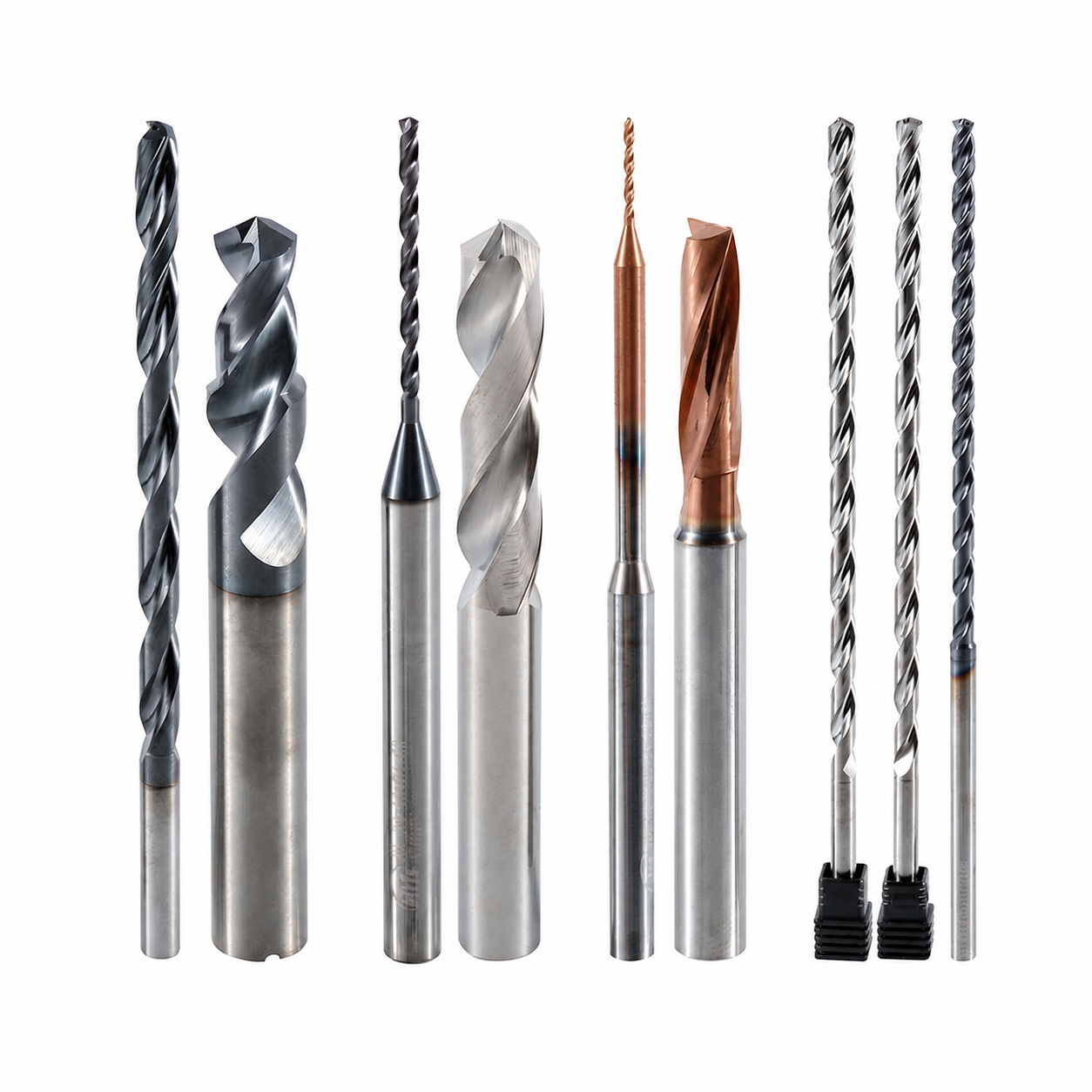
Non-Ferrous Geometry & Edge Preparation
Point angle, rake, edge preparation and flute finish can be tailored for controlled brass drilling or reduced copper adhesion.

Custom Diameters & Lengths
Metric, inch and non-standard diameters, flute lengths, overall lengths and straight-shank dimensions are available for review.
OEM & Private-Label Carbide Drills
OEM supply for brass and copper component manufacturers, cutting-tool distributors and industrial brands.
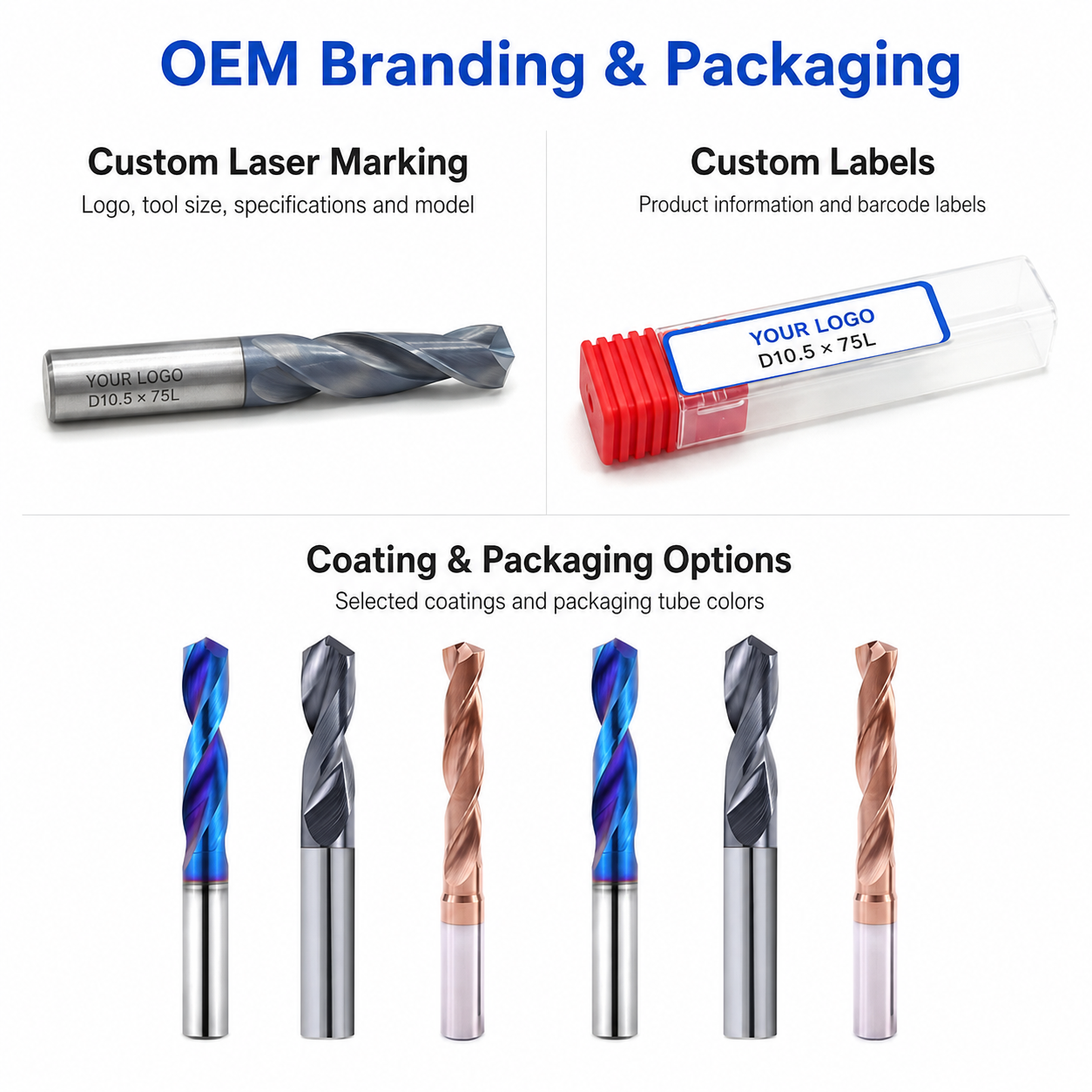
Brass & Copper Carbide Drill Quality Inspection
Quality checks for solid carbide drills for brass and copper focus on point geometry, cutting-edge condition, flute finish and dimensional consistency.

Point & Edge Geometry
Point form, cutting-edge condition and grinding quality are inspected.
Flute & Surface Finish
Flute surfaces, polishing quality and optional coating condition are checked.
Dimensions & Runout
Diameter, lengths and runout are verified against confirmed specifications.
Protective Packaging & Batch Identification
Individual protection and specification labels help prevent cutting-edge damage and support accurate order identification.

Individual Protection
Protective tubes help safeguard cutting edges.
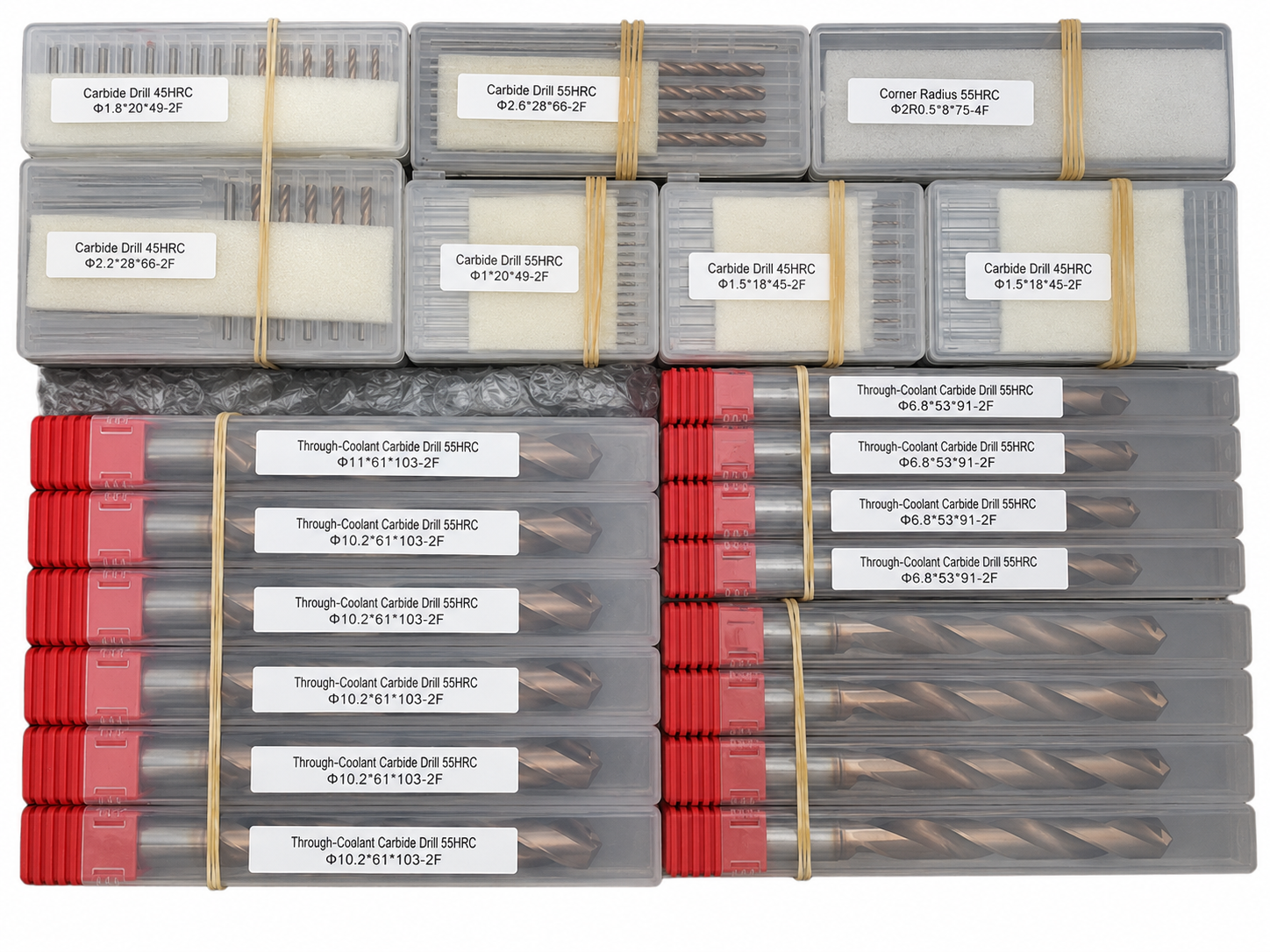
Batch Identification
Sizes, quantities and labels are checked.

Export Protection
Carton protection is selected by shipment.
Lead Time & International Shipping
Production & Lead Time
Standard and custom drill lead times are confirmed according to size, geometry, coating and quantity.
International Delivery
Express, air freight, sea freight and customer-nominated forwarders are available.
View Buyer & Reseller Resources
Brass & Copper Carbide Drill FAQ
Common questions about carbide drills for brass and copper, including drill grabbing, copper burrs, chip adhesion, point geometry and coating selection.
Can the same carbide drill be used for brass and copper?
Not always. Brass drilling may require controlled rake and point geometry to manage grabbing, while copper drilling benefits from sharp edges and smooth chip flow. Select the drill configuration according to the exact alloy.
Why does a drill grab when machining brass?
Some brass grades can grab when the cutting geometry produces aggressive entry. Suitable point and rake geometry, rigid clamping and stable feed help control cutting action. Free-cutting and lead-free brass may require different configurations.
How can burrs and chip adhesion be reduced when drilling copper?
Sharp cutting edges, smooth flutes and suitable lubrication help manage material adhesion and built-up edge in softer copper grades. Burr formation also depends on drill geometry, feed, hole exit conditions and workpiece support.
Which brass, copper and bronze grades are suitable?
The series covers free-cutting brass, selected lead-free brass and pure copper. Bronze and other copper alloys can be reviewed by grade. Point geometry, edge preparation and cutting data should be confirmed for each material.
Should I choose a polished uncoated or DLC-coated carbide drill?
A polished uncoated carbide drill can provide smooth chip flow for non-ferrous machining. Optional DLC coating may help reduce friction and adhesion in suitable applications. Selection depends on the alloy, geometry and production requirements.
How do I select 3D, 5D or 8D drills for brass and copper?
Choose the shortest practical drill for the hole depth. The 3D, 5D and 8D series require suitable chip evacuation and coolant selection. Use a low-runout holder with the straight shank; air, MQL or external coolant should match the alloy and drilling conditions.
Customization & OEM Ordering FAQs
Purchasing information for CNC machining companies, cutting-tool distributors and private-label buyers.
Can I order custom carbide drills for brass and copper?
Yes. Custom metric or inch diameters, straight-shank dimensions, lengths, point geometry, edge preparation and surface treatments can be reviewed from drawings or existing tool samples.
Do you accept small trial orders and mixed drill sizes?
Yes. Small trial quantities and mixed-size orders can be reviewed according to configuration and availability. Trial orders help evaluate chip evacuation, hole quality and tool performance before repeat purchasing.
Are OEM laser marking and private-label packaging available?
Yes. HY supports custom logos, tool codes, size marking, batch labels and private-label carbide drill packaging, subject to tool dimensions and order requirements.
What information is required for a quote, and what is the lead time?
Provide the alloy grade, hole diameter, depth, tolerance, burr requirements, coolant method and quantity. Drawings are recommended for custom tools. MOQ and lead time are confirmed after reviewing the specifications and production requirements.
Carbide Drill Catalog & Cutting Data
Reference sizes and general starting cutting data for solid carbide drilling.
Solid Carbide Drill Catalog
Drill series, reference dimensions and configurations.
Solid Carbide Drill Cutting Data
General starting speeds and feeds for drilling trials.
Confirm cutting parameters for the exact brass, copper or bronze grade and selected drill configuration.
Need Sizes, Pricing or Custom Options?
Send your specifications and quantity for a quote.
- Standard Sizes
- Small Trial Orders
- Mixed Sizes
- OEM & Custom
View QR Code – Contact Sales on WeChat

Scan to contact us on WeChat.
Scan to contact us on WeChat.