
İçten Soğutmalı Karbür Matkaplar: Ne Zaman Kullanılmalı ve Nasıl Seçilmeli?
DRILL SELECTION / THROUGH-COOLANT
A through coolant carbide drill is worth considering when chips stop clearing reliably, coolant struggles to reach the cutting edges, or drilling becomes less predictable as the hole gets deeper.
HY Cutting Tools offers steel-drilling 3D/5D and deep-hole 8D series in Ø3–20 mm, plus a separate 5D stainless-steel series in Ø3.1–20 mm. The starting choice depends on the workpiece material, finished-hole depth and the machine’s through-tool coolant capability.
For distributors and industrial buyers, this guide connects common drilling problems with those product options and explains what to send for an enquiry. For the wider selection process, see our katı karbür matkap seçim kılavuzu.
In this guide
When Does a Through Coolant Carbide Drill Make Sense?
Internal channels carry coolant through the drill and discharge it near the point. This helps deliver cooling and lubrication where external nozzles have limited access, while supporting chip removal through the flutes.
Deeper holes, longer chip-return paths
Hole depth relative to diameter matters more than depth in millimeters alone. A 30 mm hole is 5×D at Ø6 mm, but only 2×D at Ø15 mm. As this ratio increases, the chip-return path becomes longer.
Beyond about 3×D, internal coolant deserves closer consideration, especially with long-chipping materials. This is a selection signal: the exact drill, material and operating conditions still decide the method.
For steel hydraulic blocks or machine components, a longer chip-return path can make repeated chip-clearing stops a production problem. Start with the steel 3D/5D series when its usable depth covers the hole; look at the 8D series when more drilling depth is needed.
Long chips or flute packing
Repeated chip nests, flute packing or an irregular cutting sound justify a process review. Coolant delivery is one part of that review, alongside geometry, feed and material. Adding pressure alone will not correct a drill that forms unsuitable chips.
A material-specific drilling job
In 304 or 316 stainless-steel valves and fittings, long chips and heat at the cutting edges are reasons to assess internal coolant together with stainless-specific geometry. For holes within its usable depth, HY’s 5D through-coolant stainless-steel drill is a starting option. It is a separate ISO M series, not the same configuration as the steel drill.
For titanium, nickel alloys, aluminum or hardened steel, send the exact material and hardness for application review. The presence of coolant holes does not make a steel drill suitable for every material.
Repeated stops or costly tool changes
For repeat jobs, compare cost per acceptable hole. Include tool changes, chip-clearing stops, scrap and cycle time in the comparison. A more expensive drill can be a sensible purchase if a documented trial shows lower total cost. A shallow job already running reliably may offer little reason to change.
Choose 3D, 5D or 8D by the Finished Hole
The depth designation refers to nominal drilling depth relative to cutting diameter. It is not the overall length or flute length. Select the shortest series that covers the required usable depth.
| HY series | Published diameter range | İş parçası malzemesi | Typical selection |
|---|---|---|---|
| 3D steel | Ø3–20 mm | Carbon and alloy steel | Short holes where chip removal or production needs justify internal coolant. |
| 5D steel | Ø3–20 mm | Carbon and alloy steel | Steel holes beyond the selected 3D drill’s usable depth. |
| 5D stainless steel | Ø3.1–20 mm | Stainless steel, including suitable 304/316 jobs | Stainless holes needing material-specific geometry and internal coolant. |
| 8D deep hole | Ø3–20 mm | Selected steel, stainless-steel and cast-iron jobs | Holes beyond a suitable 5D model’s usable depth, within the selected 8D model’s usable depth. |
On a small screen, swipe across the table to compare all four columns.
For a through hole, allow enough travel for the drill point and full cutting diameter to break through, with clearance behind the workpiece. Plate thickness alone does not define the required drilling travel.
Also identify angled entry, angled breakthrough and cross holes. These conditions may require a different geometry or procedure even when the nominal depth fits.
HY Through-Coolant Carbide Drill Sizes and Series
Compare the through-coolant drill options below by material, depth and tool configuration. Open the matching product page to check dimensions before ordering.
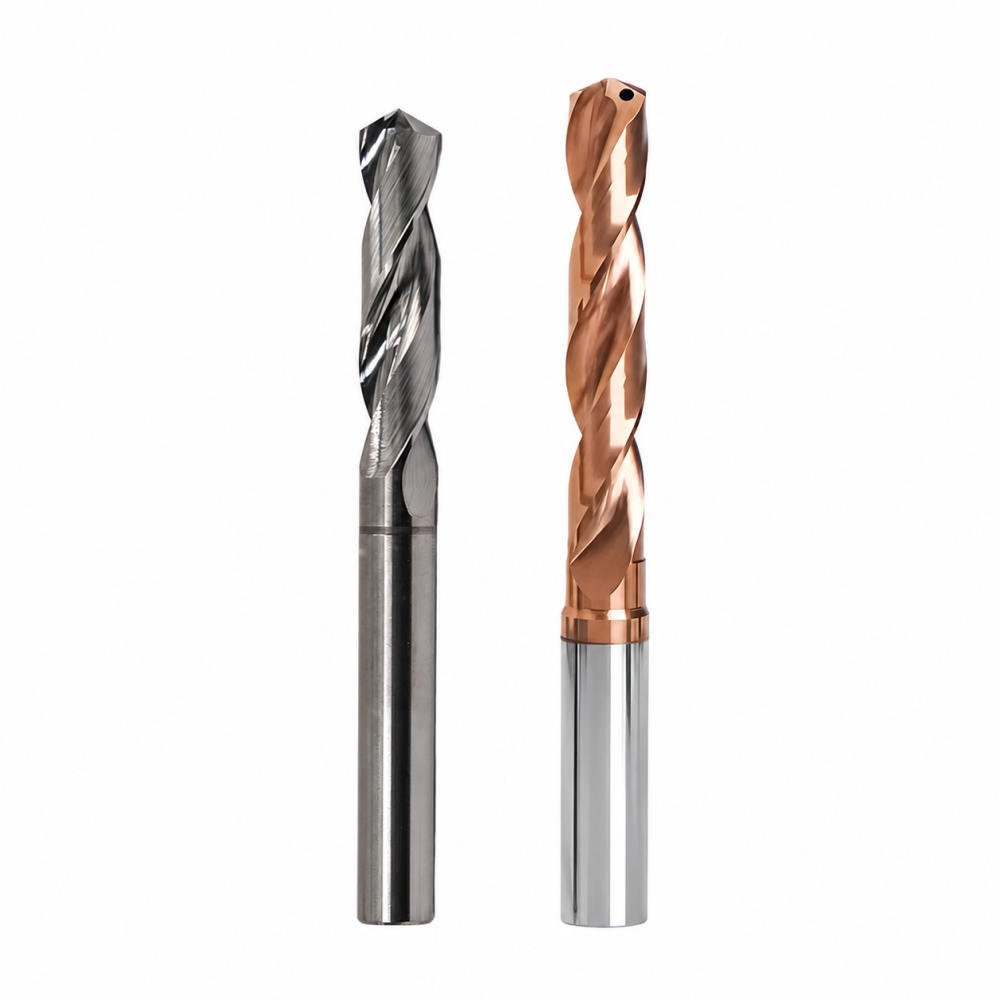
Ø3–20 mm · Carbon & alloy steel
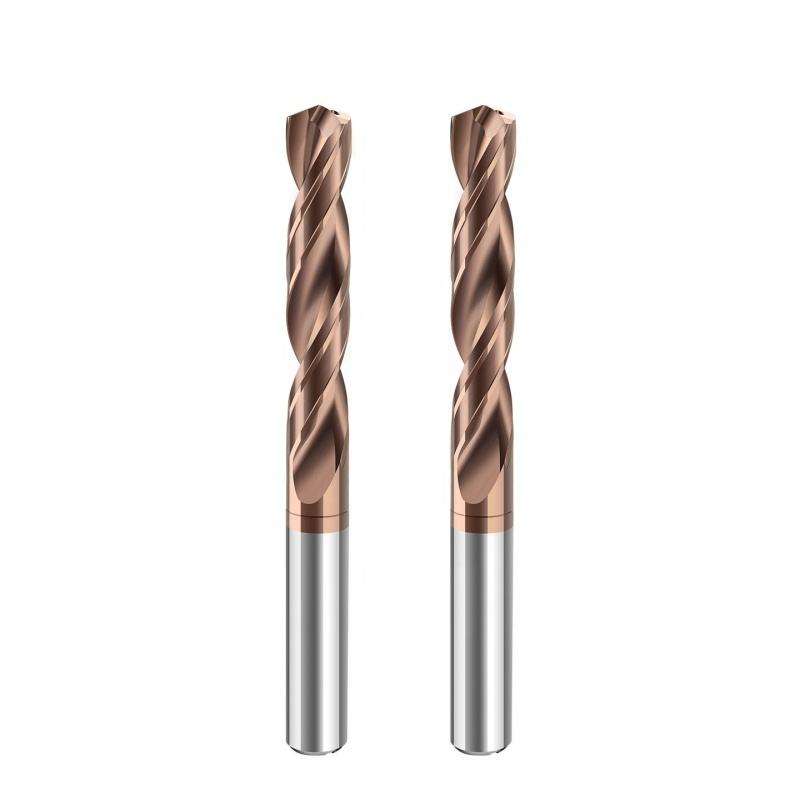
Ø3.1–20 mm · Stainless steel

Ø3–20 mm · Deep-hole series
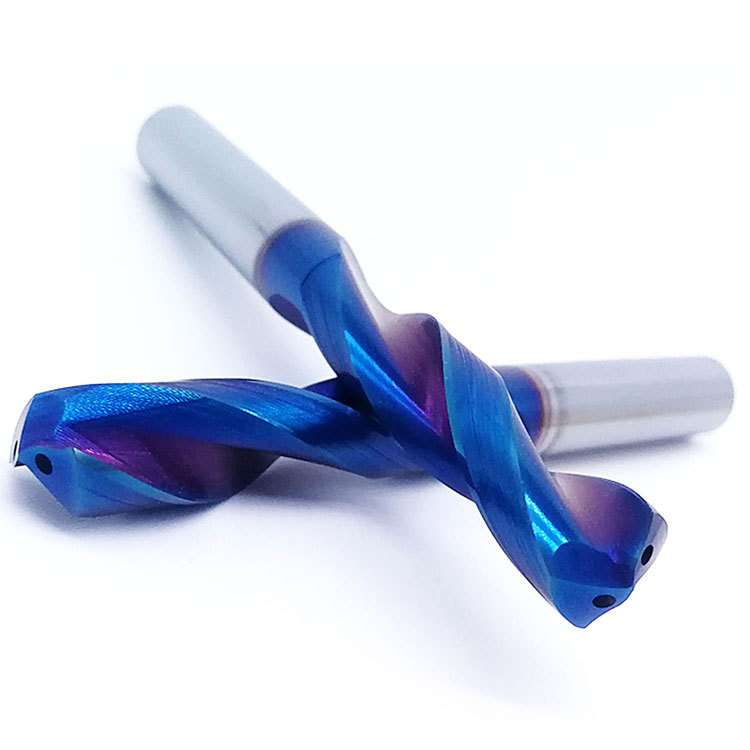
Ø3–16 mm · Steel; hardness review required

Drawing-based · Special sizes & profiles
Send a drawing, key dimensions or machining requirements.
Application details for these five series
3D / 5D for Steel
Ø3–20 mm · For carbon and alloy steels; select 3D or 5D according to usable hole depth.
5D for Stainless Steel
Ø3.1–20 mm · A separate stainless-oriented 5D series, including reviewed 304/316 applications.
8D for Deeper Holes
Ø3–20 mm · For deeper holes beyond suitable shorter-series reach; confirm entry, coolant and tool drawing.
HRC65 Through-Coolant Drill
Ø3–16 mm · Steel and selected hardened-steel conditions; HRC65 is a series designation, not a universal hardness guarantee.
Custom Through-Coolant Drill
Drawing-based diameter, depth, shank, point form and internal coolant configuration; feasibility confirmed after application review.
Always confirm usable depth, material grade, pressure, flow and tool dimensions before approving a setup.
Stainless steel: for 304/316 valve, fitting and housing jobs, compare the separate 5D stainless-steel series. Its reference range starts at Ø3.1 mm. Duplex grades such as 2205 need a separate application assessment.
Need a wider comparison? Browse the through-coolant and deep-hole drill range.
Size availability: send the exact diameter, depth series and quantity to check availability and lead time. The published range does not mean every configuration is held in stock.
Have a Hole Requirement to Check?
Send the hole diameter, depth, material and quantity. Tell us whether the machine has through-tool coolant, if known. We can help narrow down the series and identify the remaining technical details.
Check the Machine Before Ordering the Drill
Start by asking whether coolant can pass through the holder into the drill. The details below are needed to approve the setup for machining; you can begin an enquiry with the hole requirement while collecting them.
Coolant delivery through the complete assembly
Check the spindle or coolant-fed holder, seals and tool connection. A machine using external flood coolant does not automatically supply the drill’s internal passages. Confirm a compatible delivery route with the machine and holder supplier.
Pressure together with flow
Record available pressure in bar or psi and flow in L/min where known. The pump’s maximum pressure rating alone does not describe delivery through the installed drill. Diameter, passage size, drill length and system losses all affect the result.
There is no single pressure value to apply to every HY through-coolant drill. Ask for the requirement for the selected model and application before approving the order.
Filtration and coolant condition
Small coolant passages need protection from contamination. Confirm the required filtration for the selected tool, check filters and inspect for restricted delivery. Use the coolant supplier’s concentration guidance for the fluid and material.
Holder accuracy and the drilling cycle
Use a rigid setup, controlled runout and the shortest practical overhang. Confirm the model’s entry, pilot-hole and withdrawal procedure. Some deep-hole families specify a pilot and a continuous-feed cycle; those instructions cannot be transferred automatically to another drill.
Before a trial: confirm pressure, flow, filtration, pilot requirements and the approved cycle together. Do not assume that an 8D label means “no pilot” or “no pecking.”
When Should You Request a Custom Through-Coolant Drill?
Request a review when the standard size or tool drawing does not fit: an intermediate diameter, different shank, restricted reach, stepped profile or combined hole feature may need a custom configuration.
HY’s custom through-coolant carbide drill service covers drawing-based review of cutting diameter, flute and overall length, shank, point geometry, coating and coolant-channel layout.
The design must leave room for chip evacuation, coolant passages and sufficient tool strength. A channel layout that works in a straight drill may not fit a narrow step or special profile. Send the part drawing and coolant conditions before promising the design to a customer.
Depths beyond the standard series are project-specific requests. Confirm feasibility, the approved tool drawing, operating procedure and production lead time separately.
What to Send for a Useful Drill Quotation
If a customer asks for “a 6 mm internal-coolant drill,” begin with the information below. You do not need every machine specification to start the conversation.
START THE ENQUIRY
Start with the hole and order details
- Hole: diameter, required depth, and whether it is through or blind. A drawing helps distinguish cylindrical depth from depth to the drill tip.
- Malzeme: grade and hardness, where available.
- Sipariş: quantity per size and required delivery date.
- Soğutma sıvısı: whether the machine supplies coolant through the tool, if known.
BEFORE TECHNICAL APPROVAL
Complete the technical details for the proposed drill
Before approving the tool and machining setup, complete these details for the proposed drill:
- Hole and material: tolerance, entry and exit conditions, hardness and heat treatment.
- Machine and coolant: holder, length restrictions, coolant pressure, flow and filtration. If these are unknown, send the machine model or available manual details.
- Existing process: for a replacement, include current cutting data, chip photos and failure details to help identify what needs to change.
Example enquiry format
“Please quote a drill for a Ø6 mm blind hole, 27 mm cylindrical depth, in [material grade]. Quantity: [pieces]. The machine has through-tool coolant, but pressure and flow are not confirmed yet. Drawing attached.”
Trial and repeat orders: small trial orders and mixed sizes are supported, subject to availability and configuration. Laser marking and private-label packaging can also be discussed. MOQ and lead time are quoted for the selected specifications and quantities.
For the first order, select sizes with real test jobs. Record acceptable holes per tool, cycle time, chip behavior, hole measurements and the reason each trial stopped. Keep a scheduled test stop separate from a tool-life failure.
For a structured sample evaluation, use our cutting tool trial order guide. Agree the model and application before expanding the size range.
For starting data, consult the HY solid carbide drill cutting-data reference (PDF). Check its baseline conditions and drill-family adjustment; do not apply the up-to-5D baseline unchanged to an 8D application.
Questions Before You Order
My customer only asks for a 6 mm internal-coolant drill. What should I ask?
Ask for the material grade, finished-hole depth, blind or through hole, quantity and destination country.
For example: “Ø6 mm / 27 mm cylindrical blind-hole depth / 304 stainless steel / 10 pcs / through-tool coolant, pressure unknown.” That is enough to start a quotation enquiry; machine details can follow.
Can my customer use these drills with external coolant only?
If the machine cannot feed coolant through the tool, request a drill and process suited to external coolant instead. Write “external coolant only” on the enquiry so we can assess an appropriate option; external nozzles do not supply internal passages.
What if my customer does not know the coolant pressure?
Ask the workshop for the machine model and a photo of its through-tool coolant specification page. The pump’s maximum rating is not the pressure delivered through the installed drill. Send the hole details first; pressure and flow must be established before approving the machining setup.
Can the same drill cover steel and 304 or 316 stainless steel?
Do not substitute by diameter alone. For a 304 valve body, start with the separate 5D stainless-steel series; the steel 3D/5D series targets steel applications. Send the exact grade: “stainless steel” could also mean duplex 2205, which needs a separate application review.
Can I stock only 8D drills and use them for shallower holes?
An 8D drill may reach a shallower hole, but the extra length can reduce rigidity. Group stock by material and depth: Ø6 × 12 mm suggests a 3D candidate; Ø6 × 42 mm suggests an 8D candidate, subject to the tool drawing and point allowance.
Does a 28 mm flute length mean 28 mm drilling depth?
No. HY’s Ø6 mm 3D table lists L1 = 28 mm as flute length. It does not approve a 27 mm cylindrical blind hole. That hole is 4.5×D: assess a suitable 5D model using its usable-depth drawing and drill-point allowance.
Can I order samples or mixed sizes for a trial?
Most standard tools start from 10 pcs; request the MOQ for each selected size and any sample quantity. Mixed sizes can generally be combined. Samples are usually charged, with freight paid by the buyer.
List diameter, depth series, material and quantity per item. Test on actual customer jobs; compare acceptable holes per tool, hole dimensions, cycle time and the stop reason against the current tool.
Are the listed sizes in stock, and when can they ship?
The catalogue range is not live stock. In-stock standard tools can usually be ready to ship in 1–3 days; transit time is additional. Production timing for unavailable or custom drills depends on the configuration.
Send the size list, quantities, destination and required arrival date; request stock status and dispatch timing per item.
Payment, shipping and other ordering questions: see our Buyer & Reseller FAQs.
Related Guides
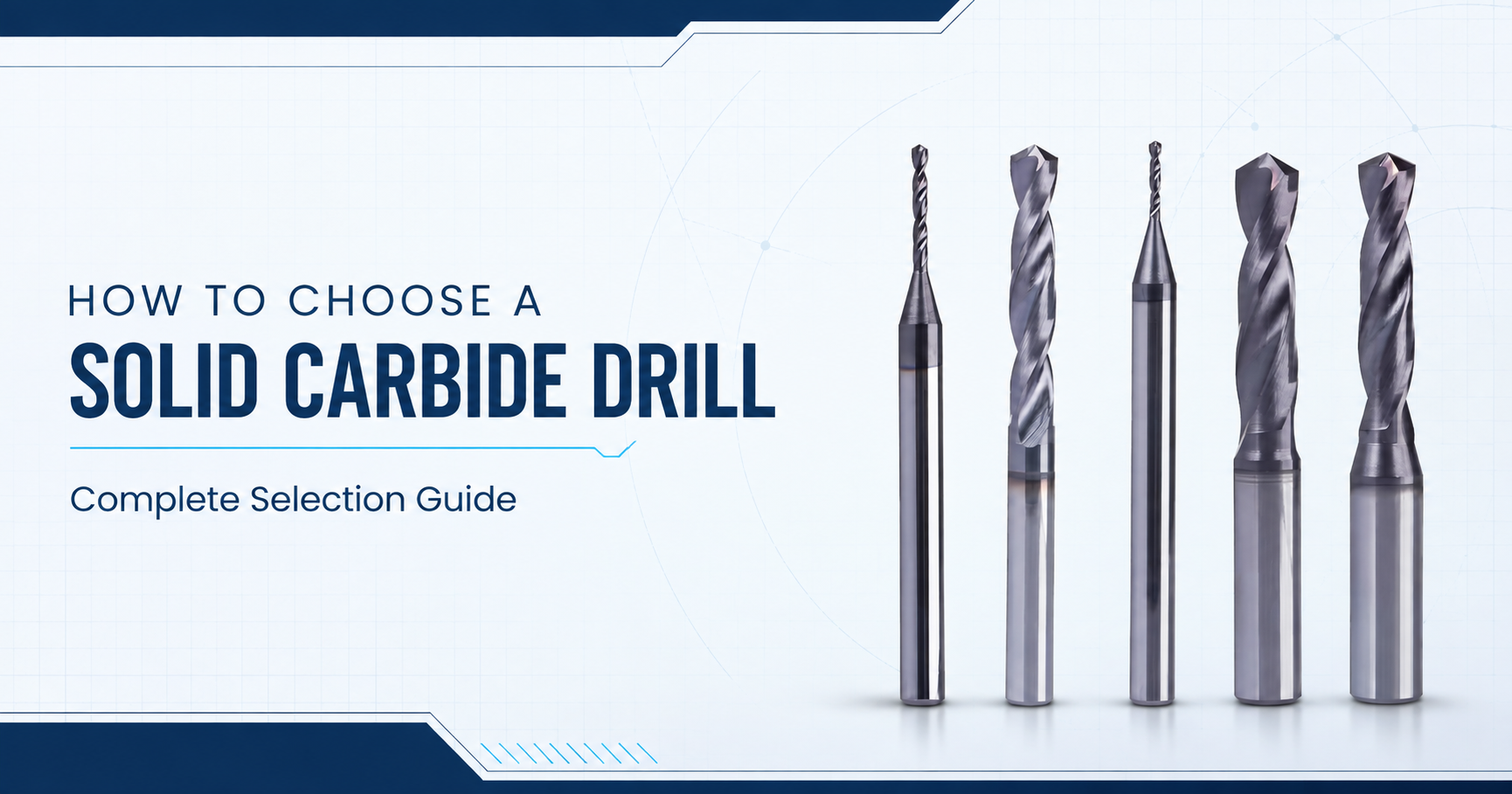

Technical reference: Sandvik Coromant: drilling coolant and chip-control guidance. General principles help frame the enquiry; the selected HY drill’s confirmed instructions take priority.
Ölçüler, fiyatlar veya özel seçenekler mi arıyorsunuz?
Send us the tool sizes, workpiece material and quantity. For a custom tool, include the key dimensions or describe the feature you need to machine.