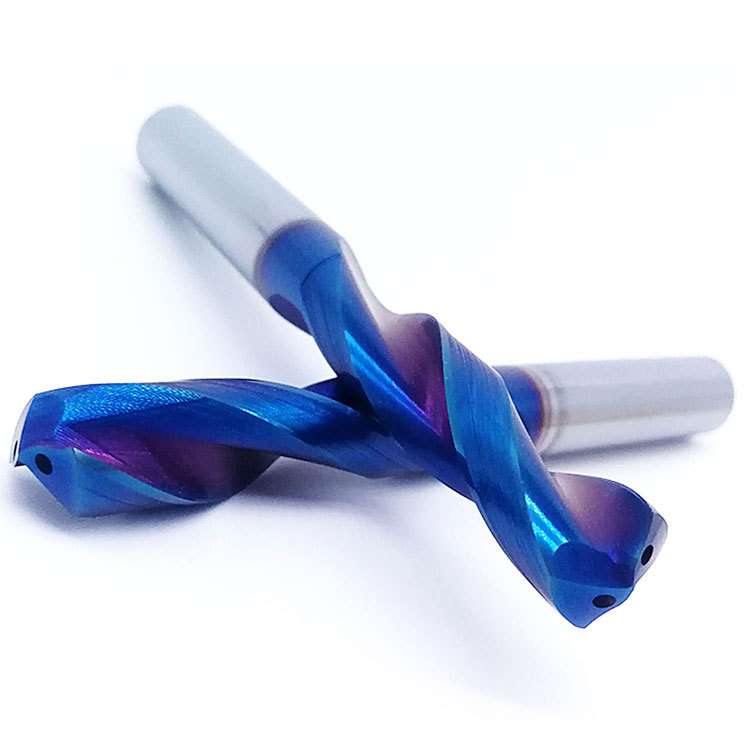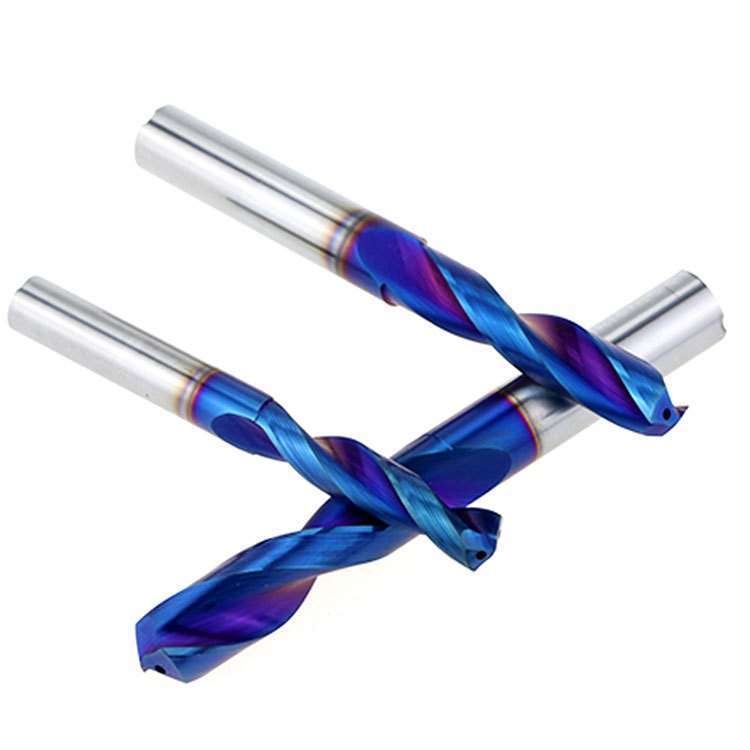

Solid Carbide Twist Drill for Titanium and Heat-Resistant Superalloys
Qualità costante
Consistent geometry across repeat orders.
Ordini flessibili
Small batches and mixed sizes available.
OEM Support
Custom marking, labels and packaging.
Standard e personalizzati
Standard sizes and custom configurations.
Solid Carbide Twist Drill for Titanium & Heat-Resistant Superalloys Overview
This solid carbide twist drill is developed for titanium alloys and heat-resistant superalloys where concentrated cutting heat, material adhesion, work hardening and difficult chip evacuation can reduce drilling stability. Application-specific point geometry, edge preparation and flute design help control thrust, chip formation and cutting-edge loading during precision CNC hole machining. Fine-grain solid carbide, low-friction flute treatment and application-specific surface options support consistent hole quality in demanding ISO S materials. Standard 3×D, 5×D and 8×D configurations are available from Ø3.0 to Ø20.0 mm, with through-coolant versions recommended for deeper and more demanding applications.
ISO S
3×D / 5×D / 8×D
Ø3.0–20.0 mm
External / Through-Coolant
Key Configuration
ISO S Material Geometry
Point geometry, edge preparation and flute design are selected specifically for titanium and heat-resistant alloy drilling.
Controlled Cutting Edge
A sharp but supported edge condition helps reduce rubbing and axial load while maintaining strength against chipping and rapid wear.
Coolant & Chip Control
External-coolant and through-coolant configurations can be selected according to drilling depth, chip flow, machine capability and alloy grade.
Key Product Advantages
Reduced Rubbing & Heat Concentration
Material-specific geometry and controlled edge preparation support a stable cutting action in alloys that are sensitive to heat and work hardening.
Low-Friction Chip Evacuation
Two spiral flutes and low-friction flute treatment help move difficult chips away from the cutting zone in blind and through holes.
Heat & Wear Management
Fine-grain carbide, edge preparation, flute treatment and application-specific PVD coating can be combined for concentrated heat and abrasive wear.
3D / 5D / 8D Application Range
Three depth series allow the drill configuration to be matched to rigidity, coolant access, chip control and the required hole depth.
Workpiece Material Compatibility
Applications & Target Scope
- Aerospace component drilling
- Turbine and engine component machining
- Medical implant and precision mechanical parts
- Chemical-processing equipment components
- Blind-hole and through-hole drilling
- Pre-machining holes for reaming or threading
Product & Cutting-Edge Details
Tool Nomenclature & Dimensions
This solid carbide twist drill series is designed for ISO S materials and is available in 3×D, 5×D and 8×D configurations from Ø3.0 to Ø20.0 mm. The tool uses two spiral flutes and a cylindrical straight shank. Point geometry, edge preparation, flute treatment, coating and coolant configuration should be selected according to the exact titanium or heat-resistant alloy grade.
3D, 5D & 8D Standard Size Matrix
The table below preserves the standard series dimensions from the original product specification. All dimensions are in millimetres.
| d1 | 3D L1 | 3D L | 5D L1 | 5D L | 8D L1 | 8D L |
|---|---|---|---|---|---|---|
| 3 | 20 | 62 | 28 | 66 | 30 | 70 |
| 4 | 24 | 66 | 36 | 74 | 42 | 83 |
| 5 | 28 | 66 | 44 | 82 | 50 | 90 |
| 6 | 28 | 66 | 44 | 82 | 57 | 97 |
| 7 | 34 | 79 | 53 | 91 | 76 | 116 |
| 8 | 41 | 79 | 53 | 91 | 76 | 116 |
| 9 | 47 | 89 | 61 | 103 | 87 | 131 |
| 10 | 47 | 89 | 61 | 103 | 95 | 139 |
| 11 | 55 | 102 | 71 | 118 | 106 | 155 |
| 12 | 55 | 102 | 71 | 118 | 114 | 163 |
| 13 | 60 | 107 | 77 | 124 | 133 | 182 |
| 14 | 60 | 107 | 77 | 124 | 133 | 182 |
| 15 | 65 | 115 | 83 | 133 | 152 | 204 |
| 16 | 65 | 115 | 83 | 133 | 152 | 204 |
| 17 | 73 | 123 | 93 | 143 | 171 | 223 |
| 18 | 73 | 123 | 93 | 143 | 171 | 223 |
| 19 | 79 | 133 | 101 | 153 | 190 | 244 |
| 20 | 79 | 133 | 101 | 153 | 190 | 244 |
ISO S Drilling Guidance
- Titanium Alloys: Use sharp cutting action, low-friction flutes, stable coolant delivery and continuous feed to limit adhesion, heat concentration and work hardening.
- Nickel-Based Superalloys: Use a supported cutting edge, conservative cutting conditions and reliable chip evacuation to control high cutting forces and rapid wear.
- 3×D: Recommended where maximum rigidity, stable chip evacuation and hole quality have priority.
- 5×D: Suitable for medium-depth holes with low runout, continuous feed and reliable coolant delivery.
- 8×D: Requires rigid toolholding, minimal runout, reliable chip control and preferably a through-coolant configuration.
- Avoid Dwell: Rubbing or pausing at the hole bottom can increase heat, promote work hardening and accelerate cutting-edge wear.
Recommended Starting Cutting Parameters
The original product page provides material-specific parameter strategy rather than fixed numerical speed and feed values. Final cutting speed, feed, coolant pressure and drilling cycle must be confirmed according to alloy grade, heat-treatment condition, drill diameter, hole depth, coating, machine rigidity and holder runout.
| WORKPIECE MATERIAL | MAIN CHALLENGE | PARAMETER STRATEGY | COOLANT GUIDANCE |
|---|---|---|---|
| Commercially Pure Titanium | Adhesion and long-chip formation | Controlled speed, stable feed, avoid rubbing or dwell | High-flow coolant recommended |
| Ti-6Al-4V / Grade 5 | Heat concentration and cutting-edge wear | Moderate cutting speed and continuous, non-rubbing feed | Through coolant preferred for deeper holes |
| Inconel 625 / 718 | Work hardening, high cutting force and rapid wear | Conservative speed, stable feed, avoid interrupted dwell | Through coolant strongly recommended |
| Hastelloy / Cobalt-Based Alloys | High-temperature strength and abrasive wear | Application-specific geometry and conservative starting conditions | Stable through-coolant supply preferred |
Solid Carbide Drill Product Family Overview
Select the drill series according to workpiece material, required depth and coolant strategy.
ISO S Drill
Titanium / Superalloys (Current)
Steel Drill
ISO P Applications
Non-Ferrous Drill
ISO N Applications
Custom Twist Drill
Special Geometry / Length
For additional sizes and related drill series, View the Solid Carbide Drill Catalog.
Titanium & Superalloy Drill Customization
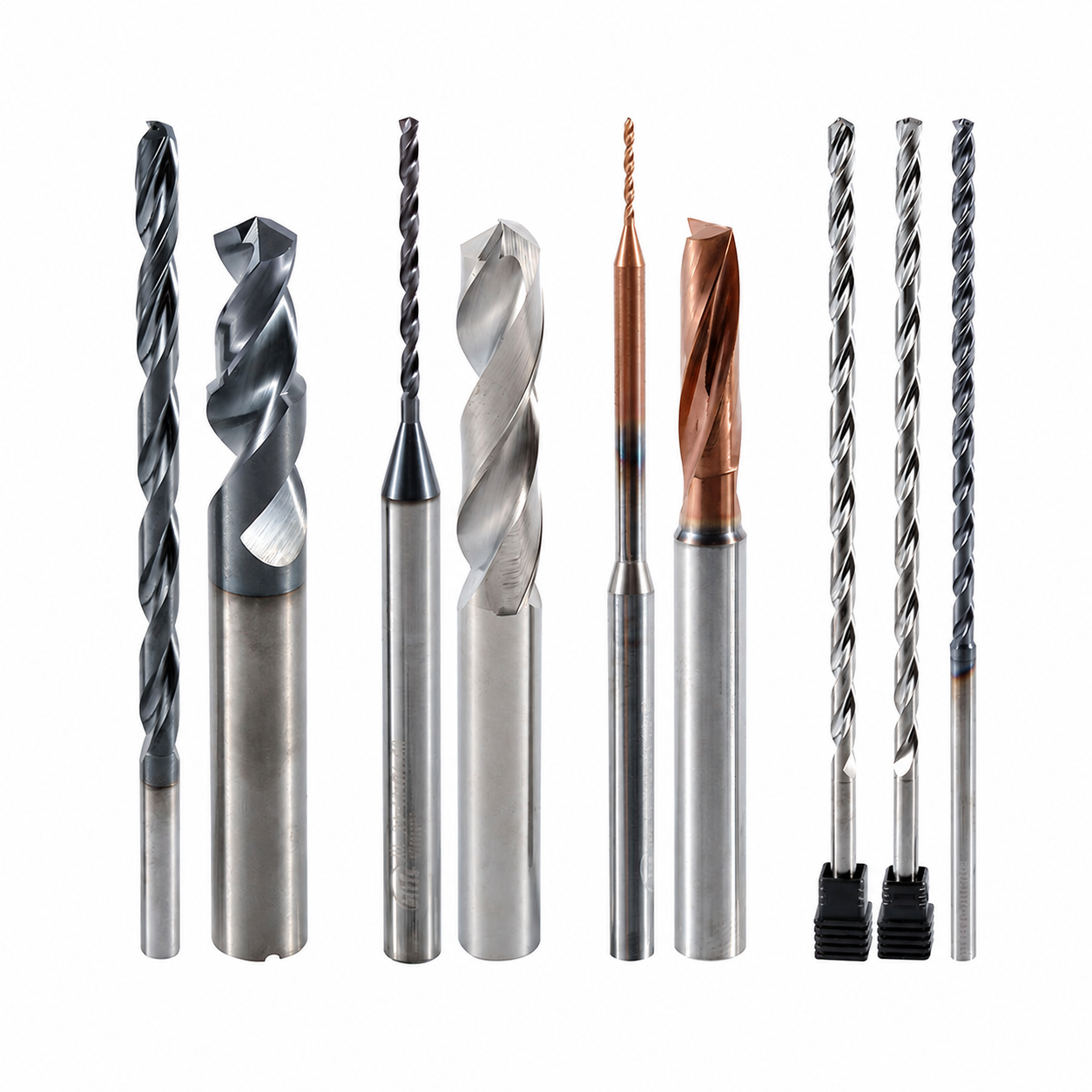
Cutting diameter, flute length, reinforced cutting geometry, edge preparation, heat-resistant coating and coolant strategy can be configured for titanium and heat-resistant superalloys. The exact alloy and machining conditions must be reviewed.
Heat-Resistant Alloy Geometry & Edge Preparation
Point form, web strength, flute profile, margins and edge preparation can be configured to manage heat, cutting load and edge failure in difficult-to-machine alloys.

Diameter & Length Options
Metric and drawing-defined diameters can be combined with application-matched flute, shank and overall dimensions to maintain rigidity.
Servizi OEM e a marchio privato
OEM manufacturing and private-label supply options for aerospace suppliers, difficult-material machining facilities and specialty-tool distributors.
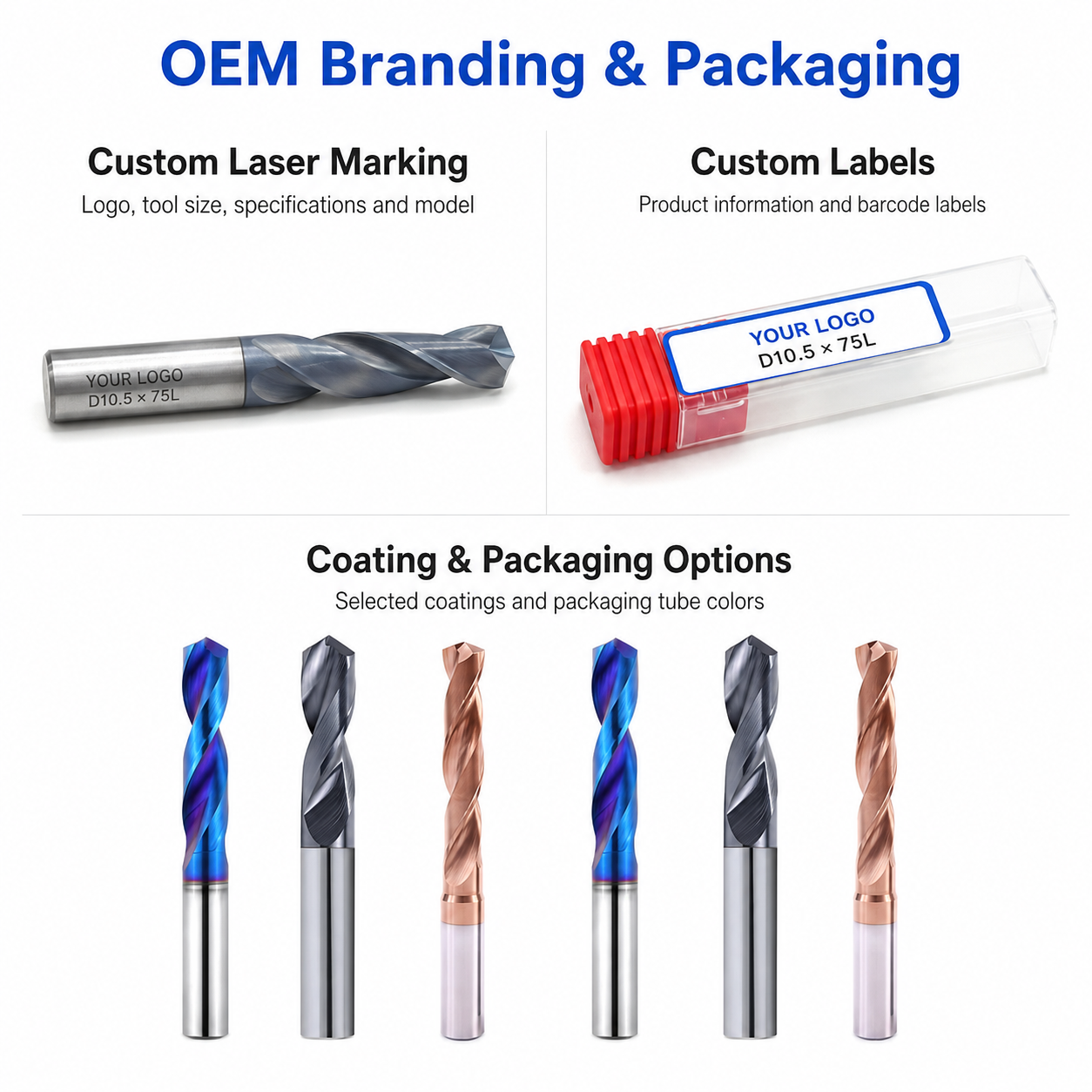
Laser Etching
Custom laser marking for logos, tool codes, diameter specifications, coating identification and batch numbers.
Custom Packaging
Individual protective tubes, diameter labels, multi-pack boxes, custom inserts and private-label packaging options.
Commercial Terms
Flexible MOQ options for standard configurations, custom sizes, trial orders and scheduled repeat supply.
Technical Workflow
Inquiry
Submit the exact alloy, hardness, hole dimensions, coolant data and quantity.
Engineering
Heat control, reinforced geometry, coating and setup rigidity are reviewed.
Commercial
Quotation, MOQ, production schedule and delivery terms are confirmed.
Production
Precision grinding, controlled edge honing, coating and identification.
Quality Control
Diameter, point geometry, edge preparation, coating and runout are inspected.
Inspection & Quality Control
Drill dimensions, cutting-edge geometry and visible surface condition are checked according to the confirmed product specification and application requirements.

Protective Packing for Shipment
Finished drills are protected individually before batch labeling and export-carton reinforcement.

Individual Tool Protection
Each drill is individually protected in a plastic tube to reduce contact damage during storage, handling and transportation.
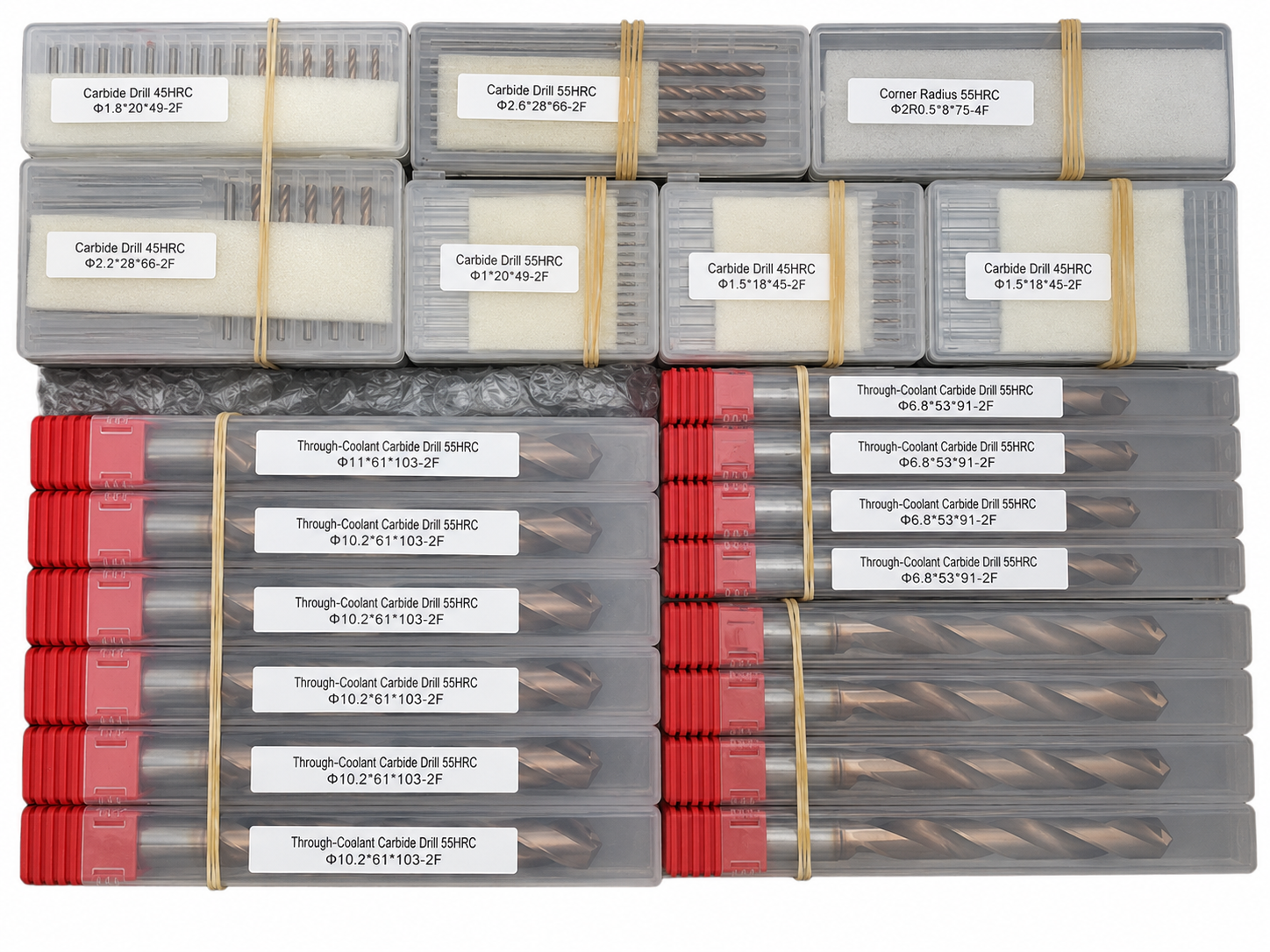
Batch & Label Verification
Tools are grouped and labeled by specification to support order verification before carton packing.

Export Carton Protection
Batch packaging, cushioning materials and reinforced export cartons are selected according to the order quantity and shipping method.
Reference Lead Time
The following timeframes are general references. Availability and production scheduling are reviewed for each order.
Shipping Options
Shipping arrangements can be selected according to order size, delivery schedule and destination.

Product FAQs
Product-specific information about solid carbide drilling in titanium, nickel-based superalloys and other heat-resistant materials, including cutting heat, edge strength, coolant strategy and machining stability.
What materials is this carbide drill designed for?
This drill is intended for titanium alloys, nickel-based superalloys and other confirmed heat-resistant metal grades. Final carbide grade, point geometry, edge preparation, coating and cutting data should be selected according to the exact alloy, hardness, hole depth and machine conditions.
Why does titanium and superalloy drilling require a dedicated drill geometry?
Titanium and heat-resistant superalloys generate high cutting temperatures and can place heavy mechanical and thermal loads on the cutting edge. A dedicated point, flute profile, edge preparation and carbide grade can help balance cutting sharpness, edge strength, chip formation and wear resistance for these demanding materials.
Why is coolant control important when drilling titanium and heat-resistant alloys?
Reliable coolant delivery helps control cutting temperature, reduce material adhesion and support chip evacuation. As hole depth increases, coolant access to the cutting zone becomes more important. The required coolant method should be selected according to drill diameter, hole depth, alloy grade and machine capability.
What machining conditions are important for stable drilling?
Use a rigid CNC machine, low-runout holder, secure workpiece clamping and the shortest practical tool overhang. Stable feed, controlled entry and consistent coolant delivery are important because vibration, rubbing and interrupted chip evacuation can quickly increase cutting temperature and edge wear.
Can the geometry, coating and dimensions be customized?
Yes. Cutting diameter, flute length, shank diameter, overall length, point geometry, edge preparation, coating and coolant configuration can be reviewed according to the titanium or superalloy grade, required hole depth, tolerance and CNC setup. Non-standard tools can also be evaluated from drawings or existing samples.
What information is required for a quotation?
Please provide the cutting diameter, hole depth, blind-hole or through-hole requirement, workpiece alloy grade, hardness or condition, flute length, shank diameter, overall length, required tolerance, coolant method, machine type and quantity. A drawing is recommended for non-standard dimensions or special hole requirements.
Ordering & OEM FAQs
General information for trial orders, mixed sizes, OEM marking and repeat distributor supply.
Do you accept small trial orders?
Yes. Small trial quantities can be reviewed for hole-quality testing, chip-evacuation evaluation, dimensional verification and tool-life comparison before larger repeat orders.
Can mixed drill sizes be ordered together?
Yes. Different cutting diameters and length configurations can normally be combined in one order when the carbide grade, geometry, coating and production requirements are compatible.
Is OEM laser marking available?
Yes. Logo, item code, tool size and batch identification can be reviewed for laser marking where the available shank area permits. Custom labels and private-brand packaging are also available for OEM programs.
What is the typical production lead time?
Lead time depends on cutting diameter, flute length, coating, coolant configuration, custom geometry and order quantity. Final production scheduling is confirmed after the tool specification and application requirements are approved.
Downloads & Technical Resources
Access drill series information and starting cutting-data references for solid carbide drilling in titanium and heat-resistant alloys.
Need Sizes, Pricing or Custom Options?
Send us the required tool type, sizes, quantities, workpiece material and any OEM or custom requirements. We will confirm suitable specifications, availability, lead time and quotation details.
Drawings, size lists and reference photos are welcome.