WC Type vs SP Type U Drill: 7 Proven Differences to Help You Choose Better
A comparison between WC type and SP type U drills is usually not just about insert shape. In most cases, the real question is which option makes more sense for daily production, insert cost, drilling stability, and overall value.
Both styles are common in indexable drilling, and both can work well in the right application. The difference is that they are often chosen for different reasons.
This article looks at 7 practical differences to help narrow down the choice more efficiently.
Daftar Isi
- What Is a WC type U Drill?
- What Is an SP type U Drill?
- WC type vs SP type U Drill Comparison
- WC type vs SP type U Drill: 7 Key Differences
- Which One Is Better for Steel, Stainless Steel, and Cast Iron?
- How to Choose Based on Cost and Production Needs
- PERTANYAAN YANG SERING DIAJUKAN
- Kesimpulan
Quick Answer
- WC type U drills are often preferred for more balanced, general-purpose drilling.
- SP type U drills are often preferred where insert edge utilization matters more.
- The better choice depends on material, hole size, machine stability, and overall cost per hole.
What Is a WC Type U Drill?
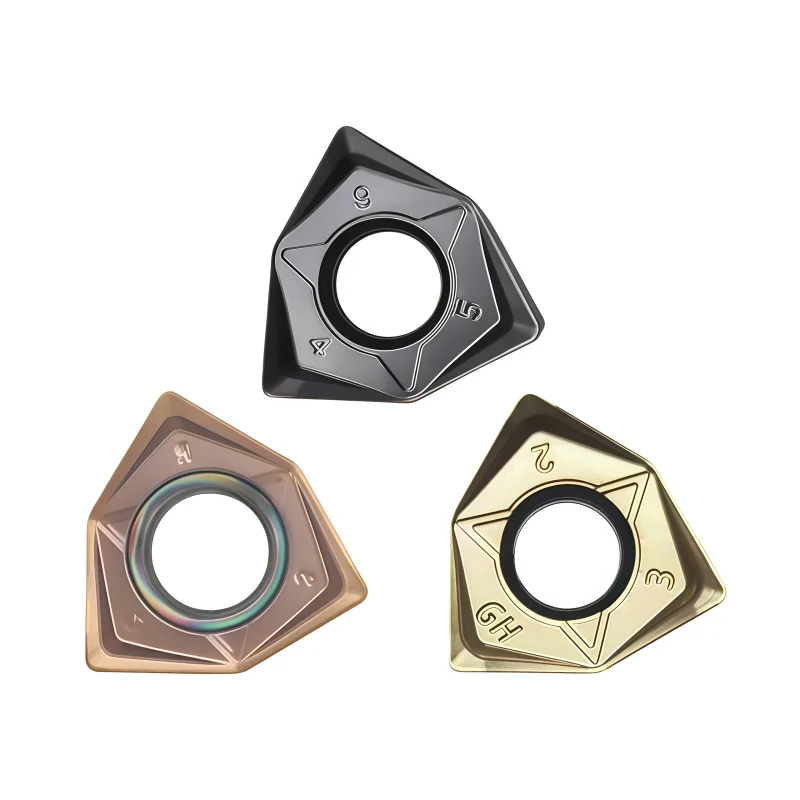
A WC type U drill is an indexable drill that uses WC type inserts. In practical terms, WC type U drills are often seen as a more balanced option for general drilling work.
One reason WC type designs are often chosen is that they fit routine production well. In many workshops, the goal is not to chase a theoretical advantage in only one area. The goal is to keep drilling stable, keep insert cost reasonable, and keep daily production moving.
WC type U drills are commonly considered for:
- general drilling applications
- cost-sensitive production
- routine holemaking in steel, stainless steel, cast iron, and similar materials, depending on insert grade and geometry
- applications where a practical balance between performance and insert economy is preferred
Of course, the drill body alone does not decide the result. Insert grade, chipbreaker, coolant condition, machine rigidity, and cutting parameters still matter a lot.
What Is an SP type U Drill?
Sebuah SP type U drill is an indexable drill that uses SP type inserts. In many cases, SP type U drills attract attention because they are commonly associated with higher usable cutting edge count.
That is usually the first reason WC type and SP type get compared. From a purchasing point of view, more usable edges often sounds more economical. But in real production, the better option is not decided by edge count alone. It still depends on whether that insert style matches the job, the machine, and the way production is run.
SP type U drills are often considered when the focus is more on:
- higher insert edge utilization
- insert replacement economy
- a balance between productivity and replacement cost
- repeat drilling work under relatively stable machining conditions
Like WC type U drills, SP type U drills are not automatically better. The final result still depends on the whole setup.
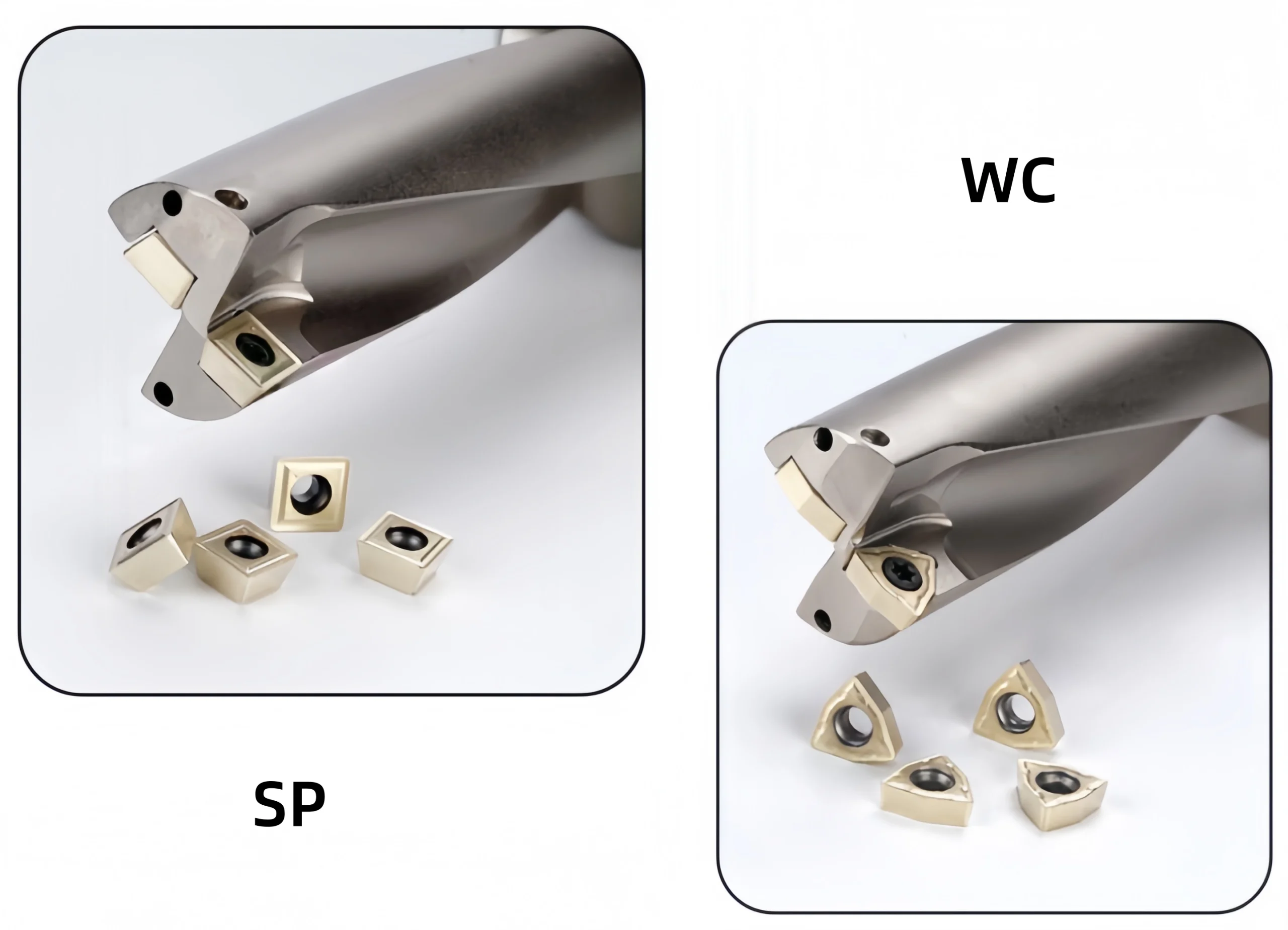
WC type vs SP type U Drill: insert structure and cutting edge comparison
Before going into the detailed differences, the table below offers a quick side-by-side view of WC type and SP type U drills.
WC type vs SP type U Drill Comparison
| Item | WC type U Drill | SP type U Drill |
|---|---|---|
| Insert style | WC type insert | SP type insert |
| Cutting edge count | Usually 3 edges | Usually 4 edges |
| Insert economy | Good | Higher edge utilization |
| Chip control | Depends on geometry and application | Depends on geometry and application |
| Typical applications | General drilling and cost-focused jobs | Applications focusing more on insert edge economy |
| Material suitability | Depends on insert grade and geometry | Depends on insert grade and geometry |
| Typical priority | Balanced cost and performance | Edge economy and productivity balance |
If WC and SP are both on your shortlist, feel free to send us your drilling details. We can help you compare them more practically.
WC type vs SP type U Drill: 7 Key Differences
1. Insert Shape and Cutting Edge Count
The most obvious difference in WC type vs SP type U drill is the insert style itself.
In many common product comparisons, WC type inserts are linked with 3 usable cutting edges, while SP type inserts are often linked with 4 usable cutting edges. This is why SP type designs are often described as more economical at first glance.
Still, cutting edge count should not be the only reason to choose a drill. More edges may look better on paper, but what matters in production is whether those edges can be used effectively and consistently.
2. Insert Economy
Insert economy is one of the main reasons WC type and SP type are compared in the first place.
From a simple counting perspective, SP type inserts often seem to have the advantage because they are commonly associated with higher edge utilization. Where insert economy is a bigger concern, that can be appealing.
WC type inserts, however, may still offer very good overall value when the priority is steady daily performance, easier stock handling, and a more straightforward drilling solution.
In other words, insert economy should not be judged only by edge count. It should be judged by how much stable production each insert really delivers.
3. Chip Control Characteristics
Chip control matters in any drilling job, but it matters even more in longer-chipping or more difficult materials.
In many comparisons, it is easy to assume that insert style alone determines chip control. In practice, that is rarely the full story.
Chip control is affected much more by:
- insert geometry
- chipbreaker design
- feed condition
- coolant delivery
- bahan benda kerja
- machine stability
This is especially true in stainless steel. In that kind of application, long chips, heat buildup, and built-up edge are often bigger issues than insert style alone.
4. Drilling Stability
Stability does not always get enough attention at the buying stage, but in real production it has a direct effect on tool life, hole quality, and consistency.
Drilling stability is influenced by:
- drill body rigidity
- insert seating accuracy
- spindle condition
- kekakuan mesin
- clamping stability
- cutting parameters
- coolant condition
WC type solutions are often seen as more familiar or more practical for general drilling work. SP type solutions are often valued more for the insert economy logic behind them. But whichever style is chosen, the more useful drill is usually the one that performs more consistently on the actual machine.
A drill that looks cheaper on paper may turn out to be more expensive if stability is poor and insert life becomes unpredictable.
5. Suitable Materials
A common question in WC type vs SP type U drill discussions is whether one style makes more sense for certain materials.
In practice, material suitability is shaped more by the overall insert solution than by insert style alone. What matters most is usually the combination of:
- insert grade
- cutting edge preparation
- chipbreaker geometry
- coolant condition
- cutting data
- hole depth
- machine setup
As a practical guide:
- For steel, both WC type and SP type U drills can work well depending on geometry and drilling conditions.
- For stainless steel, chip control, coolant, and insert suitability usually matter more than whether the drill is labeled WC type or SP type.
- For cast iron, wear resistance and stable cutting are often more important than edge count alone.
6. Application Preference
Different production environments often lead to different choices for very practical reasons.
A WC type U drill may be preferred where the focus is more on:
- a general-purpose drilling solution
- balanced cost and performance
- easier selection for routine work
- a familiar structure for day-to-day use
Sebuah SP type U drill may be preferred where the focus is more on:
- higher insert edge utilization
- closer control of insert replacement economy
- repeat batch production
- clearer value from each insert edge
Neither choice is automatically right or wrong. It depends on what matters more in production: flexibility, insert economy, process stability, or purchasing habit.
7. Cost Performance in Production
This is usually the real decision point.
In practice, the comparison is not really about catalog descriptions. It is about what each option means in actual production.
A practical cost-performance review should include:
- insert cost
- usable edges
- insert life
- drilling stability
- downtime during replacement
- hole quality consistency
- scrap risk
- machine compatibility
This is why the more economical option is not always the one with more cutting edges.
If simple and steady daily production matters more, a WC type U drill may deliver better overall value. If insert edge utilization and repeat batch drilling matter more, an SP type U drill may look more attractive.
In the end, the better choice comes from application-based cost performance, not from one specification alone.
Which One Is Better for Steel, Stainless Steel, and Cast Iron?
For Steel
In many steel drilling jobs, both WC type and SP type U drills can work well. Steel is often more forgiving than stainless steel, so the decision may come down more to insert economy, purchasing habit, and production preference.
For Stainless Steel
Stainless steel is more demanding. Long chips, heat concentration, and built-up edge make drilling more sensitive.
In this case, it is better to focus less on WC type or SP type as a label and more on:
- insert suitability
- coolant delivery
- chip control
- parameter stability
- overall setup rigidity
If you drill stainless steel frequently, it is worth checking not only the drill body, but also the insert recommendation and actual cutting condition.
For Cast Iron
Cast iron usually puts more focus on wear resistance and consistent cutting behavior. Since chip evacuation is often easier than in stainless steel, cutting edge count alone is usually not the main factor.
For cast iron drilling, it is more useful to look at insert grade, edge preparation, and stability in production.
Since material and application often influence the choice more than insert style alone, the table below offers a simpler way to look at WC type and SP type U drills from an application perspective.
WC type vs SP type U Drill by Application Focus
| Application Focus | What Matters Most | Practical Selection Suggestion |
|---|---|---|
| Steel drilling | Balanced performance and insert cost | Compare both based on insert geometry and cost target |
| Stainless steel drilling | Chip control, coolant, insert suitability | Focus less on label and more on actual cutting condition |
| Cast iron drilling | Wear resistance and cutting stability | Prioritize insert grade and stable cutting behavior |
| Daily workshop use | Practicality and consistency | WC type may feel more straightforward for routine applications |
| Batch production | Insert economy and replacement planning | SP type may be attractive for stronger edge utilization |
How to Choose Based on Cost and Production Needs
If you are still deciding between WC type and SP type U drills, the simplest way is to start from your actual production priorities.
Choose WC type U Drill If You Care More About:
- general-purpose drilling
- balanced cost and performance
- routine applications with stable purchasing habits
- a simple and familiar drilling solution
Choose SP type U Drill If You Care More About:
- insert edge utilization
- structured insert economy
- repeat batch production
- getting more usable edges from each insert
Ask These Questions Before Choosing:
- What material are you drilling most often?
- What hole diameter and depth are most common?
- Is chip control a major problem in your shop?
- Do you care more about insert economy or process flexibility?
- Are your machines stable enough for stronger productivity targets?
- Do you want the lowest insert cost, or the best total cost per hole?
In many cases, the answer becomes clearer once the real machining conditions are reviewed.
If you want a quicker way to narrow down the choice, the table below can be used as a practical starting point.
How to Choose Between WC type and SP type U Drill
| If You Care More About | Better Starting Option |
|---|---|
| General-purpose drilling | WC type U Drill |
| Balanced cost and performance | WC type U Drill |
| Insert edge utilization | SP type U Drill |
| Repeat batch production | SP type U Drill |
| Simple and familiar daily use | WC type U Drill |
| Structured insert economy | SP type U Drill |
PERTANYAAN YANG SERING DIAJUKAN
Which is more economical, WC type or SP type U drill?
On paper, SP type U drills are often seen as more economical because of higher cutting edge utilization. In practice, the more economical option depends on usable insert life, drilling stability, and total cost per hole.
Is SP type always better because it has more cutting edges?
No. More cutting edges may improve theoretical insert economy, but total production value also depends on stability, hole quality, insert life, and process consistency.
Which one is better for stainless steel?
Neither is automatically better based on insert style alone. In stainless steel drilling, chip control, coolant delivery, insert geometry, and stable parameters usually matter more than the label itself.
Can WC type and SP type U drills use the same cutting parameters?
Not necessarily. Even if the application is similar, the recommended parameters may still vary depending on insert geometry, drill design, coolant condition, and machine setup.
How should distributors and end users choose between WC type and SP type?
Distributors may look more at stock coverage, customer demand, and insert turnover. End users should pay more attention to actual drilling conditions, insert economy, and process stability.
Kesimpulan
The comparison between WC type vs SP type U drill is not simply about which insert has more cutting edges. It is really about understanding what matters more in production: insert economy, drilling stability, process consistency, or total cost performance.
A WC type U drill may be a strong choice if balanced cost and practical general drilling performance matter more. An SP type U drill may be more attractive if insert edge utilization and cost efficiency in repeat production matter more.
The better choice depends on your material, hole size, machine condition, coolant setup, and production goals.
Still deciding between WC type and SP type U drill? Feel free to send us your material, hole size, and machine condition. We’ll be glad to help you look at a more suitable option for your application.