

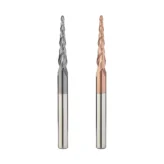
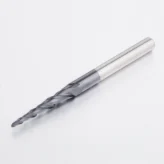
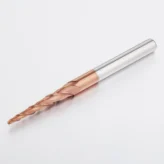
HRC45 / HRC55 2-Flute Solid Carbide Tapered Ball Nose End Mill for Mold Machining
HRC45 / HRC55 2-flute solid carbide tapered ball nose end mills for 3D mold profiling and curved-surface finishing. Select the ball radius, taper angle and reach to suit the mold geometry and material hardness.
⚙️ Product Configurations
Hardness Grades: HRC45 / HRC55
Flute Count: 2 Flutes
Tool Type: Tapered Ball Nose End Mill
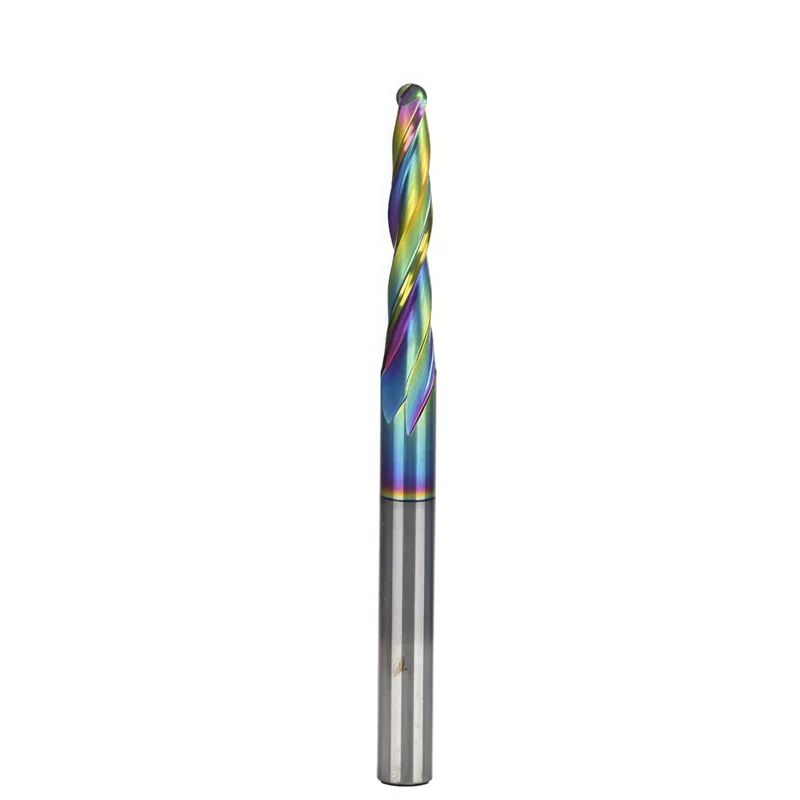
Coating Options: AlTiN / TiSiN (defined by hardness grade and application)
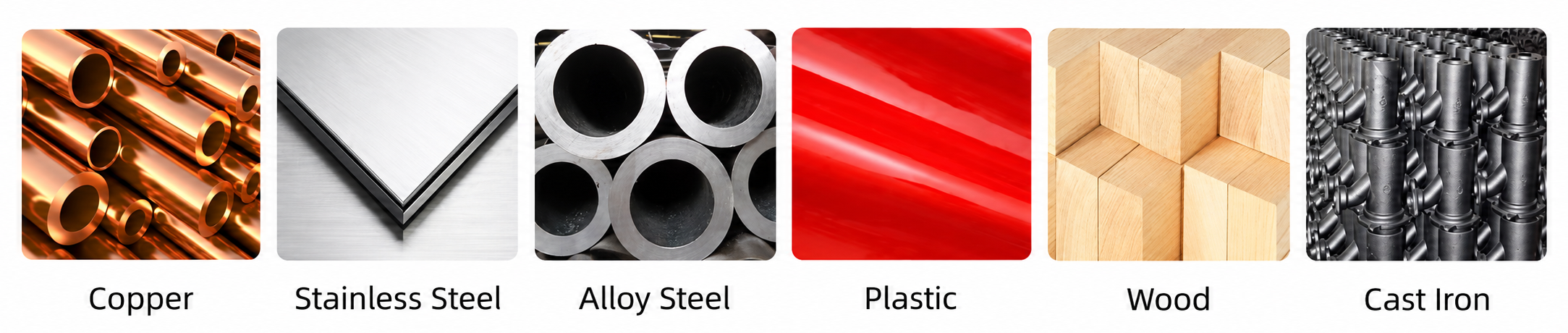
Application Materials: Carbon steel / alloy steel / mold steel / cast iron
Machining Type: 3D contouring / mold finishing / deep-cavity machining
MOQ: 10 pcs
Stock Lead Time: 1–3 days
Tapered Rigidity
Less Deflection
Deep-Cavity Access
Drafted Walls
3D Mold Finishing
Smooth Contours
Custom Geometry
Radius,Angle,Length
HRC45 / HRC55 Tapered Ball Nose End Mill Overview
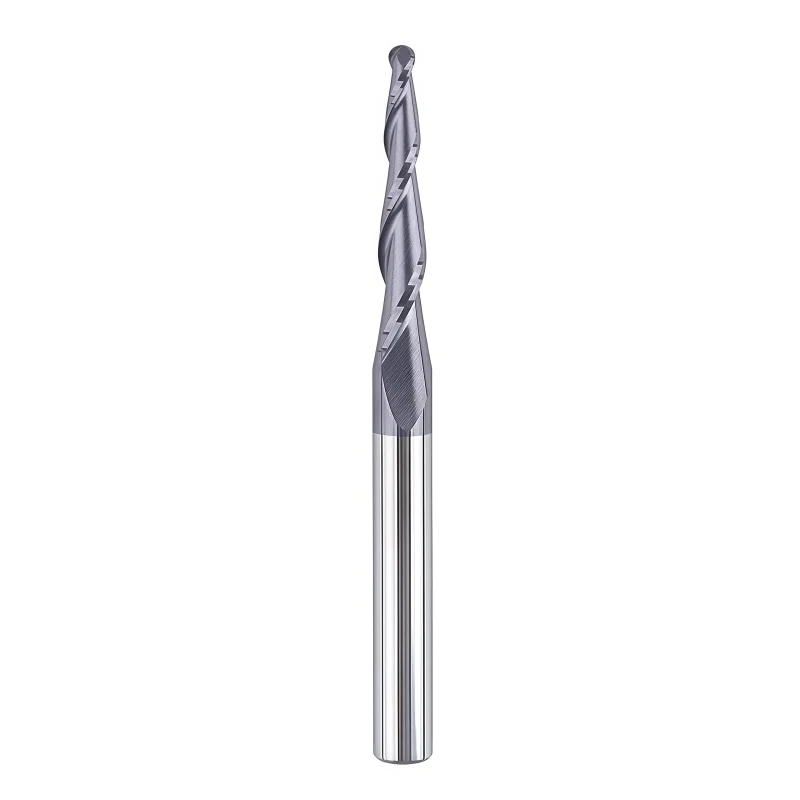
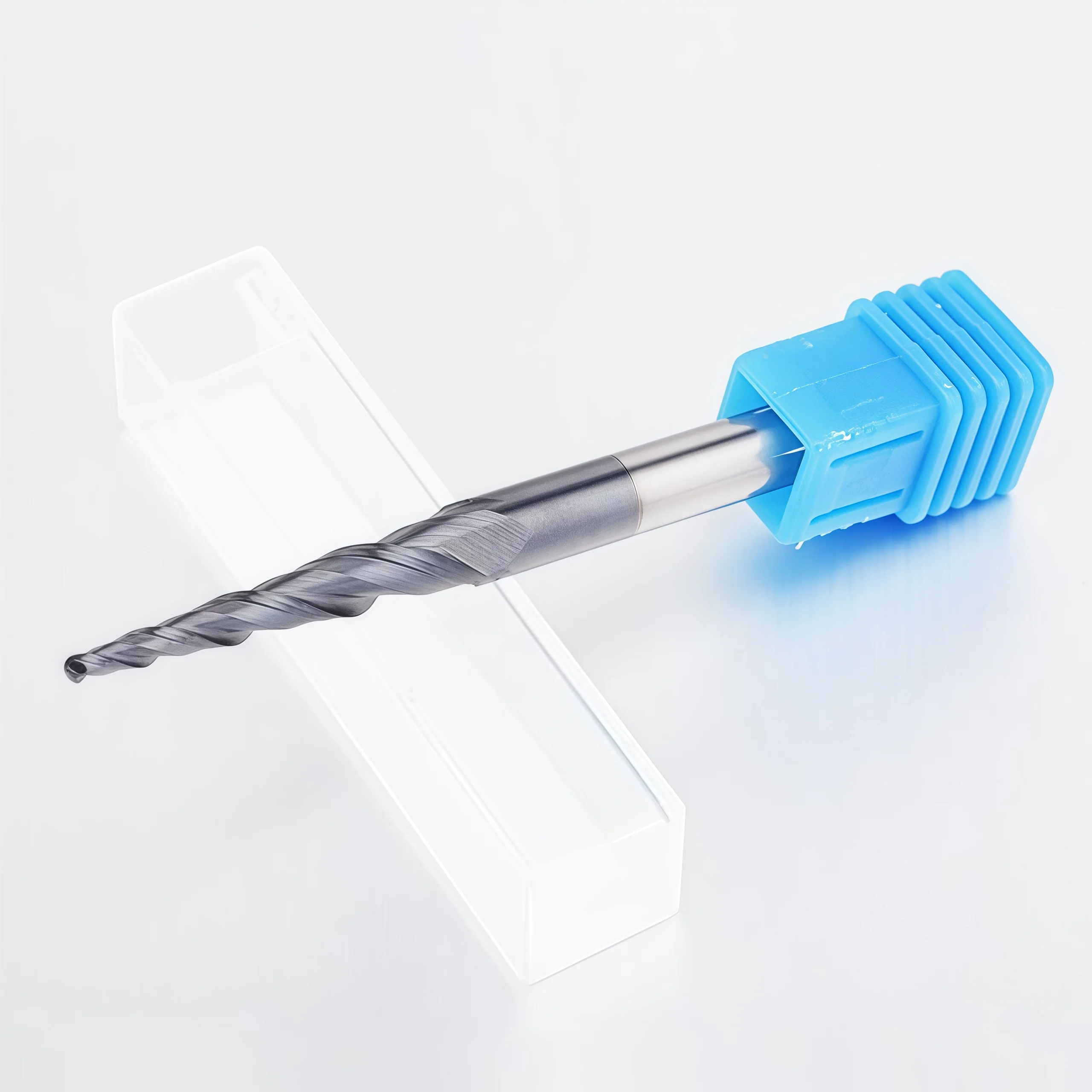
This solid carbide tapered ball end mill combines a spherical tip with a tapered body for support during 3D mold finishing. The two-flute tapered ball nose cutter provides chip space for curved-surface machining. Check the taper angle, large-end diameter and holder clearance against the CAD model to avoid interference.
Key Features & Machining Video
Tapered Core Rigidity
Improved support for deep-cavity finishing.
Drafted-Wall Clearance
Tapered geometry for sloped mold walls.
Ball-Nose Finishing
Smooth 3D contours and fillets.
Custom Geometry
Custom ball radius, taper angle and reach.
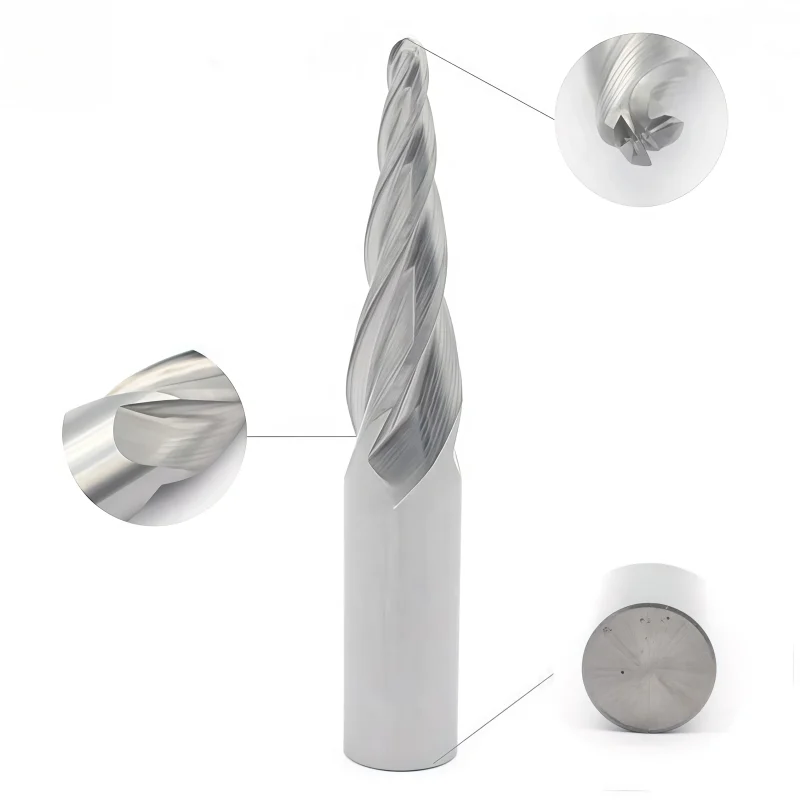
Cutting Geometry & Tool Details
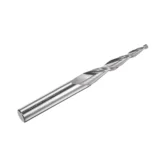
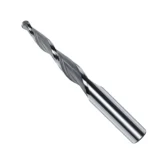
Explore the helical flute geometry, precision ball-nose tip and chamfered shank of this solid carbide tapered ball nose end mill.

Mold-Machining Applications
The tapered ball nose cutter is primarily used for 3D mold contouring, drafted-wall finishing and recessed surfaces where tool reach, rigidity and interference clearance must be considered together.
おすすめ
- Deep mold cavities and recessed 3D surfaces
- Drafted mold walls and sloped contours
- Internal fillets and narrow mold features
- Mold cores, inserts and complex surface finishing
Not Ideal For
- Heavy bulk roughing or large stock removal
- Square-bottom features requiring sharp corners
- Undercuts behind obstructing mold walls
- Applications without sufficient taper or holder clearance
Copper
Stainless Steel
Alloy Steel
Plastic
Wood
Cast Iron
Select the tool grade, geometry and coating according to the workpiece material and machining conditions.
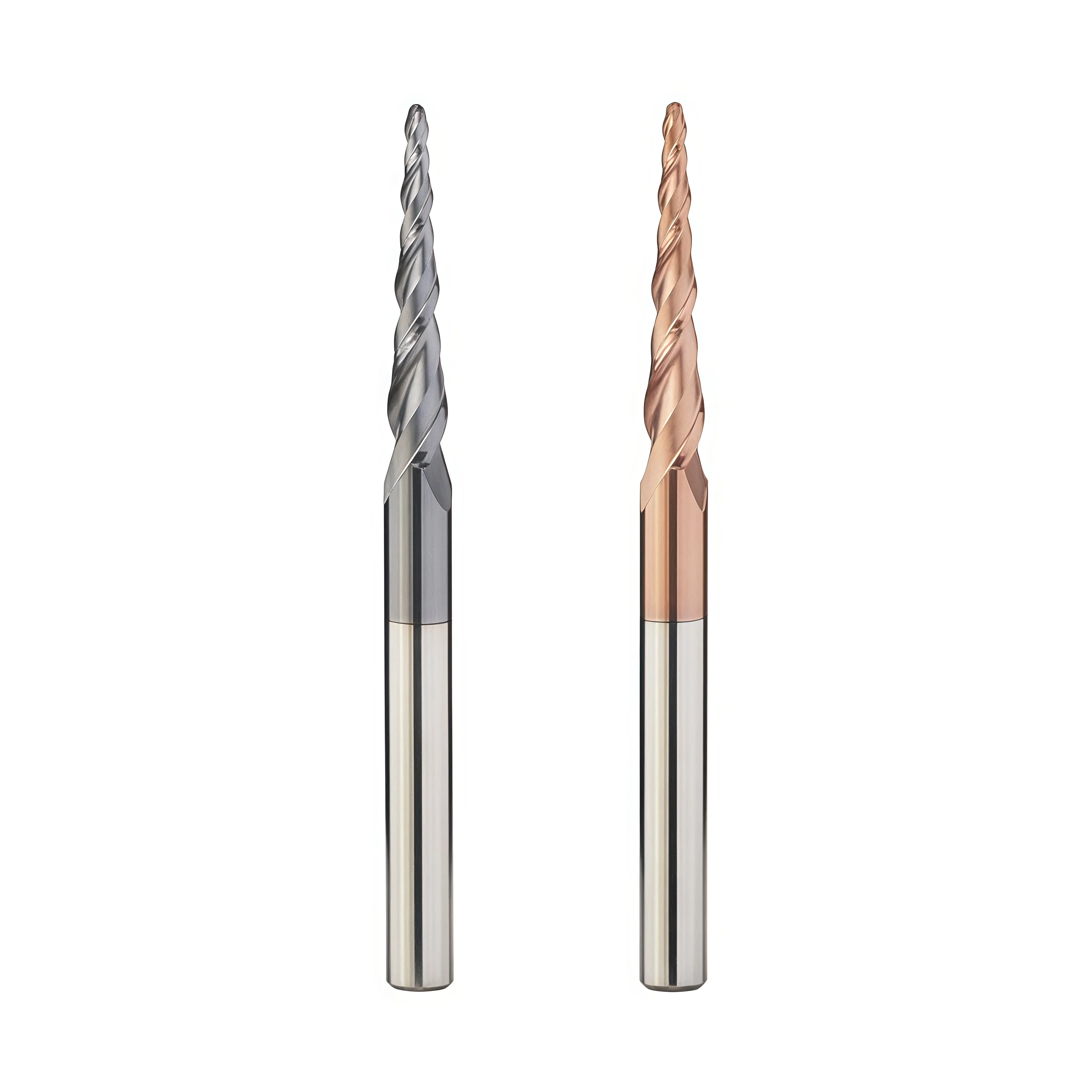
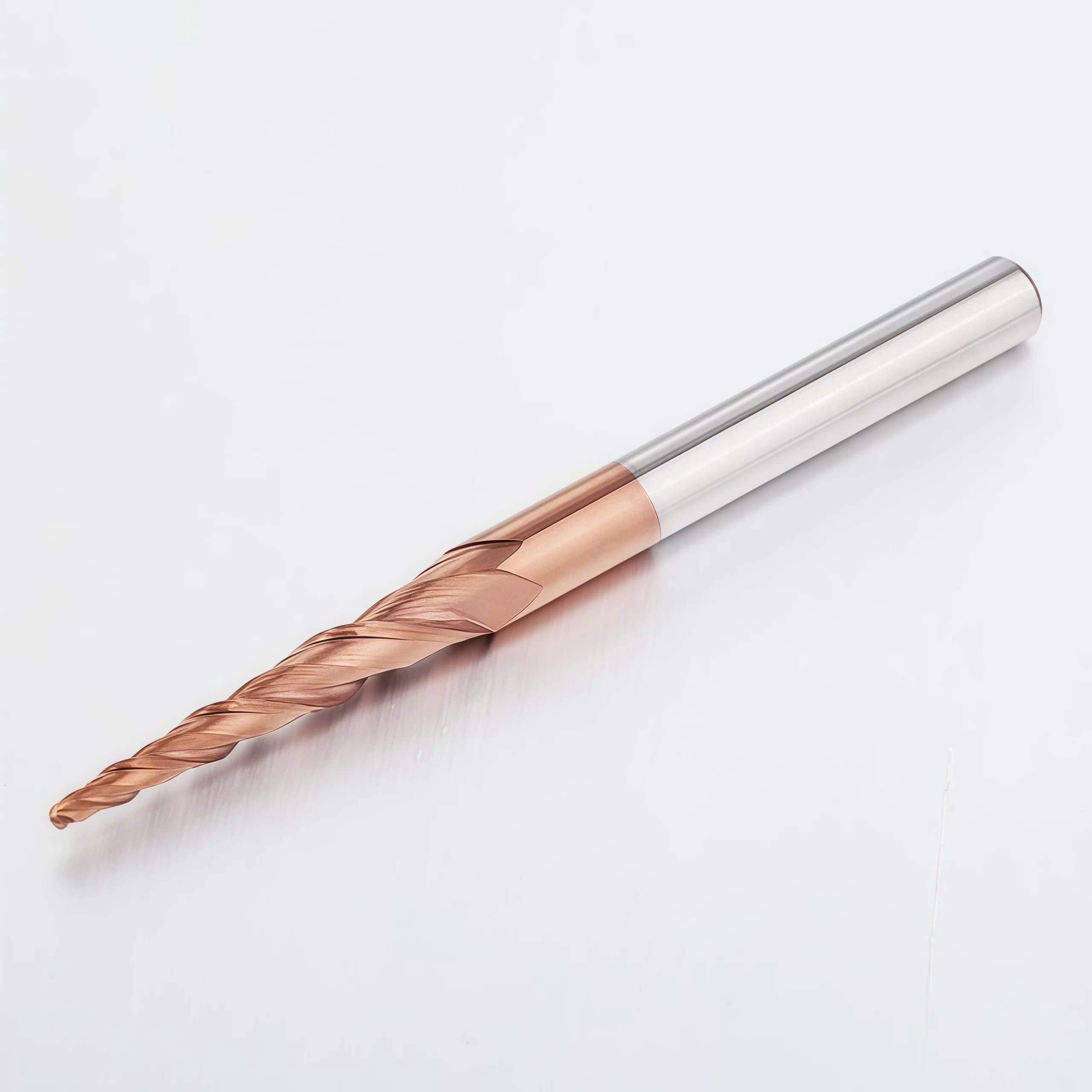
Tapered Ball Nose Geometry & Tool Details
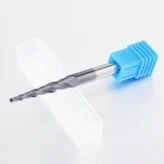
The two-flute cutting section, spherical ball tip and progressively enlarged tapered body are designed for precise mold contouring. Available surface finishes and coatings depend on the selected HRC series and application.

Geometry Selection & Custom Options
For custom tapered ball nose end mills, confirm the ball radius, taper angle and effective reach against the mold CAD model before ordering.
- Ball Radius: Match the smallest internal fillet and required surface finish.
- Taper Angle: Check wall clearance, taper definition and available tool rigidity.
- Effective Reach: Verify cavity depth, maximum tapered diameter and holder clearance.
- Machining Setup: Use controlled finishing stock, low runout and the shortest practical overhang.
Tapered Ball Nose End Mill Specifications
Reference specifications for the 2-flute solid carbide tapered ball nose end mill, including ball radius, taper angle, shank diameter, cutting length and overall length for precision mold machining.
Dimensional Tolerances
| Parameter | Reference |
|---|---|
| Ball Tip Diameter (D) | Ø3.0–Ø10.0 mm |
| Tip Diameter Tolerance | +0 / −0.05 mm |
| Shank Diameter Tolerance | h6 |
| Taper Angle Tolerance | Confirm by specification |
Standard Reference Sizes
Available reference dimensions for tapered ball nose end mills. All dimensions are in millimeters unless otherwise specified. R = Ball radius; d = Shank diameter; α = Taper angle; BD = Large-end diameter; Ap1 max = Cutting length; L = Overall length.
| Radius (R) | Shank (d) | Angle (α) | BD | Ap1 max | OAL (L) |
|---|---|---|---|---|---|
| R1.5 | 4 | 0.5° | 3.32 | 20 | 60 |
| R1.5 | 4 | 1.0° | 3.65 | 20 | 60 |
| R1.5 | 4 | 1.5° | 3.97 | 20 | 60 |
| R1.5 | 4 | 2.0° | 4.29 | 20 | 60 |
| R1.5 | 6 | 3.0° | 4.94 | 20 | 60 |
| R1.5 | 6 | 4.0° | 5.60 | 20 | 60 |
| R1.5 | 6 | 5.0° | 6.25 | 20 | 60 |
| R2.0 | 6 | 0.5° | 4.40 | 25 | 75 |
| R2.0 | 6 | 1.0° | 4.80 | 25 | 75 |
| R2.0 | 6 | 1.5° | 5.21 | 25 | 75 |
| R2.0 | 6 | 2.0° | 5.61 | 25 | 75 |
| R2.0 | 6 | 3.0° | 6.42 | 25 | 75 |
| R2.0 | 8 | 4.0° | 7.23 | 25 | 75 |
| R2.0 | 8 | 5.0° | 8.04 | 25 | 75 |
| R2.5 | 6 | 0.5° | 5.48 | 30 | 75 |
| R2.5 | 6 | 1.0° | 5.96 | 30 | 75 |
| R2.5 | 8 | 1.5° | 6.44 | 30 | 75 |
| R2.5 | 8 | 2.0° | 6.92 | 30 | 75 |
| R2.5 | 8 | 3.0° | 7.89 | 30 | 75 |
| R2.5 | 10 | 4.0° | 8.86 | 30 | 75 |
| R2.5 | 10 | 5.0° | 9.83 | 30 | 75 |
| R3.0 | 8 | 0.5° | 6.56 | 35 | 100 |
| R3.0 | 8 | 1.0° | 7.12 | 35 | 100 |
| R3.0 | 8 | 1.5° | 7.68 | 35 | 100 |
| R3.0 | 8 | 2.0° | 8.24 | 35 | 100 |
| R3.0 | 10 | 3.0° | 9.36 | 35 | 100 |
| R3.0 | 12 | 4.0° | 10.49 | 35 | 100 |
| R3.0 | 12 | 5.0° | 11.62 | 35 | 100 |
| R4.0 | 10 | 0.5° | 8.63 | 40 | 100 |
| R4.0 | 10 | 1.0° | 9.26 | 40 | 100 |
| R4.0 | 10 | 1.5° | 9.89 | 40 | 100 |
| R4.0 | 12 | 2.0° | 10.52 | 40 | 100 |
| R4.0 | 12 | 3.0° | 11.78 | 40 | 100 |
| R4.0 | 16 | 4.0° | 13.05 | 40 | 100 |
| R4.0 | 16 | 5.0° | 14.33 | 40 | 100 |
| R5.0 | 12 | 0.5° | 10.70 | 45 | 100 |
| R5.0 | 12 | 1.0° | 11.40 | 45 | 100 |
| R5.0 | 12 | 1.5° | 12.10 | 45 | 100 |
| R5.0 | 16 | 2.0° | 12.80 | 45 | 100 |
| R5.0 | 16 | 3.0° | 14.20 | 45 | 100 |
| R5.0 | 16 | 4.0° | 15.62 | 45 | 100 |
| R5.0 | 20 | 5.0° | 17.04 | 45 | 100 |
Scroll to view all 42 reference sizes. On mobile, swipe horizontally to view all six dimensions. Confirm availability and configurations before ordering.
Customization & OEM
Custom dimensions, geometry and private-label options are available for distributor and OEM programs.
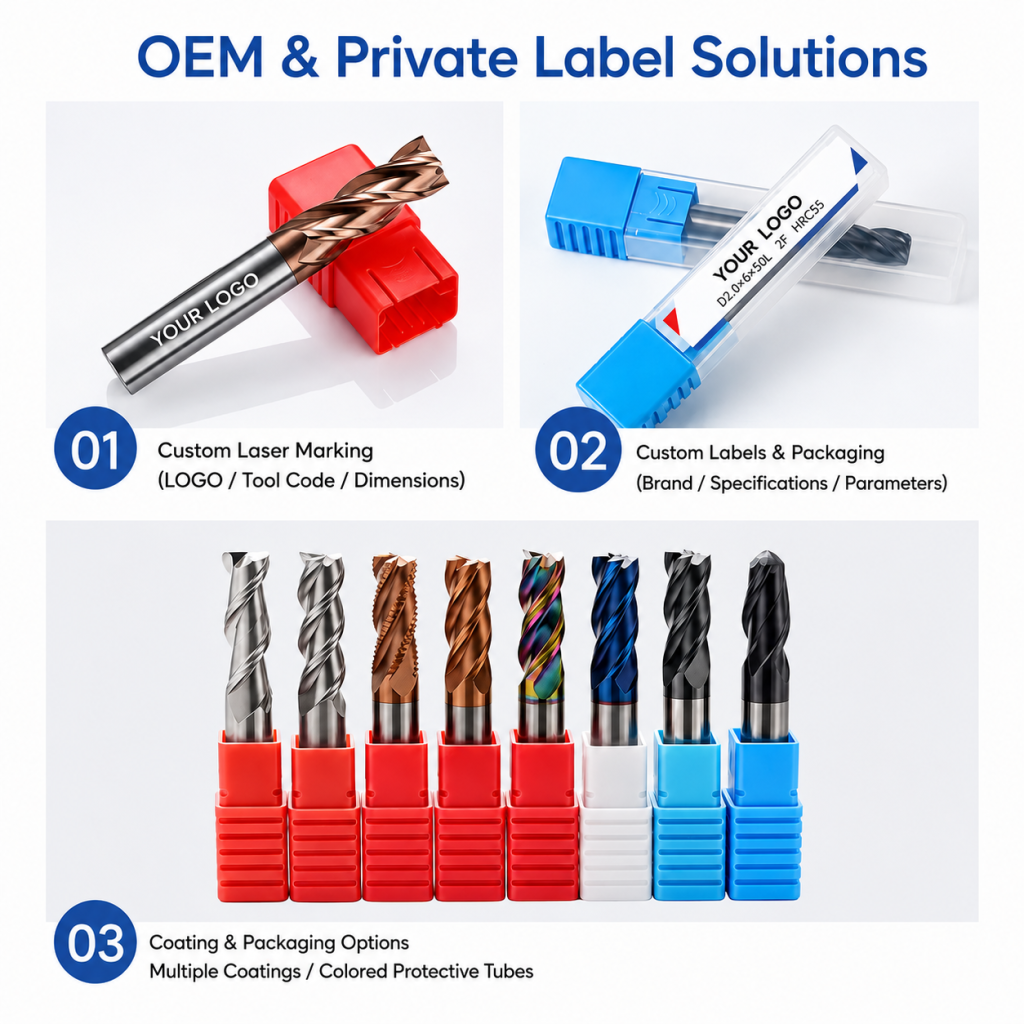
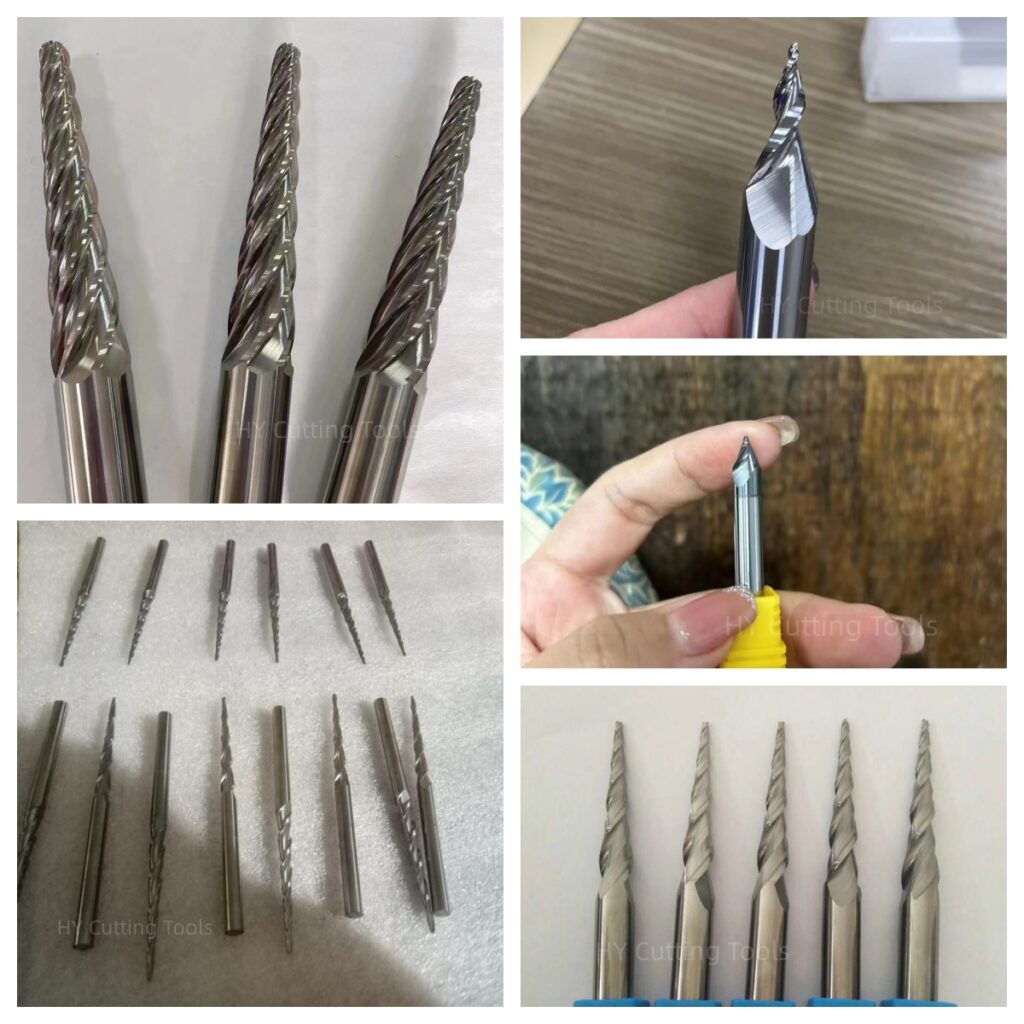
Drawing- and sample-based development is also available for special aluminum finishing applications.
Manufacturing & Quality Control
Tapered Ball Nose End Mill — Production Process
Precision Grinding & Batch Production
Actual production of solid carbide tapered ball nose end mills. Precision grinding supports accurate geometry and repeatable batch production.
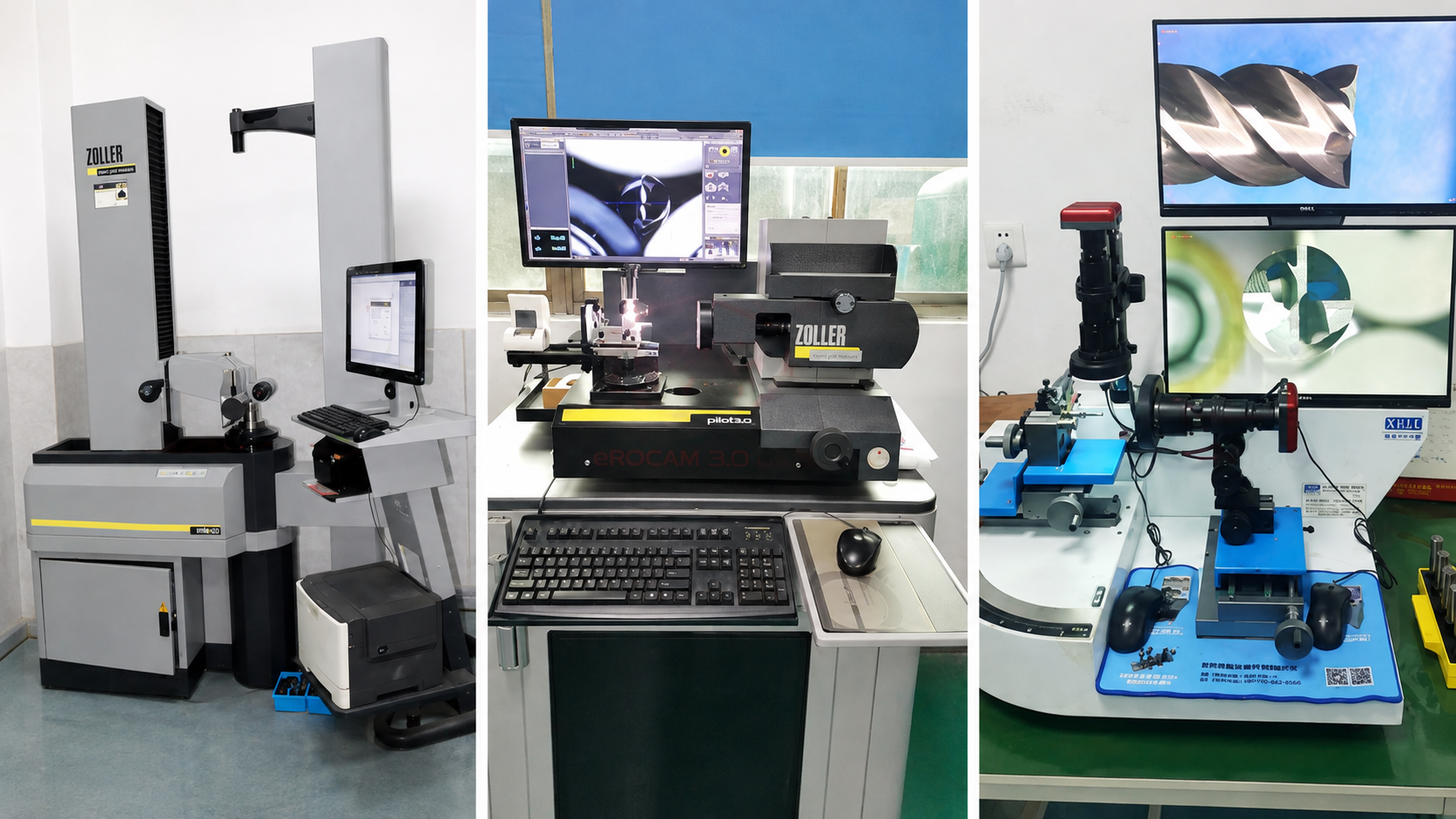
Precision Inspection & Quality Control
Inspection covers ball radius, taper angle, tool dimensions, runout and cutting-edge condition to support consistent quality and repeat orders.
Tapered Ball Nose End Mill FAQ
Answers to common questions about taper angle, ball radius, mold clearance, material selection, custom tooling and OEM orders.
Why choose a tapered ball nose end mill over a straight-neck cutter?
How do I choose the correct taper angle?
How should I select the ball radius?
How do I choose a tapered ball nose cutter for a deep mold cavity?
What do HRC45 and HRC55 mean?
Which workpiece materials are suitable?
Is this tool suitable for roughing or finishing?
How can I reduce chatter and improve surface finish?
Can you customize ball radius, taper angle and tool length?
Are samples available, and what is the lead time?
What information do you need for a quotation?
サイズ、価格、またはカスタマイズオプションについてお知りになりたいですか?
Send your specifications and quantity for a quote.
- Standard Sizes
- Small Trial Orders
- Mixed Sizes
- OEM & Custom
View QR Code – Contact Sales on WeChat

Scan to contact us on WeChat.
Scan to contact us on WeChat.