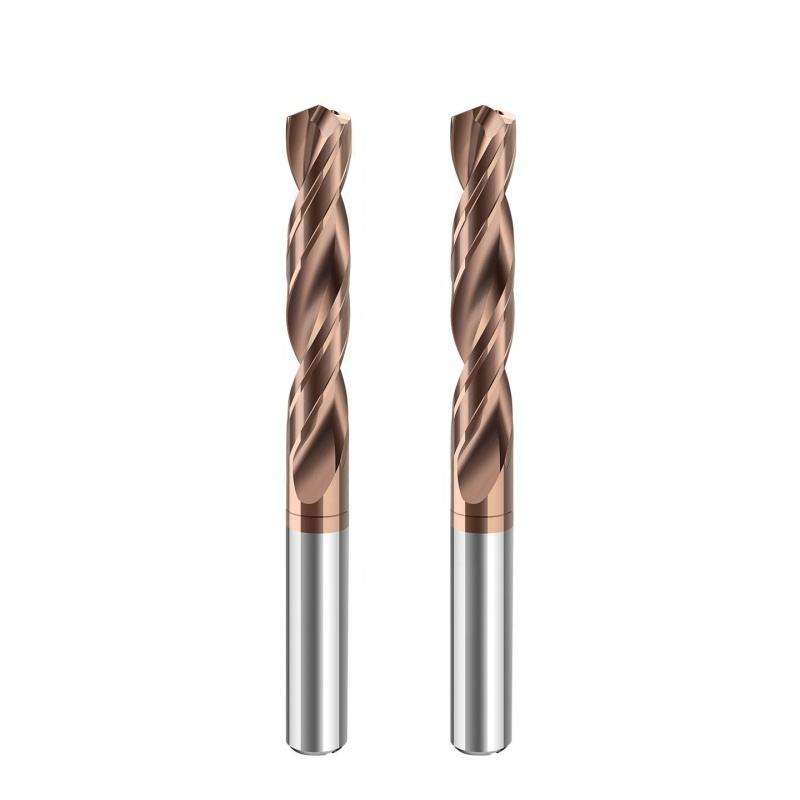
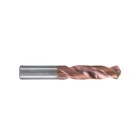
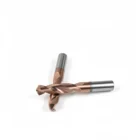
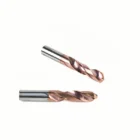
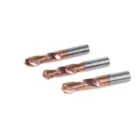
Coated Solid Carbide Twist Drill for HRC50–55 Mold Steel
Qualità costante
Consistent geometry across repeat orders.
Ordini flessibili
Small batches and mixed sizes available.
OEM Support
Custom marking, labels and packaging.
Standard e personalizzati
Standard sizes and custom configurations.
Carbide Twist Drill for HRC50–55 Mold Steel
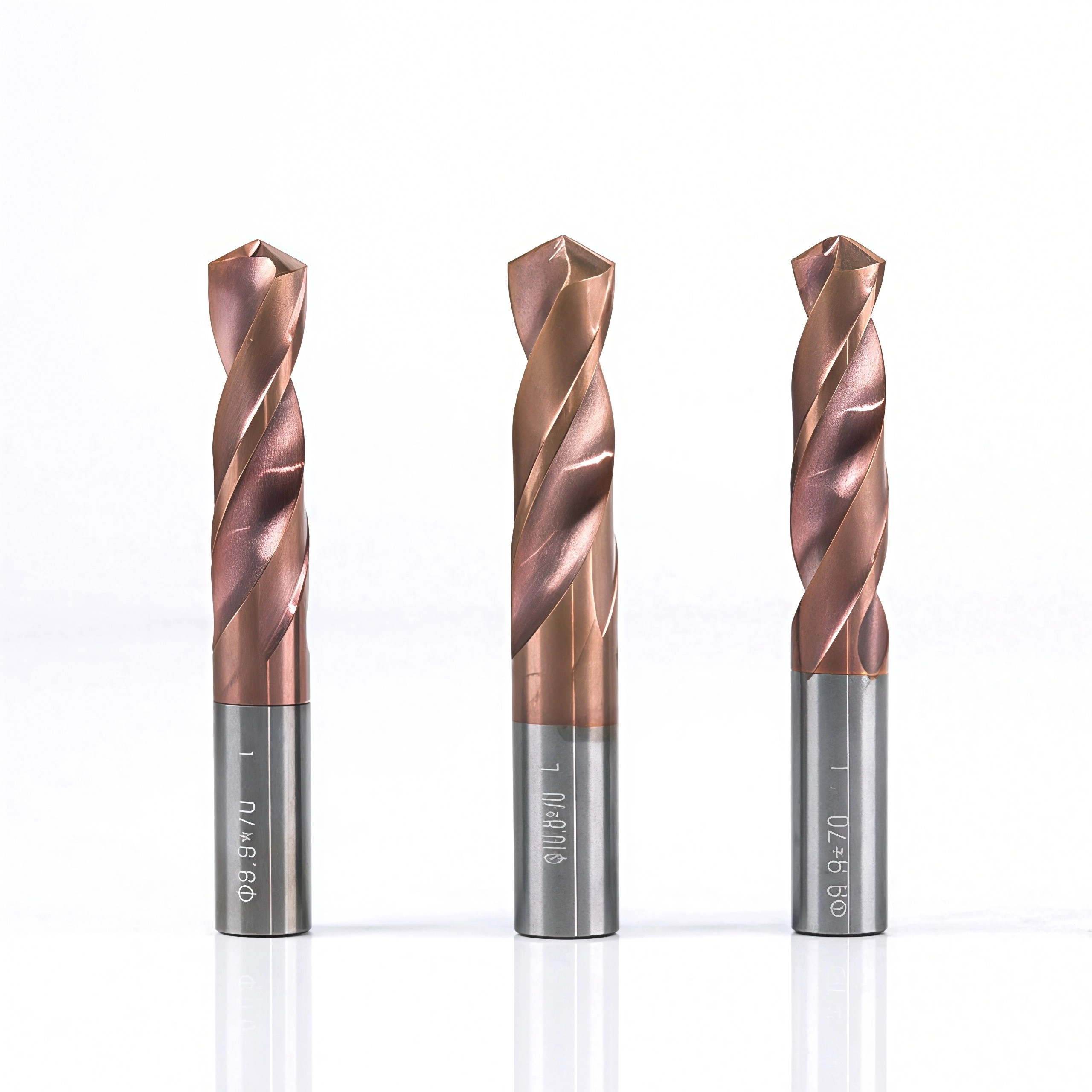
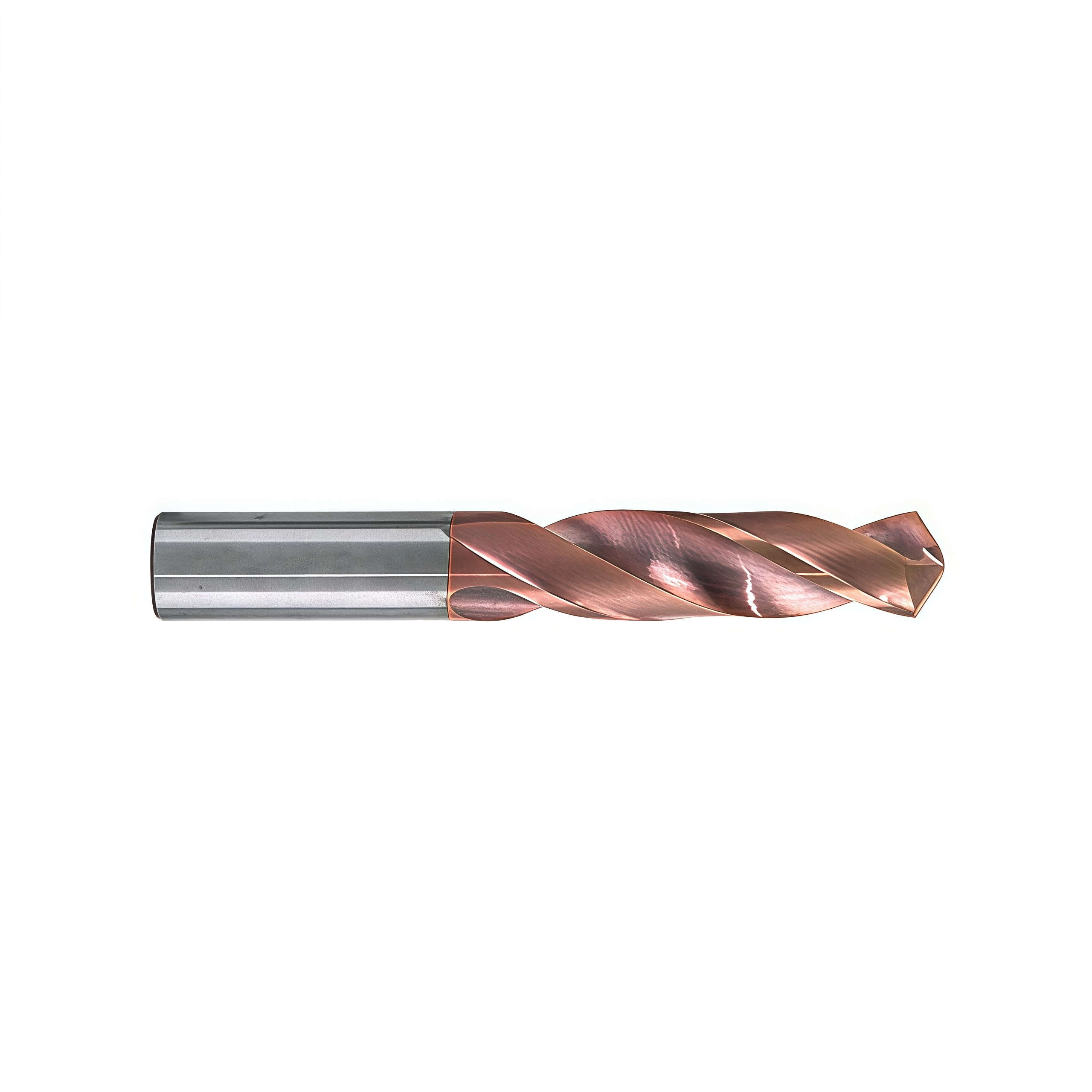
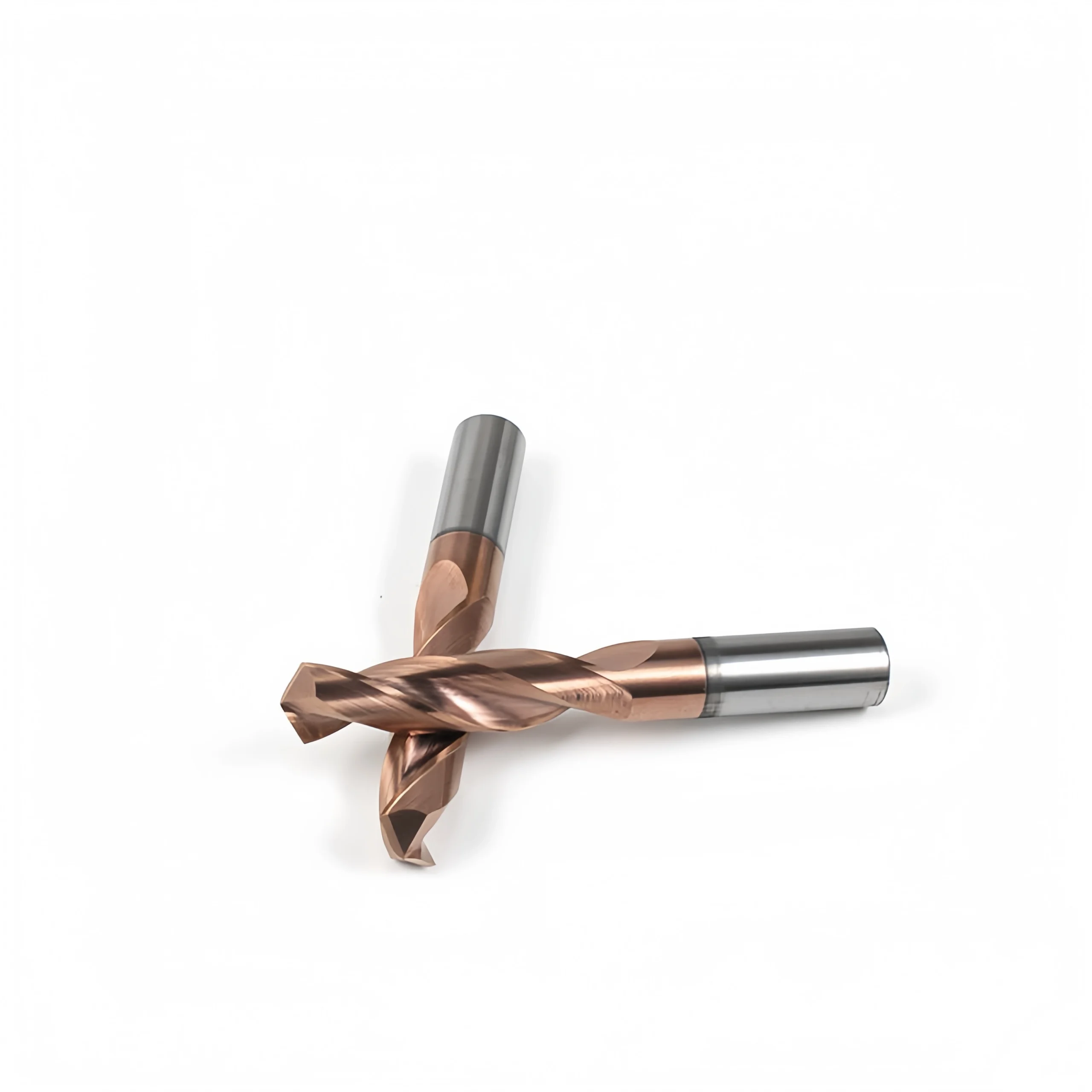
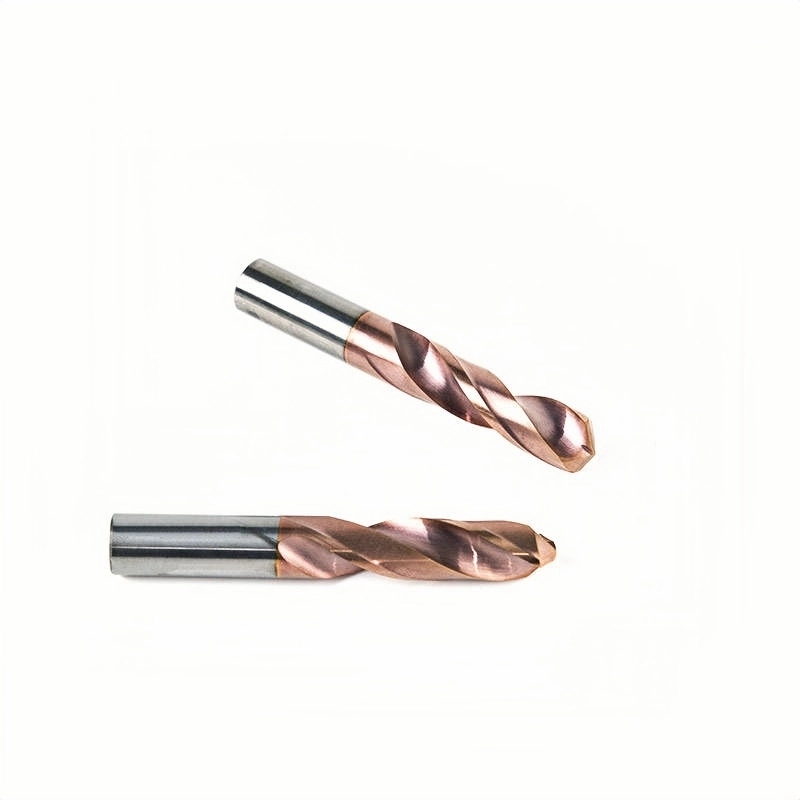
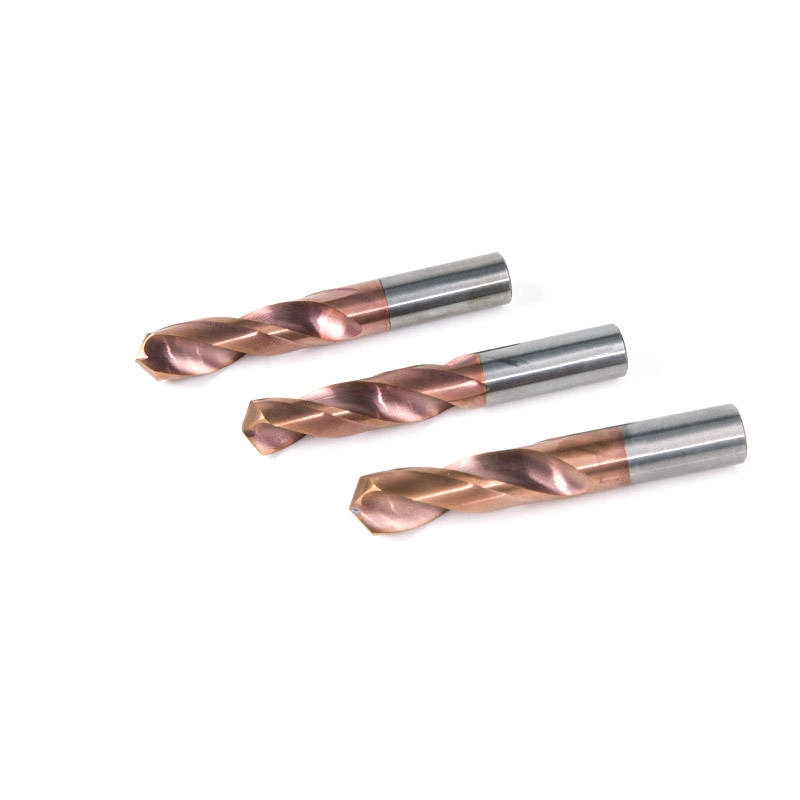
This coated solid carbide twist drill is designed for stable CNC hole machining in heat-treated mold steels with a measured hardness of HRC50–55. Its rigid carbide body, precision-ground two-flute geometry and wear-resistant coating help manage cutting-edge load, heat and abrasive wear. The standard configuration uses a cylindrical straight shank and external coolant and is intended for rigid machining centers, low-runout clamping, controlled entry and hole depths compatible with the selected flute length.
Carburo solido
2 Flauti
HRC50–55
External Coolant
Key Configuration
1
HRC50–55 Application Window
Geometry, carbide substrate and coating are selected for heat-treated mold steel within the confirmed HRC50–55 range.
2
Coated Two-Flute Geometry
Two spiral flutes provide chip space, while the coated cutting zone helps manage heat and abrasive wear.
3
External-Coolant Configuration
The standard configuration uses directed external coolant and requires reliable coolant access to the flutes.
Key Product Advantages
●
Rigid Solid-Carbide Body
High tool rigidity supports edge stability and helps limit deflection when drilling heat-treated mold steel.
●
Wear-Resistant Coating
A suitable PVD coating protects the cutting zone against heat and abrasive wear during continuous CNC drilling.
●
Two-Flute Chip Space
The two-flute design provides chip space and supports controlled chip evacuation when coolant access is maintained.
●
Precision-Ground Point
Symmetrical cutting lips support controlled entry and stable cutting when holder runout and workpiece clamping are controlled.
Mold Steel & Hardness Guidance
Tool selection should be based on measured workpiece hardness rather than the material-grade name alone. Confirm the heat-treatment condition and local surface hardness before drilling.
| MATERIAL CONDITION | TYPICAL EXAMPLES | SELECTION GUIDANCE |
|---|---|---|
| Heat-Treated Hot-Work Mold Steel | H13, SKD61, 1.2344 | Confirm measured hardness within HRC50–55. |
| Heat-Treated Stainless Mold Steel | S136, 1.2083 | Confirm grade, heat treatment and actual hardness. |
| Selected Cold-Work / Tool Steel | Application-specific grades | Use when measured hardness is within HRC50–55. |
| Outside the Rated Range | Below HRC50 or above HRC55 | Review another geometry, coating or drilling process. |
Applications & Target Scope
- Precision hole machining in heat-treated mold components
- Drilling H13, SKD61 and 1.2344 after hardness confirmation
- Selected stainless mold steels such as S136 and 1.2083
- Blind-hole and through-hole machining within the selected flute length
- Rigid CNC machining with low runout and controlled tool entry
- Standard and custom drill configurations for mold-making applications
Application Requirements
• Verify Actual Hardness
Confirm the mold-steel grade, heat-treatment condition and measured hardness before selecting the drill.
• Maintain Low Runout
Use a clean precision holder, rigid workholding and the shortest practical tool overhang.
• Control Tool Entry
Use a flat and stable entry where possible to reduce vibration, edge chipping and hole deviation.
• Maintain Coolant Access
Direct suitable coolant into the flutes and monitor chip evacuation throughout the drilling cycle.
See the tooling-as-a-system guide for holder, spindle, workholding and coolant considerations.
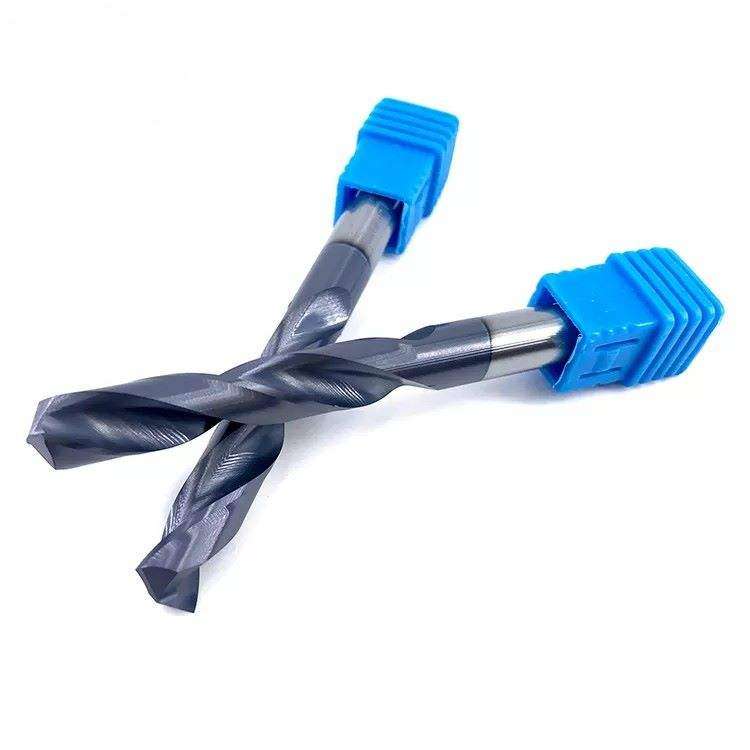
Product Photo and Video
Product Series Information
Technical configuration for coated two-flute solid carbide twist drills intended for heat-treated mold steel within the confirmed HRC50–55 workpiece-hardness range.
| Materiale dell'utensile | Carburo solido | Tipo di strumento | Coated Two-Flute Twist Drill |
| Primary Workpiece Range | HRC50–55 Mold Steel | Tipo di gambo | Round Straight Shank |
| Surface Treatment | TiAlN / AlTiN / TiSiN / Custom | Coolant Delivery | External Coolant |
| Tipo di macchina | Rigid CNC Machining Center | Available Supply | Standard e personalizzati |
| Custom Dimensions | Diameter / Flute Length / Shank / Overall Length | Additional Options | Point Geometry / Coating / Marking / Packaging |
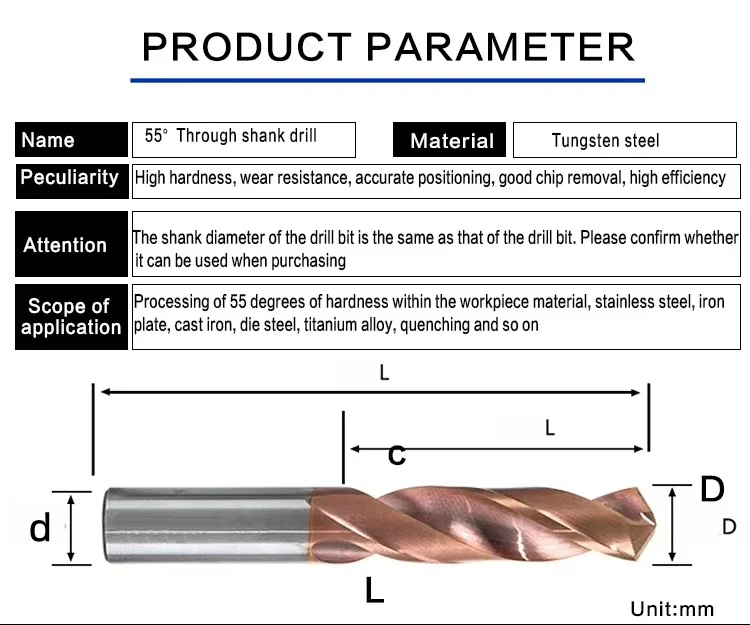
Tool Nomenclature & Dimensions
Reference symbols used to confirm cutting diameter, flute length, shank diameter and overall tool length.
Required Information for Tool Selection
Provide the following application information so the drill geometry, coating and dimensions can be reviewed correctly.
| INFORMATION TO PROVIDE | WHY IT MATTERS | EXAMPLE |
|---|---|---|
| Mold-Steel Grade & Measured Hardness | Determines geometry, carbide and coating selection | H13, HRC52 |
| D × l × d × L | Defines diameter, flute length, shank and reach | ØD × l × Ød × L mm |
| Hole Depth & Hole Type | Affects flute length, coolant access and drilling cycle | Blind hole, 18 mm deep |
| Tolerance & Surface Requirement | Clarifies whether drilling alone can meet the requirement | Ø6.0 +0.02/0 mm |
| Machine, Holder & Coolant | Defines realistic rigidity and chip evacuation conditions | CNC, hydraulic chuck, external coolant |
Machining Recommendations
- Verify Actual Hardness: Confirm the mold-steel grade, heat treatment and measured workpiece hardness.
- Maintain Low Runout: Use a precision holder, short tool overhang and rigid workholding.
- Control the Entry: Use a flat and stable entry where possible to reduce vibration and edge chipping.
- Maintain Coolant Access: Direct suitable coolant into the flutes and monitor chip evacuation.
- Match the Cycle to Depth: Select pecking and chip-clearing strategy according to diameter, depth and flute length.
- Verify Cutting Data: Match speed and feed to material grade, hardness, diameter, coating and machine rigidity.
Recommended Starting Cutting Parameters
Use the technical guide as an initial reference and adjust the cutting data according to mold-steel grade, measured hardness, drill diameter, hole depth, coating, coolant and machine rigidity.
Solid Carbide Drill Cutting Data Guide
Access ISO-categorized starting speeds and feeds for initial drilling trials.
Related Drill Configurations
Choose the drill configuration according to measured hardness, drilling depth, coolant delivery and finished-hole requirements.
HRC50–55 Series
Current Mold-Steel Option
HRC55 Steel Drills
Steel-Machining Series
3D / 5D Coolant Drills
Internal-Coolant Options
Custom Mold Drills
Drawing-Based Supply
For additional sizes and related drill series, View the Solid Carbide Drill Catalog.
HRC50–55 Mold Steel Drill Customization
Cutting diameter, flute length, reinforced point geometry, controlled edge preparation and heat-resistant coating can be configured for confirmed HRC50–55 mold-steel applications. Tool design is matched to the exact grade, hardness and setup rigidity.
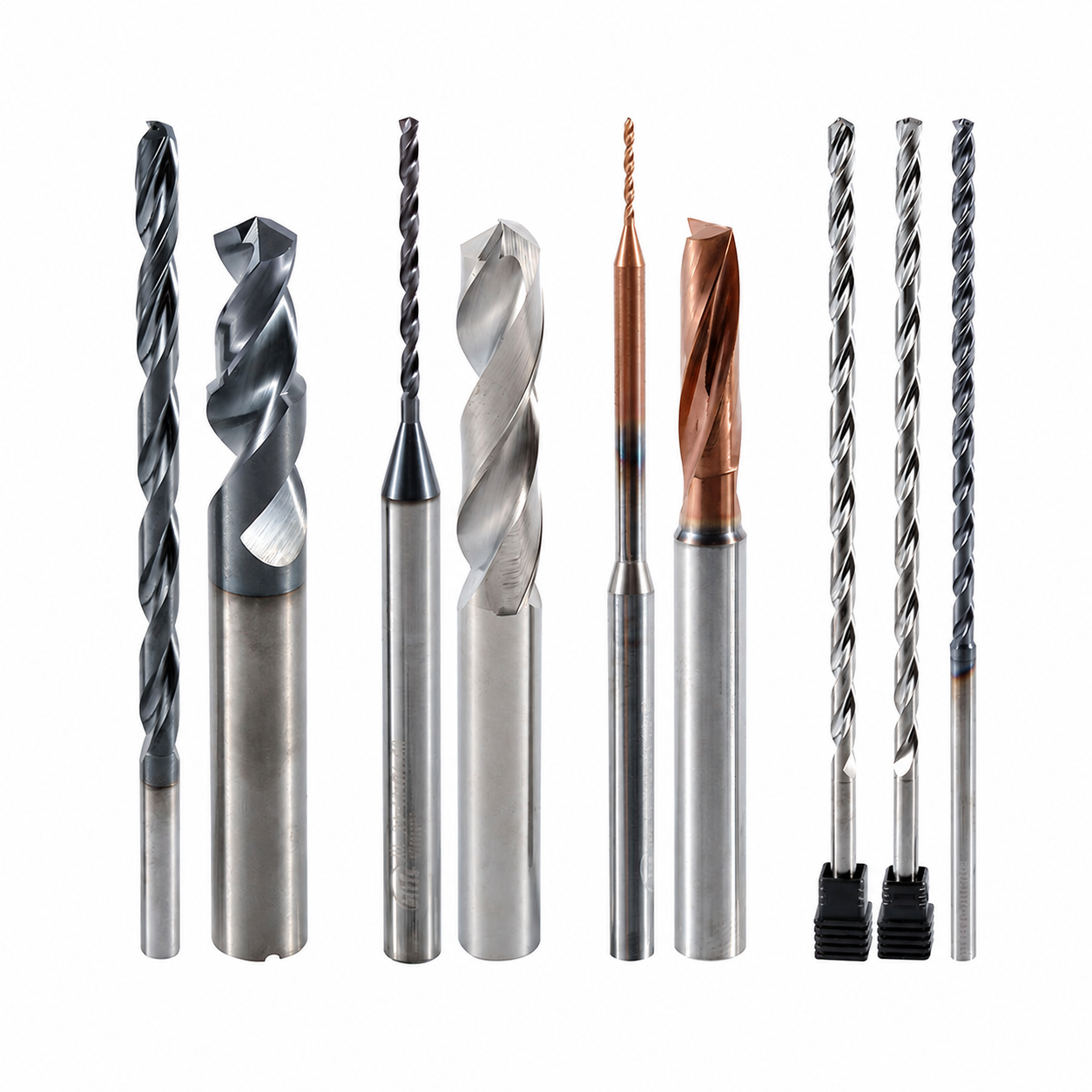
Mold Steel Geometry & Edge Preparation
Reinforced point form, web thickness, flute profile, margins and edge honing can be configured to support edge stability and controlled drilling in hardened mold steel.

Diameter & Length Options
Metric and drawing-defined diameters can be combined with application-matched flute, shank and overall dimensions to preserve rigidity.
Servizi OEM e a marchio privato
OEM manufacturing and private-label supply options for mold and die manufacturers, specialty-tool distributors and hard-steel machining customers.
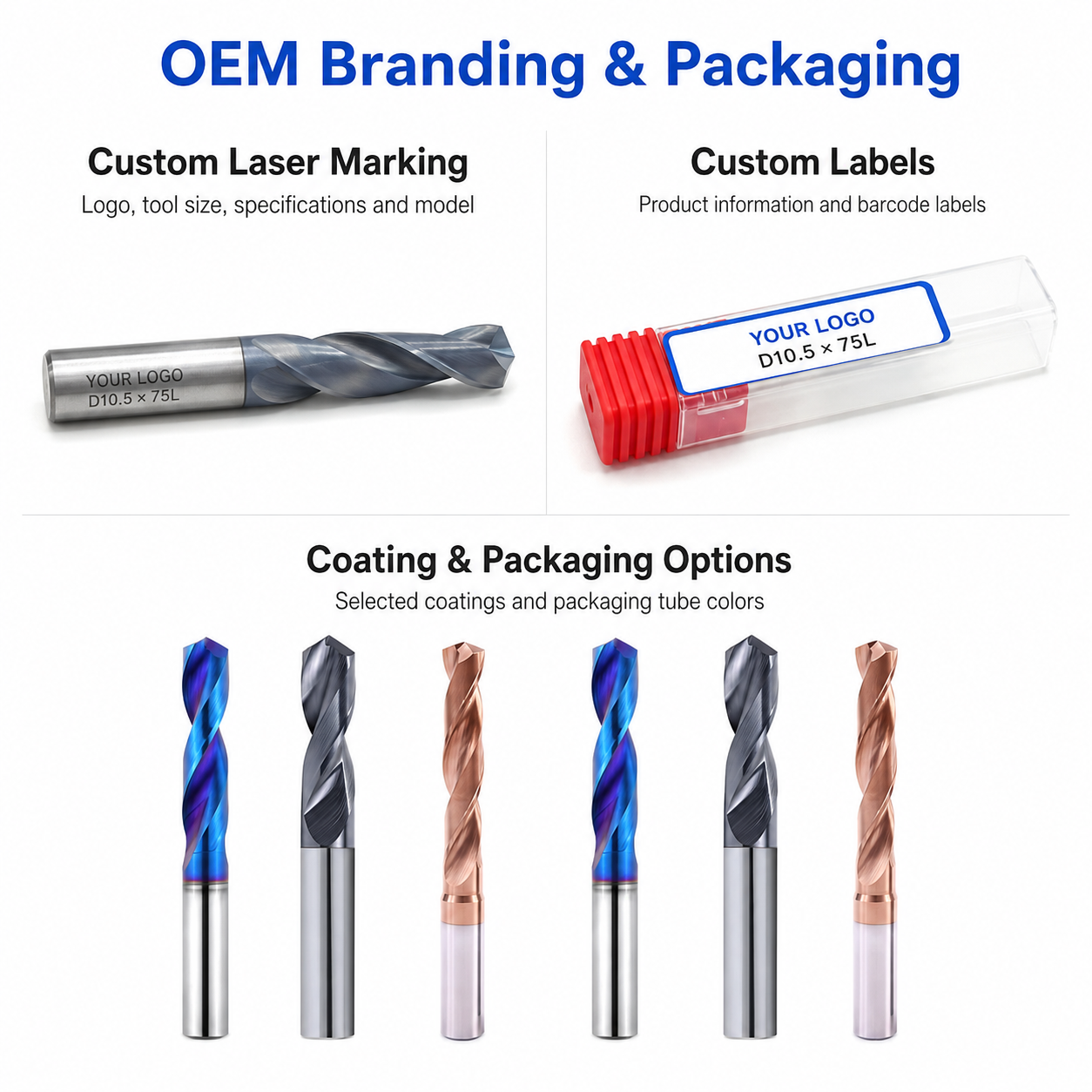
Laser Etching
Custom laser marking for logos, tool codes, diameter specifications, coating identification and batch numbers.
Custom Packaging
Individual protective tubes, diameter labels, multi-pack boxes, custom inserts and private-label packaging options.
Commercial Terms
Flexible MOQ options for standard configurations, custom sizes, trial orders and scheduled repeat supply.
Technical Workflow
Inquiry
Submit the mold-steel grade, HRC hardness, hole dimensions, setup and quantity.
Engineering
Hardness suitability, reinforced geometry, coating and machine rigidity are reviewed.
Commercial
Quotation, MOQ, production schedule and delivery terms are confirmed.
Production
Precision grinding, controlled edge honing, PVD coating and identification.
Quality Control
Diameter, point geometry, coating, edge condition and runout are inspected.
Inspection & Quality Control
Drill dimensions, cutting-edge geometry and visible surface condition are checked according to the confirmed product specification and application requirements.

Protective Packing for Shipment
Finished drills are protected individually before batch labeling and export-carton reinforcement.

Individual Tool Protection
Each drill is individually protected in a plastic tube to reduce contact damage during storage, handling and transportation.
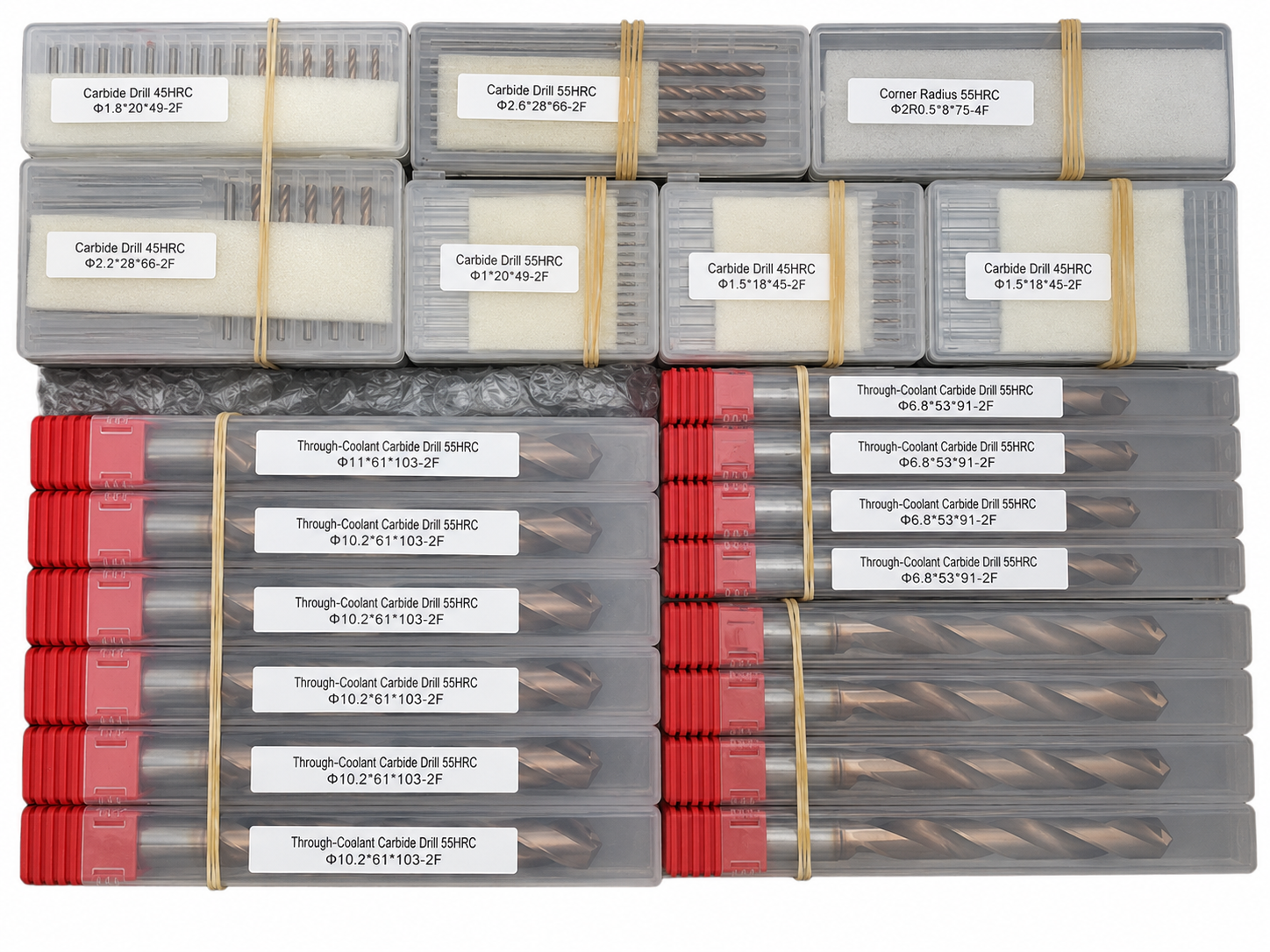
Batch & Label Verification
Tools are grouped and labeled by specification to support order verification before carton packing.

Export Carton Protection
Batch packaging, cushioning materials and reinforced export cartons are selected according to the order quantity and shipping method.
Reference Lead Time
The following timeframes are general references. Availability and production scheduling are reviewed for each order.
Shipping Options
Shipping arrangements can be selected according to order size, delivery schedule and destination.

Product FAQs
Product-specific information about mold-steel applications, HRC50–55 hardness positioning, coating selection, available configurations and machining requirements for this solid carbide twist drill.
What materials is this carbide drill designed for?
This coated solid carbide twist drill is positioned primarily for pre-hardened mold steel, tool steel and selected alloy-steel grades within the HRC50–55 range. Final suitability should be confirmed according to the exact material grade, actual hardness, hole type, drilling depth and machine conditions.
What does the HRC50–55 designation mean?
HRC50–55 describes the intended workpiece-hardness range for selected stable machining conditions. It is not the hardness of the carbide drill itself or a universal performance guarantee. Workpiece composition, actual hardness, hole depth, tool overhang, runout and machine rigidity must also be considered.
Why is a coated drill recommended for hardened mold steel?
A suitable PVD coating helps manage friction, cutting heat and abrasive wear when drilling hardened mold steel. The final coating should be selected according to the workpiece grade, hardness, coolant method, cutting parameters and required tool-life target.
What setup is recommended when drilling HRC50–55 mold steel?
Use a rigid CNC machine, a clean low-runout holder and the shortest practical tool overhang. Stable coolant delivery and controlled chip evacuation are important, while speed and feed should be matched to the exact steel grade, hardness, drill diameter and hole depth.
What sizes and drill configurations are available?
Standard and custom configurations can be reviewed according to the product series. Cutting diameter, flute length, shank diameter, overall length, drilling depth, point geometry, coating and coolant configuration should be confirmed before ordering.
What information is required for a quotation?
Please provide the required diameter, hole depth or flute length, shank diameter, overall length, workpiece grade and hardness, blind-hole or through-hole condition, coating requirement, coolant method and estimated quantity. A drawing is recommended for custom or non-standard requirements.
Ordering & OEM FAQs
General information for trial orders, mixed-size purchasing, private labeling and production scheduling.
Do you accept small trial orders?
Yes. Small sample or trial orders are welcomed for checking hole quality, cutting stability, chip evacuation and tool life in the intended mold-steel grade before volume purchasing.
Can mixed sizes be ordered together?
Yes. Standard and custom sizes can be combined in one order when the carbide grade, coating and production requirements are compatible. Mixed-size purchasing is suitable for distributors and multi-diameter mold-machining requirements.
Is OEM laser marking available?
Yes. Custom shank laser marking such as a logo, model number, tool dimensions, hardness range or batch identification can be reviewed together with OEM labels and packaging requirements.
What is the typical production lead time?
Standard stock items normally have a shorter lead time, while custom dimensions, special coatings and OEM orders require additional production time. The exact schedule is confirmed according to specification, quantity, coating and current production capacity.
Downloads & Technical Resources
Access product dimensions, series information and starting cutting data for tool selection and application review.
Need Sizes, Pricing or Custom Options?
Send us the required tool type, sizes, quantities, workpiece material and any OEM or custom requirements. We will confirm suitable specifications, availability, lead time and quotation details.
Drawings, size lists and reference photos are welcome.